- info@drreemaarora.com
- +91 99580 73900
- India’s Most Trusted Aesthetic Doctor

MNRF Treatment
- Home
- Services
- MNRF Treatment
Have Any Question?
Don’t think much, have a query? Call us now!
Connect with us
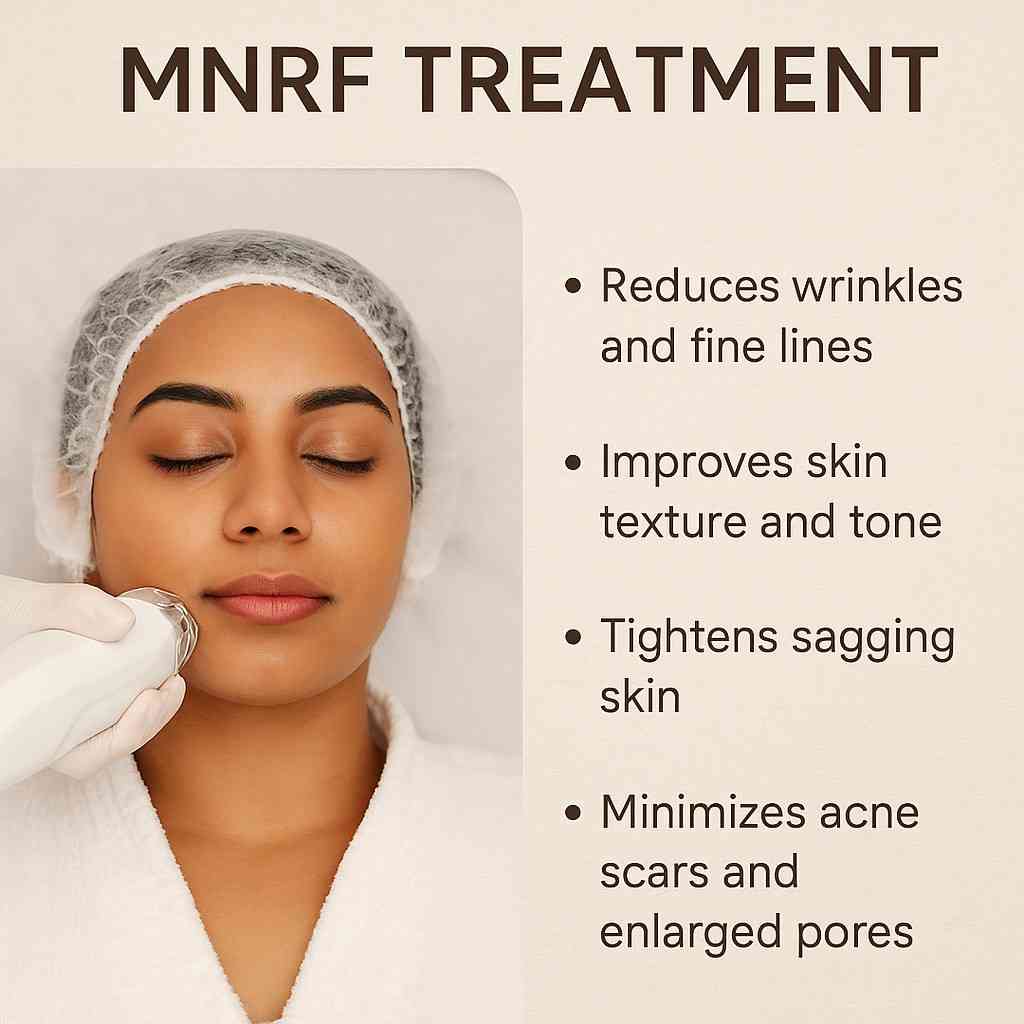
MNRF Treatment in Delhi – Doctor-Led RF Microneedling for Skin Tightening & Acne Scars
MNRF (Microneedling Radiofrequency), commonly known as RF Microneedling, is an advanced, non-surgical, doctor-led skin treatment in Delhi, India that combines precision microneedling with controlled radiofrequency energy to improve skin laxity, acne scars, enlarged pores, and early signs of ageing.
Recognised as one of the most effective solutions for MNRF treatment in Delhi, this advanced RF microneedling procedure is widely used for skin tightening and acne scar treatment, delivering visible improvement in skin texture and firmness with minimal downtime when performed under expert supervision.
At The Face Clinic, Hauz Khas, South Delhi, MNRF treatment is performed under the direct supervision of Dr. Reema Arora (18+ years experience) using advanced medical-grade RF technology and personalised treatment protocols specifically designed for Indian and brown skin types, with a strong focus on long-term safety, precision, and natural-looking results.
Doctor’s Snapshot – MNRF Treatment at a Glance
MNRF (Microneedling Radiofrequency) is a doctor-led, minimally invasive skin treatment in Delhi that uses precision microneedles to deliver controlled radiofrequency energy into the deeper layers of the skin. This advanced technology helps tighten skin, improve acne scars, refine enlarged pores, and stimulate long-term collagen production.
Compared to traditional microneedling, MNRF treatment works at deeper dermal levels, making it significantly more effective for skin tightening, texture improvement, and acne scar treatment in Delhi. When performed with customised settings and proper medical supervision, it offers safer, more consistent, and long-lasting results.

Book Your Expert Consultation
Speak directly with our clinic team to know the exact treatment plan, cost, and availability. Quick response on call or WhatsApp.
Table of Contents
What Is MNRF Treatment?
MNRF is an advanced radiofrequency skin treatment that delivers controlled RF energy through micro-needles into the dermis, triggering deep collagen and elastin stimulation. Unlike surface-level procedures, MNRF works at a structural level, improving skin quality, firmness, and scar texture over time.
In modern aesthetic practice, MNRF represents the evolution of microneedling, offering enhanced outcomes for patients who require more than superficial collagen induction. For a detailed understanding of how standard collagen induction works and when it may be appropriate, refer to our guide on microneedling treatment and collagen induction therapy.
Am I a Good Candidate for MNRF Treatment?
You may be a good candidate if you:
Have acne scars, enlarged pores, or uneven texture
Notice early to moderate skin laxity
Want non-surgical skin tightening
Prefer medical-grade collagen stimulation
- Have realistic expectations and can follow aftercare guidance
Patients with more superficial concerns, such as mild texture irregularities or early acne scarring, may not always require energy-based treatment. In such cases, microneedling treatment in Delhi. may be considered following clinical evaluation, as it focuses on surface-level collagen induction.
When MNRF May Need Caution or Alternatives
MNRF may not be advised in cases of:
Active skin infections or open wounds
Certain inflammatory skin conditions
- Specific medical considerations (evaluated during consultation)

How MNRF Is Different from Traditional Microneedling
Feature | Traditional Microneedling | MNRF (RF Microneedling) |
|---|---|---|
Energy delivery | Mechanical only | Radiofrequency + mechanical |
Skin tightening | Minimal | Significant |
Acne scar correction | Mild–moderate | Moderate–severe |
Collagen depth | Superficial | Deep dermal |
Longevity of results | Short-term | Long-term |
Clinical insight:
Patients researching microneedling should understand these differences before choosing an advanced MNRF RF microneedling treatment.
Patients researching microneedling should understand these differences before choosing an advanced MNRF RF microneedling treatment.
Post-Treatment Care – Common Practical Questions
When can I wash my face?
→ Gently cleanse after 24 hours, using a mild, non-active cleanser.
When can I apply makeup?
→ Usually safe after 24–48 hours, once redness has settled.
When can I restart actives (retinoids, acids, vitamin C)?
→ Typically after 5–7 days, or as advised during your follow-up review.
When can I return to work or normal activities?
→ Most patients resume routine activities within 1–2 days, depending on redness.
→ Most patients resume routine activities within 1–2 days, depending on redness.
Sun protection is essential during the recovery phase to reduce pigmentation risk.
Clinical Note
Post-procedure instructions may be modified based on treatment depth, skin sensitivity, and individual healing response. Personalised aftercare guidance is always provided following the session.
What Conditions Can MNRF Treat?
MNRF treatment is suitable for patients seeking visible, structural skin improvement, including:
- Acne scars (rolling and box scars)
- Enlarged pores and uneven texture
- Facial skin laxity and early jowling
- Jawline and lower-face firmness loss
- Fine lines and early wrinkles
Each treatment plan is customised after a medical skin assessment to ensure appropriate depth and energy delivery.
Treatment Areas Commonly Addressed with MNRF
MNRF can be safely customised for:
- Cheeks and mid-face (acne scars, texture)
- Jawline and lower face (firmness and contour)
- Neck and décolletage (skin laxity)
- Enlarged pores in the T-zone
- Overall facial collagen density
MNRF for Men vs Women – Is There a Difference?
MNRF Treatment in Women
Common concerns addressed include acne scars, texture refinement, and early collagen loss related to ageing or weight changes.
MNRF Treatment in Men
Men typically present with thicker skin and deeper scars, requiring calibrated RF energy and depth control for safe, effective jawline and lower-face tightening.
Doctor-led calibration ensures predictable results for both men and women.
Am I a Good Candidate for MNRF Treatment?
You may be a good candidate if you:
- Have acne scars, enlarged pores, or uneven texture
- Notice early to moderate skin laxity
- Want non-surgical skin tightening
- Prefer medical-grade collagen stimulation
- Have realistic expectations and can follow aftercare guidance
When MNRF May Need Caution or Alternatives
MNRF may not be advised in cases of:
- Active skin infections or open wounds
- Certain inflammatory skin conditions
- Specific medical considerations (evaluated during consultation)
Step-by-Step MNRF Treatment Process (What to Expect on the Day)
Understanding the treatment process in advance helps patients feel confident and prepared. MNRF at The Face Clinic follows a structured, doctor-led protocol, with each step designed to maximise safety, comfort, and clinical outcomes.
1. Medical Consultation & Skin Assessment
Every MNRF treatment begins with an in-depth consultation by Dr. Reema Arora. Skin type, thickness, pigmentation tendency, scar pattern, and treatment goals are assessed to determine whether MNRF is suitable and how settings should be customised.
2. Skin Preparation & Topical Numbing
The treatment area is thoroughly cleansed, and a medical-grade topical anaesthetic is applied to enhance comfort. Adequate numbing time is allowed before treatment begins.
3. MNRF Treatment Session
Treatment duration: typically 45–60 minutes, depending on the area and indication
Microneedles deliver controlled radiofrequency energy into targeted dermal layers
- Settings are adjusted zone-by-zone during the session based on tissue response
Most patients describe the sensation as pressure or warmth, rather than pain.
4. Immediate Post-Treatment Appearance
Skin appears red and mildly swollen, similar to a moderate sunburn
Pinpoint marks may be visible temporarily
- A soothing post-procedure product is applied before discharge
These effects usually subside over the next 24–72 hours.
Technology & Treatment Settings (Depth, Energy & Safety Controls)
MNRF (Microneedling Radiofrequency) is a medical-grade, energy-based procedure where outcomes and safety are directly influenced by how precisely treatment settings are selected. There is no single “fixed” setting suitable for every face, skin type, or concern.
At The Face Clinic, MNRF treatment parameters are customised after a detailed in-person assessment by Dr. Reema Arora, with special consideration for Indian and brown skin tones.
 Treatment Depth (Published as Safe Clinical Ranges)
Superficial dermis: for pores, texture irregularities, early ageing
Mid-dermis: for acne scars, uneven skin surface
- Deeper dermal layers: for skin laxity and collagen remodelling
 Exact depth selection is individualised and finalised only after clinical examination, skin thickness evaluation, and treatment indication.
 Radiofrequency Energy Delivery
Fractional RF energy is delivered through microneedles directly into the dermis
Energy levels are adjusted based on:
treatment area (under-eye, cheek, jawline, neck, body)
skin sensitivity and pigmentation risk
- scar type or laxity severity
Conservative, staged energy delivery is preferred in Indian skin to minimise risks such as post-inflammatory pigmentation or overheating.
Safety & Control Mechanisms
Controlled needle penetration to limit epidermal trauma
Precise RF timing to avoid excessive thermal spread
Single-use sterile tips for every session
- Real-time parameter adjustment during treatment based on tissue response
Why Custom Settings Matter
Incorrect depth or energy selection can increase the risk of:
burns or prolonged redness
pigmentation changes
- scarring or uneven results
This is why MNRF at The Face Clinic is performed only under doctor supervision, using individualised protocols rather than pre-set or technician-driven treatments.
Clinical note: Final treatment settings are never pre-decided online and are confirmed only after an in-clinic consultation and skin assessment.
What to Expect During an MNRF Session
Step-by-Step Overview
- Detailed skin analysis and treatment planning
- Application of topical anaesthesia
- Controlled RF microneedling delivery
- Cooling and calming protocols
- Personalised aftercare guidance
Sessions typically last 45–60 minutes.
MNRF Results – Before & After, Sessions & Timeline
MNRF results develop gradually and naturally, as collagen and elastin production are biologically stimulated over time. Improvements are progressive rather than instant, with outcomes influenced by skin condition, age, treatment indication, and the personalised treatment plan designed after clinical assessment.
Timeline of Visible Results
2–4 weeks: Early improvement in skin texture, tone uniformity, and subtle firmness
6–12 weeks: Noticeable skin tightening, pore refinement, and softening of acne scars
3–6 months (peak response): Maximum collagen remodelling and structural skin improvement
- Long term: Continued collagen strengthening with appropriate maintenance
Individual results vary and are dependent on baseline skin quality, treatment depth, and number of sessions advised.
Downtime & Recovery After MNRF Treatment
Most patients experience mild redness for 24–48 hours with minimal downtime.
MNRF is a non-surgical skin tightening treatment with a strong safety profile when performed under medical supervision.
Aftercare Guidelines – Do’s & Don’ts
After MNRF Treatment
Do:
- Use gentle cleansers and prescribed skincare
- Apply sunscreen diligently
- Follow doctor-advised post-procedure care
Avoid (for a few days):
- Direct sun exposure
- Harsh exfoliants or active ingredients
- Heat-based procedures unless advised
Safety, Risks & Medical Transparency of MNRF Treatment
Radiofrequency microneedling is considered a medical aesthetic procedure. While generally safe when performed correctly, potential side effects can include redness, swelling, temporary pigmentation changes, and, rarely, burns or scarring if improperly performed.
This is why doctor-led assessment, device control, and protocol selection are critical for safety and outcomes.
Doctor’s Safety Philosophy
At The Face Clinic, MNRF is approached as a medical procedure rather than a cosmetic device treatment. Dr. Reema Arora’s safety philosophy is rooted in conservative energy selection, anatomical understanding, and respect for individual skin behaviour—particularly in Indian and brown skin types that are more prone to pigmentation and inflammatory responses. Treatment settings are never standardised or rushed; instead, they are progressively adjusted based on real-time tissue response, treatment area, and clinical indication. This measured, doctor-led approach prioritises long-term skin health, natural results, and risk minimisation over aggressive single-session outcomes, ensuring that safety is never compromised for speed or overtreatment.
MNRF Treatment Cost in Delhi
The cost of MNRF treatment in South Delhi varies based on the complexity of treatment rather than a fixed, one-size-fits-all price. Pricing is influenced by clinical factors assessed during consultation, ensuring both safety and appropriate outcomes.
Factors That Influence MNRF Pricing
Treatment area (face, neck, jawline, or combined zones)
Severity and type of concern (acne scars, pores, skin laxity, texture)
Number of sessions recommended for optimal results
- Depth and customisation required for individual skin type
As a broad guide, MNRF treatment in Delhi typically ranges from approximately ₹12,000 to ₹25,000 per session, depending on the personalised treatment plan.
Final pricing is confirmed only after an in-clinic medical consultation.
What Your MNRF Treatment Quote Includes
To ensure transparency and clinical safety, your treatment cost at The Face Clinic includes:
Doctor-led consultation and skin assessment
Medical-grade topical numbing for comfort
Single-use, sterile microneedling tips for every session
Procedure performed under doctor supervision
Post-treatment care guidance and recovery instructions
- Follow-up review, when clinically indicated
There are no hidden add-ons or technician-led shortcuts in the treatment process.Cost Perspective
While cost is an important consideration, MNRF is a medical, energy-based procedure where outcomes depend on correct patient selection, depth planning, and safety controls. Choosing treatment based solely on price—without understanding what is included—may compromise results and increase risk.
For additional context, patients may explore our detailed guide on microneedling treatment cost in Delhi, India.
Why Doctor-Led MNRF Matters
Radiofrequency microneedling is highly technique-sensitive. Incorrect depth or energy settings may increase the risk of burns, pigmentation changes, or uneven outcomes.
At The Face Clinic:
- Needle depth is customised per facial zone
- RF energy is adjusted for Indian skin tones
- Scar patterns are medically evaluated
- All protocols are doctor-designed and supervised
Results by Concern (Typical Treatment Plan)
Skin Concern | Typical Sessions* | Interval Between Sessions |
|---|---|---|
Acne scars (mild–moderate) | 3–5 sessions | 4–6 weeks |
Enlarged pores & uneven texture | 2–4 sessions | 4–6 weeks |
Mild skin laxity (face / jawline / neck) | 3 sessions | 4–6 weeks |
Overall skin rejuvenation | 2–3 sessions | 4–6 weeks |
* Final session count and treatment depth are determined after in-clinic consultation and skin assessment.
Maintenance & Longevity of Results
Results are long-lasting due to genuine collagen stimulation rather than temporary swelling effects
Many patients choose maintenance sessions once every 9–12 months to preserve skin firmness and texture
- Combination protocols (with injectables, lasers, or skin boosters) may further enhance and prolong outcomes when clinically appropriate
Clinical Perspective
MNRF does not create artificial volume or instant tightening. Instead, it works by improving skin quality from within, making results appear natural, progressive, and stable over time—an approach favoured in leading aesthetic practices across the USA, UK, and Dubai.
Expert FAQs – MNRF Treatment in Delhi, India
How many MNRF sessions do I need for acne scars or pores?
Most patients typically require 2–5 sessions, depending on the severity of acne scars, pore size, skin thickness, and individual healing response. Final session count is confirmed only after an in-clinic medical assessment.
What is the downtime after MNRF (RF microneedling)?
Downtime is usually minimal to moderate. Most patients experience redness and mild swelling for 24–72 hours and resume routine activities within 1–2 days, depending on treatment depth.
Is MNRF safe for Indian / brown skin tones?
Yes. When performed by a trained doctor using customised, conservative settings, MNRF can be safely used in Indian and brown skin tones. Careful depth planning and energy control are essential to minimise pigmentation risk.
When will I see results—and when are peak results visible?
Early improvements may be noticed within 2–4 weeks. Visible tightening and scar softening develop over 6–12 weeks, with peak collagen remodelling typically seen at 3–6 months after completing the recommended sessions.
Can MNRF worsen pigmentation or cause burns? How is this risk reduced?
While uncommon, risks such as pigmentation changes or burns can occur if inappropriate settings are used. These risks are reduced through doctor-led assessment, zone-specific depth selection, conservative energy delivery, and personalised aftercare guidance.
Can MNRF be combined with lasers, injectables, or skin boosters?
Yes. MNRF is often combined with lasers, injectables, or skin boosters as part of a personalised skin rejuvenation plan, when clinically appropriate and correctly sequenced.
Additional Clinical Considerations (Important to Know)
MNRF is a medical, energy-based procedure, not a cosmetic facial or technician-led treatment.
Results are progressive and natural, driven by collagen remodelling rather than instant tightening.
Treatment depth and energy settings are never pre-decided online and are finalised only after medical consultation.
Patients with active skin infections, uncontrolled inflammatory conditions, or unrealistic expectations may require alternative or staged treatment approaches.
- Long-term outcomes depend on skin quality, treatment consistency, sun protection, and appropriate maintenance, not a single aggressive session.
Related Treatments to MNRF & Clinical Options
Patients exploring MNRF often compare it with other non-surgical skin tightening and collagen-stimulating treatments. The resources below provide clear clinical context and help guide informed decisions.
Related Treatments at The Face Clinic
- HIFU Treatment(non-surgical skin tightening alternative)
- Under Eye Dark Circles Treatment – targeted treatments for pigmentation, hollows, and tear trough concerns
- Skin Booster Treatments – injectable therapies focused on hydration and collagen support
- Pico Laser Treatment – laser-based treatment for pigmentation, texture, and photo-damage
International Clinical References
FDA Safety Communication on Radiofrequency Microneedling Risks
- Radiofrequency Microneedling – Patient Overview (Healthline)
Doctor’s Recommendation
MNRF may be ideal if you:
- Want non-surgical skin tightening
- Have acne scars or textural concerns
- Seek long-term collagen regeneration
It may not be ideal if:
- You have active infections or untreated inflammatory skin conditions
A medical consultation helps determine the most appropriate approach.
Considering MNRF Treatment?
MNRF (Microneedling Radiofrequency) is a medical, energy-based procedure that requires careful assessment to determine suitability, treatment depth, and the number of sessions needed for safe, natural results.
A doctor-led consultation allows for a detailed evaluation of your skin concerns—such as laxity, acne scars, or texture changes—and helps establish a personalised treatment plan with realistic expectations.
Special Offer
Get a Consultation With Our Experts*
*T&C Apply