Non-Surgical Weight Loss
- Home
- Services
- Non-Surgical Weight Loss
Don’t think much, have a query? Call us now!
EXCELLENT Based on 313 reviews
 Posted on Google
 anjana kaushalI had a wonderful experience at The Face Clinic. Dr. Reema is incredibly kind, polite, and professional. She listens to all your concerns very patiently and carefully, making you feel comfortable and well cared for throughout the consultation. The quality of services provided by the clinic is top-notch. The entire team ensures that patients are comfortable Overall, if I ever need any dermatology services in the future, I will definitely visit this clinic again. It has become my go-to place, and I highly recommend it to anyone looking for expert and compassionate skincare treatment.Posted on Google
 Ritu BhardwajA very experienced doctor.

Medically reviewed by Dr. Reema Arora · Last updated: October 2026
Weight loss treatment in Delhi works best when it starts with a medical assessment, not a standard slimming package. At The Face Clinic in Hauz Khas, South Delhi, Dr. Reema Arora reviews your weight history, health and goals before recommending a non-surgical plan.
Your plan may include structured nutrition and lifestyle changes, or medically supervised treatment where clinically appropriate. Body contouring for a specific area is a separate treatment and is discussed only if it is relevant to you.
The distinction matters. Managing overall body weight and reducing localized fat are different clinical objectives, and not every patient requires the same intervention.
Treatment planning begins with individual assessment, realistic expectations and consideration of medical suitability.
Non-surgical weight loss refers to approaches intended to support weight management without bariatric surgery.
For individuals exploring weight loss without surgery, the appropriate approach depends on factors such as current weight, medical history, lifestyle, previous weight-management efforts and treatment goals.
Non-surgical weight management may involve:
Non-invasive body contouring is a separate category that may be relevant to selected individuals concerned about localized fat.
While these options are sometimes discussed together, body contouring should not be confused with the treatment of overweight or obesity.
There is no universally appropriate non-surgical treatment. The objective of consultation is to establish which concern requires attention and what approach may be suitable.
The World Health Organization’s guidance on obesity and overweight explains why body-weight management involves multiple medical, behavioural and environmental considerations.
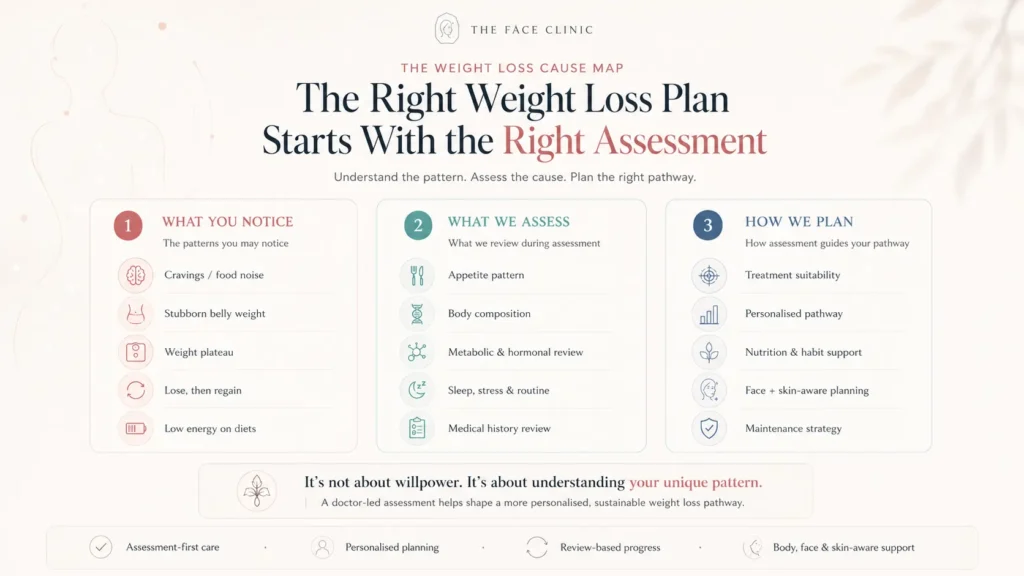
Different weight-management concerns require different interventions.
At The Face Clinic, the consultation process helps distinguish between overall weight reduction, localized body-fat concerns and situations where additional medical investigation or specialist assessment may be appropriate.
Lifestyle measures remain an important foundation of sustainable weight management.
Depending on individual needs, a weight-management plan may address:
The objective is to establish practical, sustainable changes rather than relying on extreme short-term diets.
Structured programmes can provide guidance, monitoring and support, although the level of professional involvement required varies between individuals.
The National Institute of Diabetes and Digestive and Kidney Diseases provides guidance on choosing a structured weight-loss programme, including the importance of realistic goals, professional support and long-term maintenance.
Some people want to reduce fat in a specific area rather than lose overall body weight. Non-invasive body contouring may suit selected patients after assessment, but it does not treat obesity and is not a substitute for weight management. Read more about non-surgical body contouring in Delhi.
For further information, see the US FDA’s guidance on non-invasive body-contouring technologies.
For some individuals, medical assessment may identify circumstances in which prescription weight-management treatment deserves consideration.
Certain prescription medicines involving GLP-1 receptor activity, including semaglutide-based treatments, and dual GIP/GLP-1 receptor agonists such as tirzepatide, may be relevant to appropriately selected patients.
These medicines have specific indications, contraindications, precautions and potential adverse effects.
Not every medication or brand has the same approved indication, and treatment must follow applicable regulatory requirements and individual clinical assessment.
Medication-assisted weight management may also require attention to nutritional adequacy, potential loss of lean mass, treatment tolerability and longer-term maintenance.
Prescription medicines should not be started, adjusted or discontinued without appropriate medical guidance.
The suitability of medication is determined through clinical assessment, with additional investigations or specialist input where required.
For GLP-1 medication eligibility, specialist evaluation and follow-up, see our GLP-1 weight loss treatment page.
Although non-surgical weight management and body contouring are sometimes discussed together, they address different concerns.
Overall weight management | Non-invasive body contouring | |
Primary objective | Manage excess body weight and associated health concerns | Change the appearance of selected body areas |
Approach | Lifestyle measures, with medical treatment where indicated | Suitable non-invasive, device-based procedures |
Assessment | Weight history, medical factors, body composition and goals | Localized fat distribution, treatment area and procedural suitability |
Follow-up | Progress monitoring and longer-term maintenance | Assessment of treatment response and potential adverse effects |
Important limitation | Outcomes depend on individual circumstances and the treatment selected | Does not treat obesity or provide the health benefits of overall weight loss |
A patient may have both an overall weight-management concern and a separate localized body-contouring concern.
However, this does not mean that both treatment categories are automatically necessary.
The decision should reflect individual clinical priorities, treatment suitability and the patient’s goals.
Dr. Reema Arora is an aesthetic physician with more than 20 years of experience in medical and aesthetic practice.
She previously served as Medical Head – Facial Aesthetics at Allergan India Pvt Ltd and has trained more than 2,000 dermatologists and plastic surgeons across India in injectable and non-surgical aesthetic protocols.
Her approach at The Face Clinic emphasises individual assessment, realistic expectations and treatment planning according to the patient’s clinical and aesthetic concerns.
In the context of non-surgical weight management, consultation helps distinguish between concerns involving overall body weight, localized fat and conditions that may require additional medical evaluation.
Where assessment identifies concerns requiring specialist evaluation, including relevant endocrine or metabolic conditions, appropriate investigations or referral may be recommended.
Prescription weight-management treatment is considered only within applicable clinical, regulatory and professional requirements.
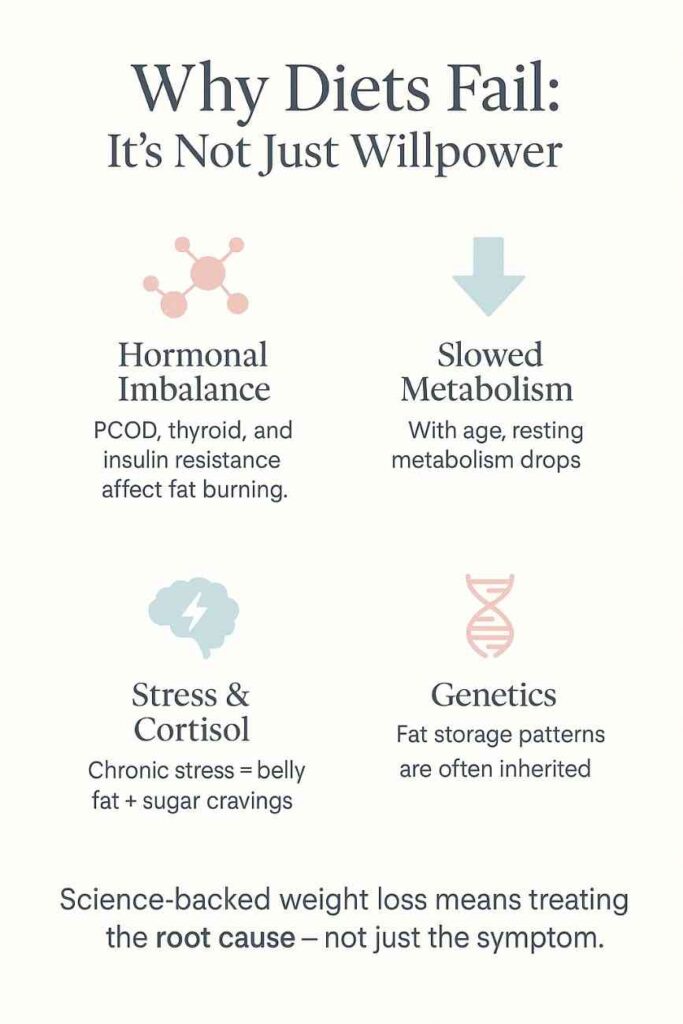
Body weight can be influenced by several factors, including eating patterns, physical activity, sleep, medications, genetics, age and certain medical conditions.
Someone concerned about localized fat may have different treatment needs from a patient experiencing persistent weight gain or a suspected metabolic disorder.
A consultation may therefore consider:
The purpose is to identify an appropriate direction rather than recommend the same treatment to every patient.
The CDC discusses the importance of medical history, lifestyle factors and realistic planning in its guidance on steps for losing weight.
A non-surgical weight-management consultation may be appropriate if you:
Not everyone seeking non-surgical weight loss requires medication or a procedure.
Equally, non-surgical treatment is not necessarily the most appropriate option for every medical circumstance.
Patients with unexplained weight changes, suspected endocrine disorders or significant weight-related health conditions may require further evaluation or specialist referral.
Your consultation begins with a discussion of your concerns, relevant health history, previous weight-management efforts and expectations.
The assessment helps distinguish between overall weight-management needs, localized fat concerns and situations requiring further medical evaluation.
Following assessment, the doctor discusses which treatment category may be appropriate.
Depending on your circumstances, this may involve lifestyle-focused guidance, consideration of a suitable non-invasive body-contouring procedure, assessment for medical weight-management treatment or referral for further evaluation.
A procedure or prescription is not assumed before consultation.
The treatment pathway should reflect the intervention genuinely required.
Follow-up requirements depend on the treatment selected.
Lifestyle-based weight management may require periodic review of eating patterns, physical activity and weight-management progress.
Medication-assisted treatment requires monitoring appropriate to the prescribed medicine and individual clinical circumstances.
Body-contouring procedures require assessment of the treatment response and any treatment-related complications.
Long-term weight management may also require continued attention to lifestyle habits and other relevant health factors.
For general guidance on maintaining progress after weight loss, see the CDC’s recommendations for keeping weight off.
Significant weight reduction may sometimes affect facial appearance.
Some people notice hollow cheeks, more prominent under-eye shadows, changes in facial fullness or increased visibility of loose facial skin.
These concerns are sometimes described as Ozempic face or Mounjaro face.
However, similar changes can occur following substantial weight loss through other methods. They are not an inevitable consequence of medication-assisted treatment.
At The Face Clinic, patients concerned about facial changes following weight loss can undergo an individualised aesthetic assessment.
The assessment may consider whether the predominant concern involves facial volume loss, skin laxity, tissue descent or changes in skin quality.
Aesthetic treatment is not automatically necessary. Where appropriate, its timing and selection should reflect the patient’s anatomy, medical suitability and stage of weight loss.
For further information, read our Ozempic Face and facial restoration after weight loss guide.
The cost of non-surgical weight loss treatment in Delhi depends on the approach recommended following individual assessment.
Lifestyle-based weight management, medically supervised treatment and non-invasive body contouring have different cost structures.
The consultation fee at The Face Clinic is ₹1,500.
Where applicable, the total expense may depend on:
There is no single cost applicable to every patient.
The recommended treatment pathway and its associated expenses should be discussed after assessment.
For medication-specific pricing, see our GLP-1 injection prices and treatment costs in India guide.
Treatment costs should reflect the intervention actually required rather than a predetermined weight-loss package.
Patients comparing weight loss clinics in Delhi should understand whether a provider focuses on overall weight management, localized body contouring or both.
At The Face Clinic, the initial assessment is intended to distinguish these concerns before an appropriate treatment pathway is discussed.
The approach focuses on five considerations.
The starting point is understanding the patient’s concern, medical background and expectations.
Lifestyle-based measures, medically supervised treatment and body-contouring procedures serve different purposes.
Recommendations should reflect the concern being addressed.
The potential benefits, limitations and uncertainties of the proposed intervention should be explained before treatment.
A non-invasive aesthetic procedure should not be presented as equivalent to medical treatment for overweight or obesity.
Where further clinical evaluation is required, this should take priority over elective treatment.
Monitoring and follow-up should be appropriate to the treatment selected and the patient’s circumstances.
The Face Clinic is located in Hauz Khas, South Delhi, and provides consultations by appointment.
Looking for a weight loss doctor near you? The Face Clinic is in Hauz Khas, South Delhi, close to Green Park, Greater Kailash, Saket and Defence Colony.
Yes. Non-surgical weight management may involve lifestyle-based measures and, where clinically appropriate, medically supervised treatment.
The suitable approach depends on individual health, weight-related concerns and treatment goals.
Non-invasive body contouring is a different category intended to address selected aesthetic concerns rather than overall weight loss.
Non-surgical weight management focuses on overall body weight and related health considerations.
Body contouring is intended to change the appearance of selected body areas and is not a treatment for obesity.
Safety depends on the treatment being considered, individual medical circumstances and appropriate clinical assessment.
Different interventions have different risks, contraindications and follow-up requirements.
No medication or procedure is universally appropriate for every patient.
Not necessarily.
Lifestyle-based approaches do not require injections.
Some medically supervised treatment options involve prescription medication, while certain body-contouring treatments use non-invasive technologies.
The appropriate approach depends on individual needs and clinical suitability.
Not in every case.
The appropriate treatment depends on the degree of excess weight, associated health conditions, previous treatment response and individual medical circumstances.
Some patients may benefit from specialist obesity-medicine or bariatric surgical evaluation.
The total cost depends on the treatment recommended, its duration and the follow-up required.
The consultation fee at The Face Clinic is ₹1,500.
Additional treatment expenses are discussed after individual assessment.
There is no universal timeline.
Changes in body weight depend on starting weight, treatment approach, overall health and individual response.
Body-contouring outcomes follow different timelines and should not be interpreted as equivalent to overall weight reduction.
Promises of guaranteed or extremely rapid weight loss should be approached cautiously.
The Face Clinic is located in Hauz Khas, New Delhi.
The location is accessible to patients from Green Park, Safdarjung Enclave, Panchsheel Park, Defence Colony, Greater Kailash and nearby South Delhi neighbourhoods.
Consultations are available by appointment.
If you are exploring non-surgical weight loss in Delhi, a consultation can help determine whether your primary concern involves overall weight management, localized body fat or another issue requiring medical evaluation.
At The Face Clinic, Dr. Reema Arora provides individual consultations to discuss your concerns, relevant medical background and available treatment pathways.
The objective is to establish which approach may be appropriate for you — including whether additional medical assessment is necessary.
The Face Clinic — Dr. Reema Arora
LGF, C-36, Chaudhary Dilip Singh Marg Hauz Khas Market New Delhi – 110016
Clinic hours: Monday–Saturday, 10 AM–6 PM Consultation fee: ₹1,500 Consultations: By prior appointment
Book a Consultation with Dr. Reema Arora
Call: +91 99580 73900 WhatsApp: Contact The Face Clinic
Individual suitability, treatment response and outcomes vary. All interventions are subject to appropriate clinical assessment. Prescription medicines and procedural treatments have specific risks and limitations.
All treatments are subject to individual variation. Outcomes are determined following clinical evaluation by a qualified doctor.