- Home
- Services
- Non-Surgical Hair Restoration Treatments
Have Any Question?
Don’t think much, have a query? Call us now!
Connect with us
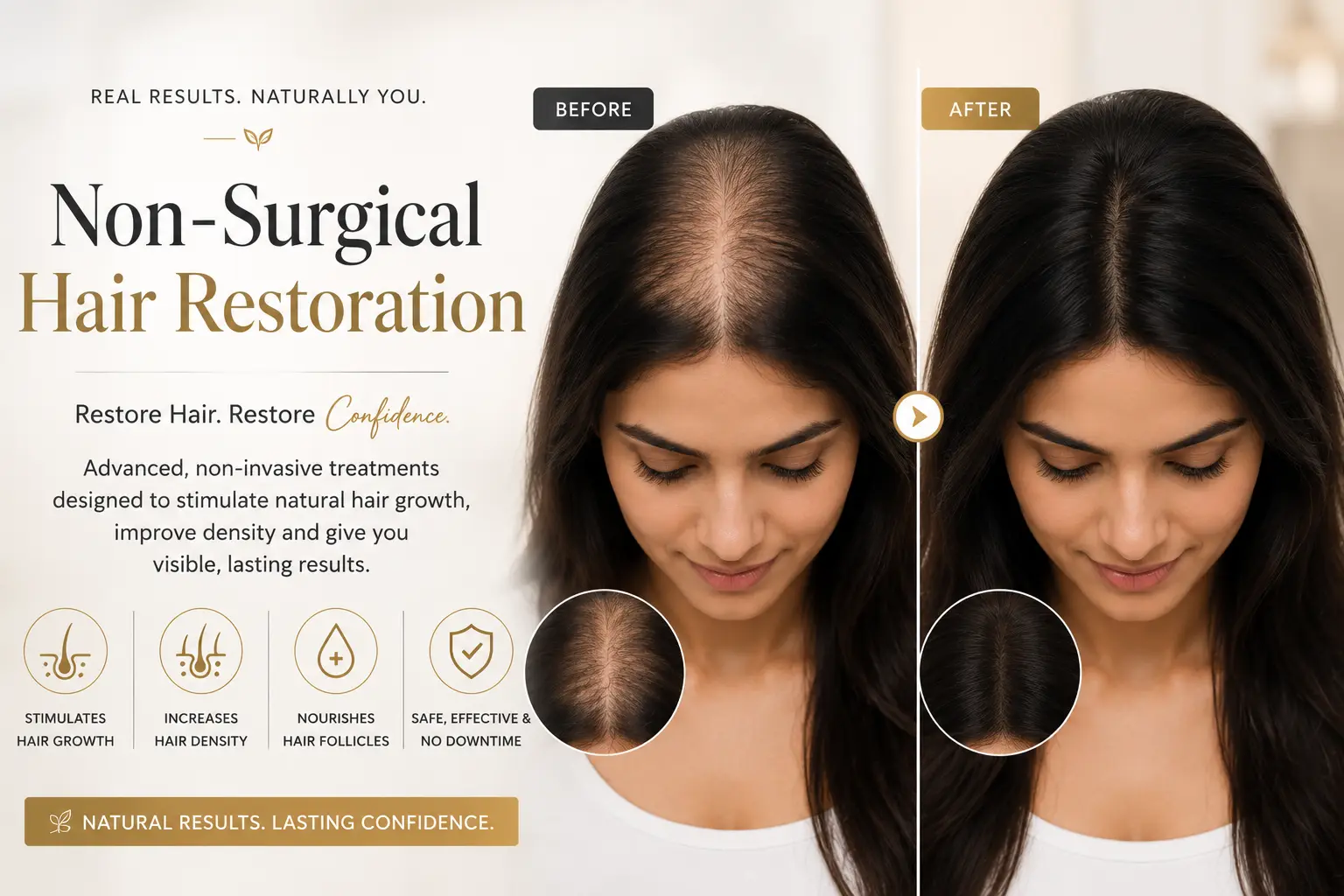
Images are for illustrative purposes only and may not represent actual patients or outcomes. Individual results vary based on anatomy, clinical assessment, and personalised treatment planning.
Non-Surgical Hair Restoration in Delhi: PRP, GFC & Hair Loss Treatments
Hair thinning, excessive shedding and reduced hair density are common concerns among men and women. However, not every type of hair loss requires surgery, and not every patient needs the same treatment.
At The Face Clinic in Hauz Khas, South Delhi, Dr. Reema Arora offers personalised consultations for patients exploring non-surgical hair restoration in Delhi, including PRP hair treatment, GFC therapy and selected adjunctive procedures.
The approach begins with understanding the pattern and possible causes of hair loss before considering treatment. Depending on the diagnosis, some patients may benefit from established medical therapies, selected scalp procedures or a combination of approaches.
For suitable candidates, non-surgical treatments may help manage progressive thinning or improve hair density. The likelihood of improvement depends on the underlying condition, the viability of existing follicles and individual response.
The focus is on choosing the right treatment for your hair-loss concerns—not promising a particular degree of regrowth.

Images are for illustrative purposes only and may not represent actual patients or outcomes. Individual results vary based on anatomy, clinical assessment, and personalised treatment planning.
What Is Non-Surgical Hair Restoration?
Non-surgical hair restoration includes medical treatments and procedures used to manage hair loss, preserve existing hair or potentially improve hair density without surgically transplanting follicles.
Unlike hair transplantation, which transfers follicles from a donor area to areas of hair loss, most non-surgical approaches act on existing follicles or address factors contributing to shedding and thinning.
Treatment options may include:
- PRP hair treatment: A preparation of platelet-rich plasma derived from the patient’s own blood.
- GFC hair treatment: A concentrated preparation of growth factors obtained from blood components.
- Medical hair-loss treatment: Diagnosis-specific medicines, such as topical minoxidil or other appropriately prescribed treatments.
- Adjunctive scalp procedures: Selected treatments considered according to their evidence, safety and individual suitability.
- Combination hair restoration plans: Medical and procedural treatments used together where clinically appropriate.
The term non-surgical should not be confused with non-invasive. PRP, GFC and similar scalp procedures involve injections and carry procedure-related risks.
How Is Hair Restoration Without Surgery Different From a Hair Transplant?
A hair transplant relocates viable follicles to an area affected by hair loss. Non-surgical treatments do not replace follicles that have been permanently lost.
For patients with early thinning and functioning follicles, certain non-surgical treatments may be appropriate. In advanced baldness, however, the potential for meaningful regrowth may be limited.
A hair treatment without a transplant should therefore be considered according to the diagnosis and degree of follicular loss rather than viewed as a universal substitute for surgery.
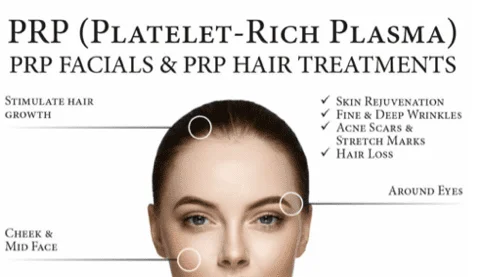
Images are for illustrative purposes only and may not represent actual patients or outcomes. Individual results vary based on anatomy, clinical assessment, and personalised treatment planning.
Why Consider Non-Surgical Hair Restoration Treatments?
Patients may explore non-surgical hair loss treatment for several reasons:
- Management of early hair thinning
Some medical treatments and selected procedures may help maintain existing hair or improve density in patients with suitable forms of pattern hair loss.
- Alternatives to surgery
Patients who are not ready for a hair transplant, do not require one or prefer to explore non-surgical options can discuss appropriate alternatives.
- Individualised treatment
Different types of hair loss require different approaches. A diagnosis-led plan can help avoid unnecessary procedures.
- Outpatient procedures and recovery
Many scalp treatments can be performed without surgical incisions or stitches. However, temporary discomfort, bruising, swelling and other adverse effects remain possible.
- Ongoing hair-loss management
Because some types of hair loss are progressive, treatment may focus on preservation, monitoring and long-term management rather than a one-time intervention.
The value of non-surgical hair restoration lies in selecting an appropriate treatment—not simply in choosing the newest technology.
Understanding the Cause of Hair Loss
Hair loss can develop for genetic, hormonal, nutritional, inflammatory or medical reasons. Identifying the underlying condition is essential before selecting a hair regrowth treatment.
Male and Female Pattern Hair Loss
Androgenetic alopecia is a common cause of progressive thinning.
Men frequently experience recession around the temples or thinning at the crown. Women may develop widening of the central parting or a gradual reduction in overall density.
Established medical treatments can help some patients manage this condition. PRP may be considered as an adjunct in selected cases.
Telogen Effluvium and Excessive Hair Shedding
Telogen effluvium may develop after illness, childbirth, major stress, rapid weight loss, nutritional disturbances or medication changes.
Management typically focuses on identifying the trigger, addressing reversible causes and monitoring recovery.
Injectable treatment is not automatically required.
Hormonal and Nutritional Causes
Thyroid disorders, iron deficiency, hormonal changes and other medical factors can contribute to hair thinning.
Where clinically indicated, investigations and appropriate medical treatment may be more useful than proceeding directly to scalp injections.
Inflammatory or Autoimmune Hair Loss
Sudden patchy hair loss, scalp redness, scaling, pain or suspected scarring alopecia warrants dermatological assessment.
These conditions may require treatment directed at the underlying disease rather than routine aesthetic hair-restoration procedures.

Images are for illustrative purposes only and may not represent actual patients or outcomes. Individual results vary based on anatomy, clinical assessment, and personalised treatment planning.
Non-Surgical Hair Restoration Treatments Available in Delhi
The Face Clinic discusses a range of non-surgical hair-restoration approaches, with treatment selection based on clinical suitability and the available evidence.
Not all procedures have the same level of scientific support. PRP has been studied more extensively for pattern hair loss than GFC and several emerging regenerative treatments.
1. PRP Hair Treatment in Delhi
Platelet-rich plasma (PRP) is prepared from a sample of the patient’s blood, which is processed to concentrate platelets before the preparation is injected into selected areas of the scalp.
Platelets contain growth factors involved in cellular signalling and tissue responses.
Clinical studies suggest that PRP may improve hair density in some patients with androgenetic alopecia. However, differences in preparation methods, treatment protocols and study quality make individual outcomes difficult to predict.
PRP may be considered for suitable patients with early or moderate pattern hair loss where viable follicles remain.
Treatment may involve multiple sessions, followed by reassessment. PRP is not a cure for genetic hair loss and cannot reliably restore follicles that have been permanently lost.
Related reading: PRF treatment for skin and hair rejuvenation.
PRF is a related platelet-based preparation, but its composition and supporting evidence differ from PRP.
2. GFC Hair Treatment in Delhi
Growth Factor Concentrate (GFC) is an autologous preparation that uses growth factors obtained from components of the patient’s own blood.
It is used in selected hair-restoration protocols with the aim of supporting existing hair follicles.
Early clinical studies have explored the potential of GFC for hair thinning and pattern hair loss. However, standardised protocols and large comparative studies remain limited.
GFC may be discussed when:
- Hair thinning has been appropriately assessed.
- Viable follicles remain.
- The clinician considers an adjunctive procedure suitable.
- The patient understands the evidence, limitations and possible risks.
GFC should not be assumed to be superior to PRP simply because it uses a different concentration or preparation method.
Learn more: GFC hair treatment in Delhi — benefits, cost and safety.
3. Exosome-Based Hair Therapy
Exosomes are extracellular vesicles involved in communication between cells. Their potential role in tissue repair and hair-follicle biology is an area of ongoing scientific investigation.
Exosome-based hair therapy is frequently discussed in regenerative aesthetics, but the clinical evidence for hair restoration remains preliminary.
Reliable treatment protocols, long-term safety and predictable hair-regrowth outcomes have not been established.
The US FDA has stated that no exosome products are FDA-approved. Product-specific regulatory requirements in India must be considered separately.
Exosome products should not be presented as proven hair-regrowth treatments or as interchangeable with established therapies.
Further reading: Exosome treatment for hair loss — potential applications and limitations.
4. Polynucleotide and PDRN Hair Treatments
Polynucleotides and PDRN are nucleic-acid-derived preparations being investigated in regenerative and tissue-support applications.
Their possible role in scalp treatment and hair-follicle biology has attracted research interest, but evidence supporting consistent hair regrowth remains limited.
Formulations differ, and the terms polynucleotide and PDRN should not be treated as automatically equivalent.
Any proposed use requires consideration of the individual product, supporting research, safety profile and regulatory status.
Related reading: Polynucleotide treatment for hair loss.
5. Peptide-Based Scalp Mesotherapy
Some scalp mesotherapy preparations contain peptides, vitamins or other ingredients intended for hair and scalp applications.
Formulations vary, and high-quality evidence demonstrating reliable hair regrowth is limited.
These treatments should not be regarded as substitutes for established medical management of androgenetic alopecia or other diagnosed hair-loss conditions.
Where considered, the treatment plan should account for product composition, clinical evidence, safety and suitability.
6. Combination Hair Restoration Protocols
In selected cases, medical treatment and appropriate scalp procedures may be used together.
For example, PRP may be discussed as an adjunct to established medical treatment for pattern hair loss.
However, combining multiple procedures does not necessarily improve results. Each component should have a clear clinical rationale, and treatment plans should be reassessed if meaningful benefit is not observed.

Images are for illustrative purposes only and may not represent actual patients or outcomes. Individual results vary based on anatomy, clinical assessment, and personalised treatment planning.
Which Hair Restoration Treatment Is Most Suitable for You?
There is no single best non-surgical hair loss treatment for every patient.
The table below illustrates why treatment choice depends on diagnosis rather than procedure popularity.
Hair-loss concern | Appropriate clinical considerations |
Early male pattern hair loss | Established medical treatment; PRP as a possible adjunct |
Female pattern hair loss | Diagnosis-specific medical management; selected adjunctive procedures |
Diffuse shedding after illness or stress | Identify the trigger, address reversible factors and monitor |
Hair loss related to nutritional deficiencies | Investigate and correct the underlying deficiency |
Hair loss associated with scalp inflammation | Dermatological evaluation and condition-specific management |
Advanced baldness | Assess follicular loss and suitability for transplantation or other management |
A consultation helps determine whether the priority should be medical treatment, a scalp procedure, further investigation or referral.
Who Is a Suitable Candidate for Non-Surgical Hair Restoration?
Non-surgical treatments may be considered for men and women experiencing suitable forms of hair thinning, particularly when functioning follicles remain.
You May Be a Candidate If:
- You have early or moderate pattern hair loss.
- You are noticing gradual thinning at the temples, crown or central parting.
- You wish to explore appropriate non-surgical options before considering transplantation.
- You understand the expected limitations and possible treatment risks.
- Your clinical assessment supports the selected procedure.
When Might Treatment Need to Be Deferred?
Further evaluation may be appropriate in cases involving:
- Sudden or unexplained hair loss.
- Active scalp infection or inflammation.
- Untreated nutritional or endocrine disorders.
- Suspected autoimmune or scarring alopecia.
- Medical conditions or medication use that increase procedural risk.
Advanced follicular loss may also limit the benefit of procedures designed to support existing hair.
Hair Loss Treatment for Women in Delhi
Women may experience hair thinning due to female pattern hair loss, hormonal changes, pregnancy-related shedding, PCOS, nutritional deficiencies, thyroid disorders or other medical conditions.
The presentation often differs from male pattern baldness, with a gradual reduction in hair density or widening of the parting.
At The Face Clinic, women considering non-surgical hair restoration are assessed individually to determine whether medical management, further investigation or a selected procedure may be appropriate.
Female Pattern Hair Loss
Medical treatments may help some women with progressive pattern thinning. PRP can be considered as an adjunct in selected cases.
Postpartum Hair Shedding
Temporary shedding after childbirth is common and often improves over time. Persistent or unusual hair loss should be evaluated, but routine injectable treatment is not always necessary.
PCOS and Hormonal Hair Thinning
Women with PCOS or other hormonal concerns may require medical management directed at the underlying condition.
Scalp procedures do not replace appropriate endocrine care.
Hair Thinning Around Menopause
Changes in hair density around menopause may reflect several factors, including female pattern hair loss.
Treatment recommendations should be based on the diagnosis and individual medical history.
For women searching for hair loss treatment in Delhi, identifying the cause is an essential part of choosing appropriate care.
Hair Loss Treatment for Men in Delhi
Male pattern hair loss frequently begins with thinning at the temples, recession of the hairline or reduced density at the crown.
For suitable patients, established treatments such as topical minoxidil and appropriately prescribed finasteride may help slow progression or improve hair growth.
These medications have contraindications and possible adverse effects, which should be considered during clinical assessment.
PRP or another adjunctive procedure may be discussed depending on the severity of thinning and the patient’s treatment goals.
Men with advanced baldness may have limited benefit from non-surgical regrowth procedures and may require a hair-transplant assessment.
Why Early Assessment of Hair Loss Matters
Hair loss can progress gradually, and early assessment may help identify causes that are treatable or reversible.
Consider an evaluation if you notice:
- Persistent or increased shedding.
- Progressive thinning at the temples or crown.
- Widening of the central hair parting.
- A noticeable reduction in overall density.
- Patchy loss or scalp inflammation.
- Hair thinning associated with illness, medication changes or significant weight loss.
An early diagnosis can help guide treatment and avoid unnecessary procedures.
However, early intervention does not guarantee the prevention or reversal of hair loss.
What Happens During a Hair Restoration Consultation?
At The Face Clinic, non-surgical hair-restoration planning begins with individual assessment.
Step 1 — Understanding Your Hair-Loss Concerns
The consultation includes discussion of the pattern and duration of hair loss, family history, relevant medical conditions, medications and previous treatments.
Step 2 — Scalp Assessment
The hair-loss pattern and scalp condition are reviewed. Additional investigations, trichoscopy or dermatological referral may be recommended when appropriate.
Step 3 — Reviewing Treatment Options
Suitable medical and procedural options are discussed, including their evidence, expected limitations, risks and costs.
Step 4 — Personalised Treatment Planning
If a procedure is considered appropriate, the proposed treatment schedule, preparation, aftercare and follow-up requirements are explained.
Step 5 — Monitoring Response
Progress may be reviewed using clinical examination, standardised photography or other relevant measurements.
The plan may be modified if the response is limited or if additional medical assessment is needed.
When Can You Expect Results from Non-Surgical Hair Restoration?
Hair growth follows a biological cycle, and improvements generally require time to assess.
For established medical treatments and selected PRP protocols, clinicians may evaluate changes over several months.
Some patients may notice reduced shedding or an improvement in hair density, while others may experience little or no measurable benefit.
What Influences Treatment Results?
Important factors include:
- Type and severity of hair loss.
- Duration of thinning.
- Viability of existing follicles.
- Treatment selection and protocol.
- Concurrent medical conditions.
- Individual biological response.
How Are Results Assessed?
Clinical examination, standardised scalp photographs or hair-density measurements may be used to monitor progress.
Photographs should be taken under comparable lighting, hair length and camera conditions to help avoid misleading comparisons.
Before-and-after photographs demonstrate individual experiences and should not be interpreted as guarantees.
Will Maintenance Treatment Be Needed?
Some forms of hair loss require ongoing management. Maintenance requirements depend on the diagnosis, selected treatment and individual response.
These should be discussed before treatment begins.
Is Non-Surgical Hair Restoration Safe?
Safety depends on the selected treatment, medical history, product used and procedural technique.
Potential risks of injectable scalp procedures include pain, swelling, bruising, bleeding, infection and other treatment-specific complications.
PRP and autologous GFC are prepared from the patient’s own blood, but this does not eliminate procedural risks.
For emerging treatments such as exosome-based preparations, additional uncertainties may exist regarding product quality, clinical evidence and long-term safety.
Patients should understand the expected benefits, limitations and potential risks before proceeding with any treatment.
Non-Surgical Hair Restoration Treatment Cost in Delhi & India
The cost of non-surgical hair restoration in Delhi depends on the procedure selected, treatment area, preparation required and number of sessions proposed.
Patients comparing hair regrowth treatment costs should consider the clinical evidence supporting a procedure as well as its price.
Indicative Hair Restoration Costs at The Face Clinic
Treatment | Indicative price per session |
PRP Hair Treatment | ₹12,000–₹15,000 |
GFC Hair Treatment | ₹15,000–₹18,000 |
Polynucleotide-Based Hair Treatment | ₹20,000–₹30,000 |
Peptide-Based Scalp Mesotherapy | ₹6,500–₹14,000 |
Customised Combination Protocols | Based on individual treatment planning |
These are indicative clinic-published price ranges, subject to confirmation at consultation. Pricing does not establish clinical suitability, effectiveness or product regulatory authorisation.
Exosome-based hair therapy is not included in the standard treatment-price table because clinical evidence and product-specific regulatory status require particular scrutiny.
What Determines Hair Restoration Treatment Cost?
The final cost may vary according to:
- The diagnosis and treatment selected.
- The extent of scalp treatment required.
- The product or preparation used.
- The proposed number of sessions.
- Additional investigations or medical treatment.
- Follow-up and maintenance requirements.
The clinic provides an individual cost estimate after consultation.
For more information about a specific procedure, see GFC hair treatment cost in Delhi.
Why Choose The Face Clinic for Hair Restoration in South Delhi?
The Face Clinic is a doctor-led aesthetic clinic located in Hauz Khas, South Delhi.
Its Founder and Medical Director, Dr. Reema Arora, has more than 20 years of experience in facial aesthetics and medical training.
She graduated from St. John’s Medical College, Bangalore, and holds an MSc in Facial Aesthetics from Anglia Ruskin University, UK. She previously served as Medical Head – Facial Aesthetics at Allergan India and has extensive experience in aesthetic medicine education and training.
Our Approach to Hair Restoration
Individual assessment
Treatment planning begins with understanding the patient’s hair-loss history and clinical findings.
Evidence-informed recommendations
The limitations of established and emerging treatments are discussed rather than presenting all procedures as equally effective.
Personalised treatment planning
Options are considered according to the diagnosis, medical history, treatment suitability and patient preferences.
Informed consent and follow-up
Patients receive information about procedural risks, possible benefits, costs and follow-up requirements.
South Delhi location
The clinic is located in Hauz Khas and serves patients from Green Park, Greater Kailash, Defence Colony, Saket and other areas of Delhi NCR.
Learn more about Dr. Reema Arora’s qualifications and experience.
Frequently Asked Questions About Non-Surgical Hair Restoration
What is non-surgical hair restoration?
Non-surgical hair restoration includes medical treatments and selected procedures used to manage hair loss or potentially improve density without transplanting hair follicles.
Can hair regrow without a hair transplant?
Yes. Some types of hair loss may improve without surgery, particularly when follicles remain viable or the underlying condition is reversible. Results depend on the diagnosis and treatment.
Which is the best non-surgical hair loss treatment?
There is no universally best treatment. Established medical therapies are important for several forms of pattern hair loss, while PRP may be considered as an adjunct in selected patients.
Does PRP help with hair regrowth?
Clinical research suggests PRP may improve hair density in some patients with androgenetic alopecia. However, treatment responses and study findings vary.
Is GFC better than PRP?
There is insufficient high-quality comparative evidence to conclude that GFC is consistently more effective than PRP. Both treatments have different preparation methods and evidence bases.
Are exosomes effective for hair restoration?
Exosome-based treatments are being investigated, but clinical evidence is insufficient to establish predictable hair-regrowth benefits or long-term safety.
What is the cost of non-surgical hair restoration in Delhi?
At The Face Clinic, the currently published indicative PRP price is ₹12,000–₹15,000 per session, while GFC is listed at ₹15,000–₹18,000 per session. Final pricing depends on the individual treatment plan.
How many sessions are required?
Session requirements vary by procedure, diagnosis and response. Completing a particular number of sessions does not guarantee improvement.
Is non-surgical hair restoration painful?
Injectable procedures may cause temporary discomfort, tenderness, swelling or bruising. Individual experiences vary.
Can women benefit from non-surgical hair restoration?
Some women with appropriate forms of hair thinning may benefit from medical treatment or selected procedures. The underlying cause should be evaluated first.
Can non-surgical hair restoration replace a hair transplant?
Not in every case. Where follicles have been permanently lost, non-surgical procedures may provide limited regrowth, and transplantation may be considered.
Is hair restoration without surgery permanent?
Not necessarily. Progressive conditions such as androgenetic alopecia often require ongoing management, and treatment benefits may not persist without maintenance.
When should I seek medical advice for hair loss?
Seek assessment for persistent shedding, progressive thinning, sudden patchy hair loss or scalp inflammation. Rapidly progressing or potentially scarring hair loss warrants timely dermatological care.
Medical References and Further Reading
Patients can explore the following resources for additional information about hair-loss diagnosis, established treatment options and emerging regenerative approaches.
- American Academy of Dermatology — Hair Loss: Diagnosis and Treatment.
Information about clinical evaluation and treatment selection. - American Academy of Dermatology — Male Pattern Hair Loss Treatment.
Information about medical management and selected procedural approaches. - US FDA — Consumer Alert on Regenerative Medicine Products, Including Exosomes.
US safety and regulatory guidance; Indian requirements must be considered separately.
Considering Non-Surgical Hair Restoration in Delhi?
If you are noticing progressive thinning, increased hair shedding or reduced hair density, a consultation can help you understand the possible causes and available treatment options.
At The Face Clinic in Hauz Khas, Dr. Reema Arora provides personalised guidance on non-surgical hair restoration, including PRP, GFC and other approaches where clinically appropriate.
Your consultation is an opportunity to discuss your concerns, understand which treatments may be suitable, and review their expected benefits, limitations, risks and costs.
The aim is to help you make a well-informed decision—whether that involves an aesthetic procedure, medical management or further investigation.
Book Your Hair Restoration Consultation
Schedule a Consultation with Dr. Reema Arora
The Face Clinic — Dr. Reema Arora
C-36, LGF, Chaudhary Dilip Singh Marg, Hauz Khas Market, New Delhi – 110016
Phone: +91 99580 73900
Clinic Hours: Monday–Saturday, 10:00 AM–6:00 PM
Medical disclaimer: This content is intended for general patient education and does not replace individual medical advice. The evidence, risks, limitations and regulatory status of treatments vary. Not every procedure is suitable for every type of hair loss, and individual outcomes cannot be guaranteed.