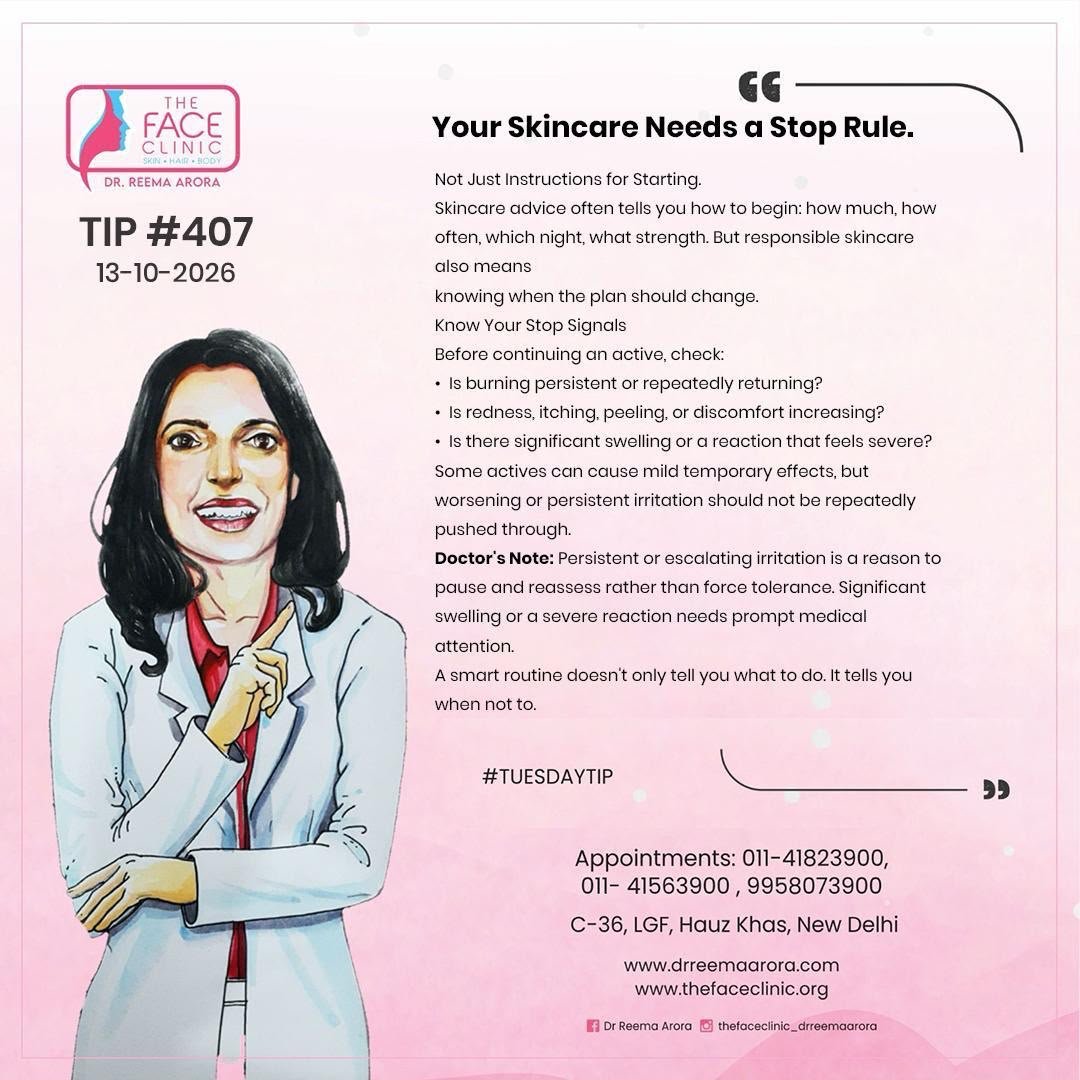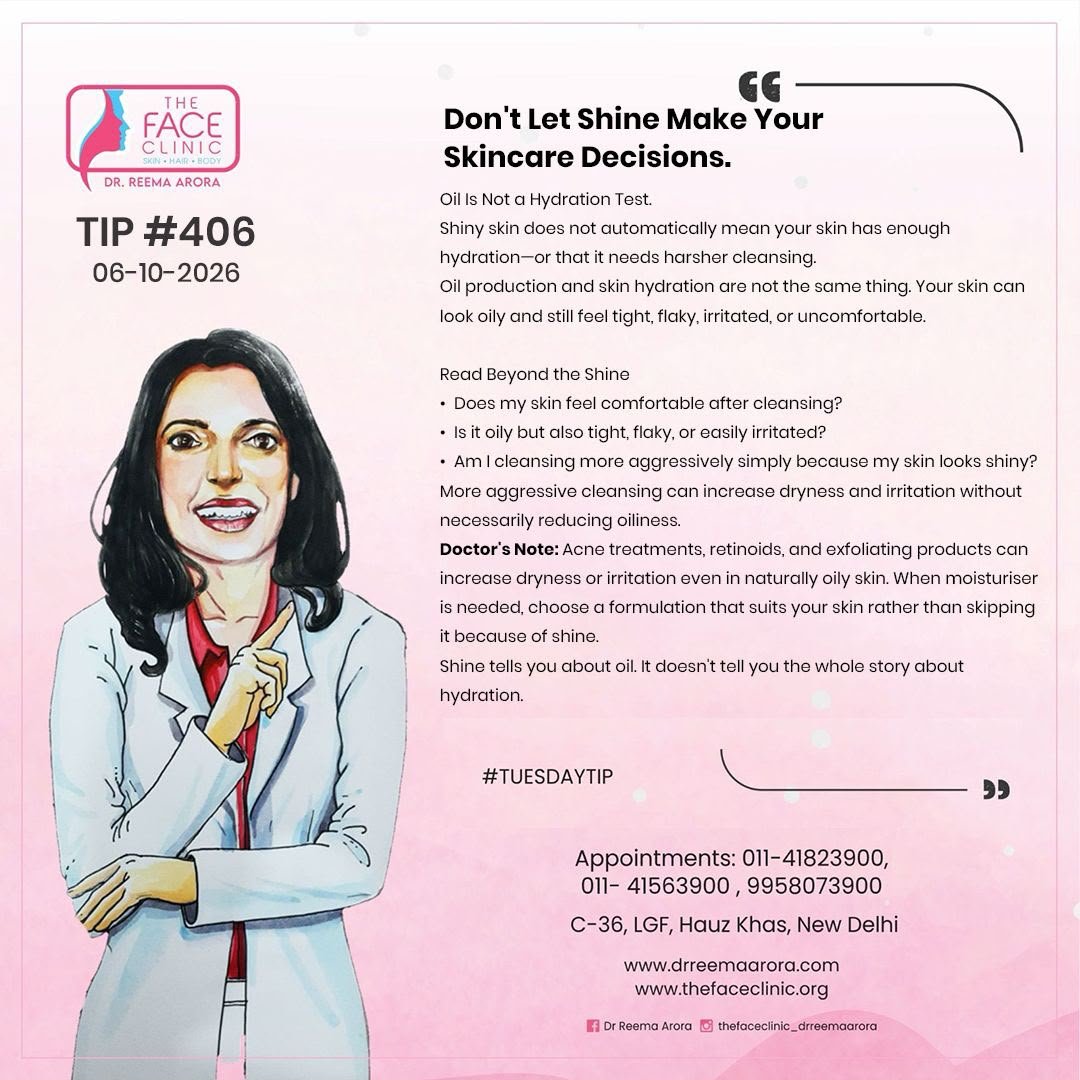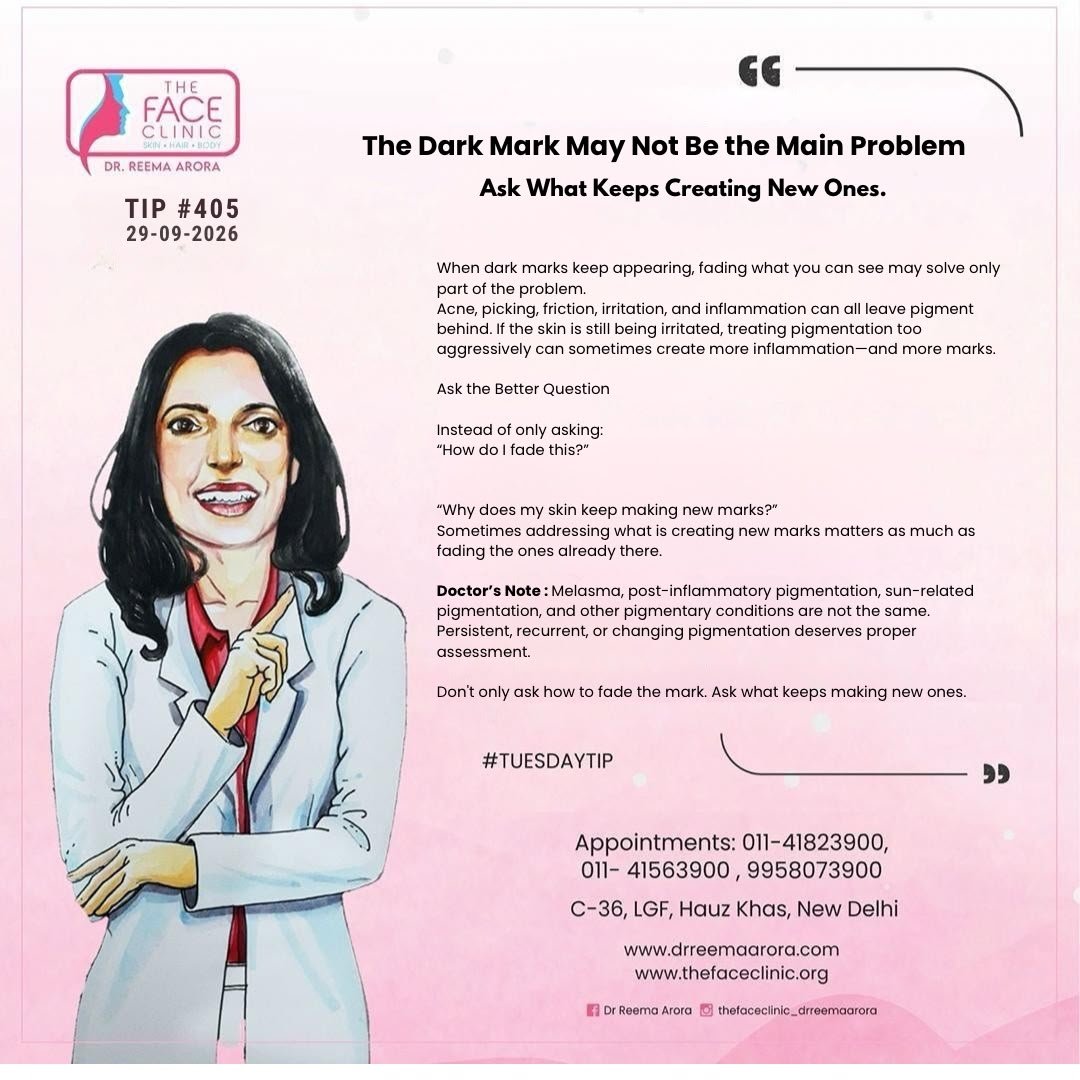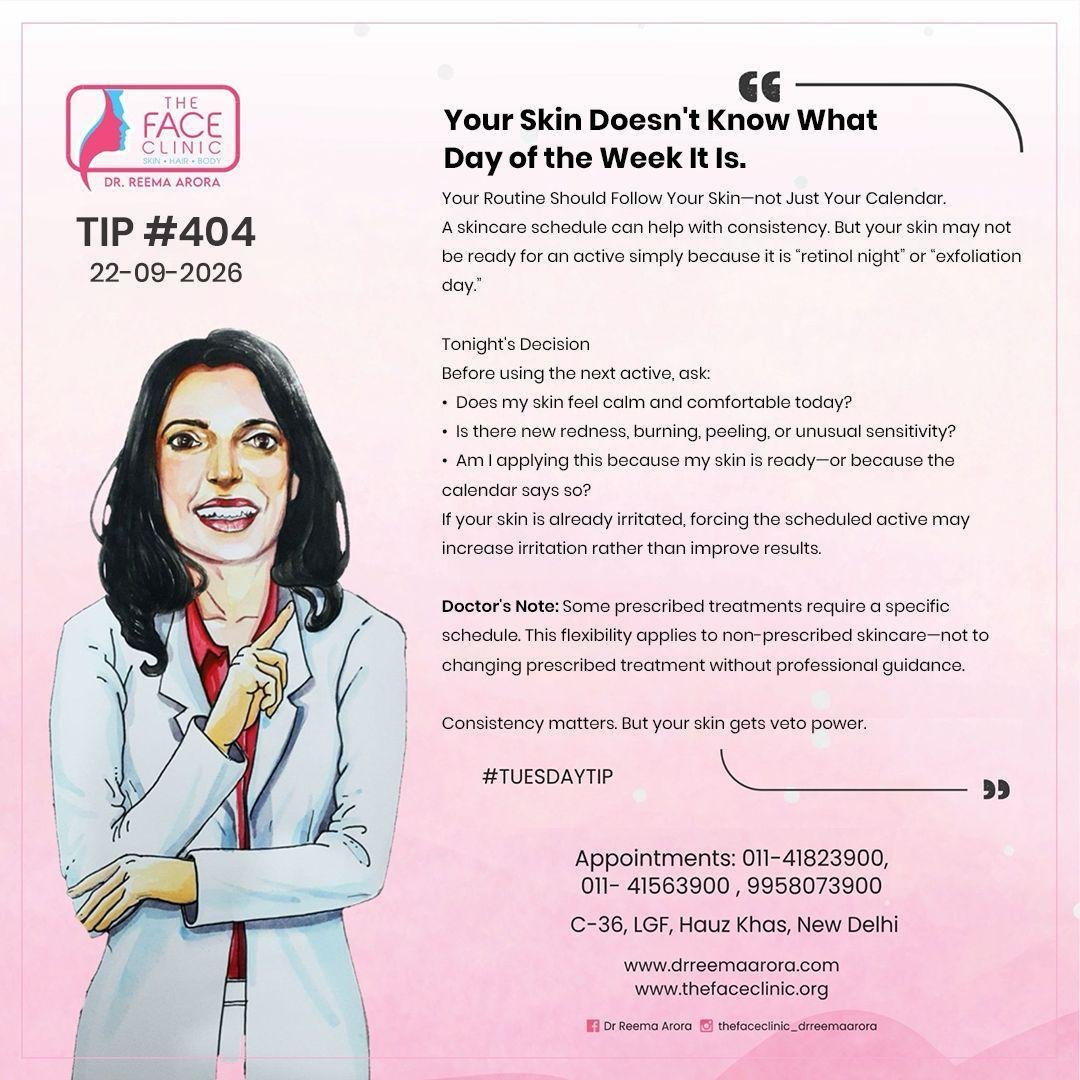
Tuesday Tips new

Tuesday Tip

Glow Naturally, Every Day!

Retinol in Summer—PART 2

The 3S Rule

Slow. Shield. Soothe.
Summer retinol does not need to be aggressive to be effective.

Slow
Lower frequency before higher strength.

Shield
Use broad-spectrum SPF 30+ every morning; reapply when outdoors.

Soothe
Use recovery nights to support the skin barrier.

Retinol works best when your skin can tolerate it consistently.

Doctor Note: In pigment-prone skin, the safest retinol routine is the one your barrier can tolerate consistently.

With retinol, consistency usually outperforms intensity.

Can Sunscreen Replace Moisturiser? Your Skin Barrier Decides

Try the 4-Hour SPF Comfort Test.

Sometimes
But only if your skin barrier stays comfortable

After sunscreen alone, if your skin still feels smooth, calm, and not tight, a hydrating SPF may be enough in the morning.

But if it feels tight, flaky, rough, stinging, dull, or sensitive, your barrier may need moisturiser underneath.

Doctor Note: If sunscreen stings, don’t add more actives. Support the barrier first.

Dry, sensitive, acne-treated, mature, or pigmentation-prone skin should be more careful about skipping moisturiser.

Sunscreen protects.
Moisturiser supports.
Your barrier decides.

When skin feels tight, minimalism has gone too far.

Retinol in Summer— Peeling Is Not Progress

Retinol should not leave your skin burning, raw, or repeatedly flaky. In summer, many people can continue retinol—but not aggressively.

Use it only at night.
Reduce frequency if skin feels sensitive.
Pause if it burns, feels raw, or peeling keeps returning.
Support the barrier on recovery nights.

Use broad-spectrum SPF 30+ every morning; reapply when outdoors. The goal is not to push through irritation. The goal is calm, consistent skin tolerance.

Doctor Note: In pigment-prone skin, irritation can leave marks. Calm, consistent use is safer than forcing tolerance through irritation.

With retinol, resilience is built by restraint, not by irritation.

Not All Neck Lines Are the Same

We often treat the neck as an extension of the face — but it has its own concerns, sensitivities and ageing patterns.

Before choosing a neck cream, first notice what you want to improve.

If the skin looks dry or finely lined, hydration and barrier support may soften the appearance. If it feels rough, dull or sun-exposed, daily sunscreen is often the most valuable “anti-ageing” step — even before a specialised neck cream.

For early texture change or mild crepiness, gentle retinoids, peptides, antioxidants and moisturisers may support gradual improvement. Because the neck can be sensitive, introduce active ingredients slowly.

If the concern looks like looseness, folds, bands or heaviness, skincare can support skin quality — but not fully change deeper ageing patterns.

Expert takeaway: Choose by concern, not hype.

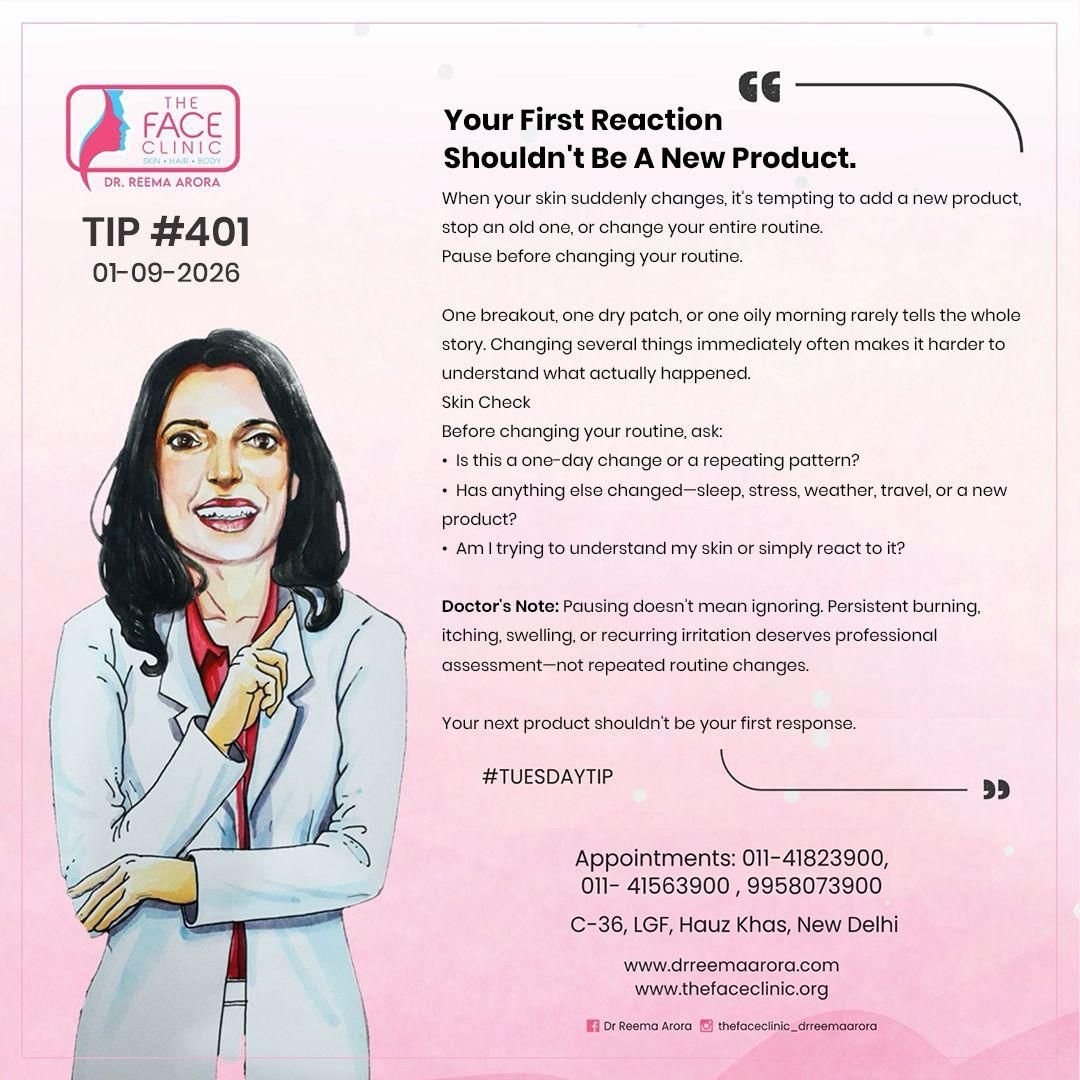
Season Changed? Don’t Panic – Change Your Skincare

Reset the barrier first. Adjust one step at a time.

When the weather changes, your skin may suddenly feel oily, dry, sensitive, bumpy, dull, itchy, or breakout-prone.
Heat, humidity, cold air, pollution, air-conditioning, and indoor heating can all affect the skin barrier.

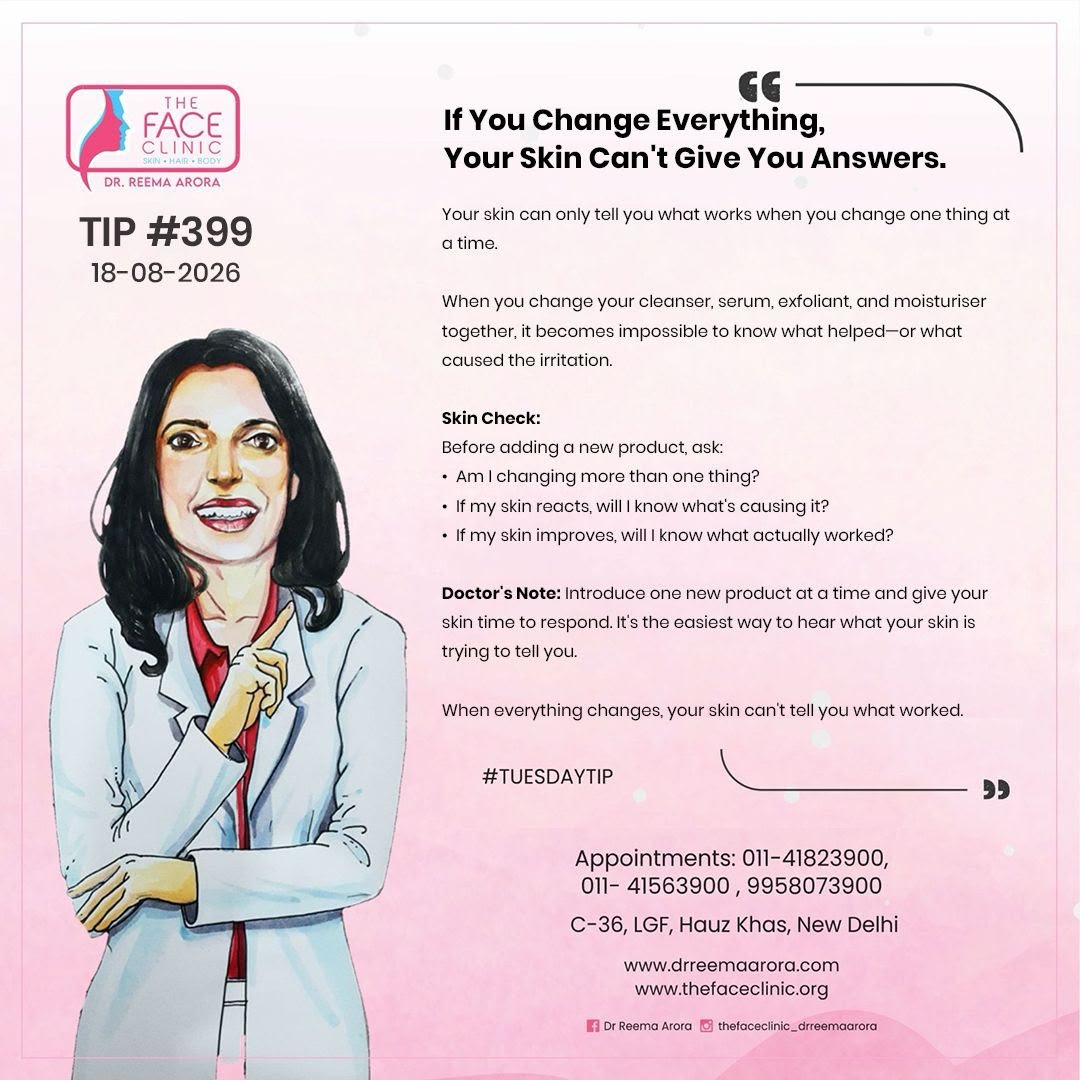
But changing your cleanser, serum, exfoliant, retinol, moisturiser, and sunscreen all at once can make irritation worse — and make it harder to know what actually helped.

Start simple:

  • – Keep the cleanser gentle.
  • – Adjust your moisturiser texture.
  • – Continue sunscreen daily.
  • – Reduce actives if your skin stings, burns, peels, or feels unusually sensitive.
  • – Introduce only one new product at a time.

In pigment-prone skin, irritation and acne flares can also leave marks, so calming the skin early matters.

Seasonal skin needs a careful reset — not a panic overhaul.

If your skin keeps flaring with every season change, get the pattern assessed instead of guessing with products.

Tiny Bump? Don’t Turn It Into a Dark Mark

Not every bump is acne. The cause decides the care.
A small bump on the face may be milia, a clogged pore, an ingrown hair, folliculitis, a skin tag, or a deeper acne cyst — and each one needs a different approach.

Picking, squeezing, scrubbing, or trying DIY removal can worsen inflammation, infection, scarring, and pigmentation. In pigment-prone skin, the mark left behind can last longer than the bump itself.

Pause before you touch it — and get it assessed — if the bump is deep, painful, near the eye, changing, bleeding, spreading, or keeps coming back.

The safest first step is not removal.
It is identification.

Identify before you treat.

For Dark Spots, Stronger Is Not Always Faster

When pigmentation is not fading, the answer is not always a stronger brightening serum.

Ingredients like kojic acid may help with uneven tone and post-acne marks, but they work best when the skin barrier is calm and sunscreen is used daily.

If the skin is irritated, over-exfoliated, peeling or inflamed, adding more actives can make dark spots look more stubborn — especially in pigmentation-prone skin.

Think of pigment care in three steps:

  • — Calm the skin.
  • — Protect it daily.
  • — Introduce brightening actives gently.

Avoid layering too many strong ingredients at once. Consistency matters more than intensity.

Expert takeaway: For dark spots, calm, protected skin responds better than stressed skin.

Your body skin keeps receipts

That roughness, those bumps, dark marks, dryness or itching may not be random — they may be signs of repeated irritation.

Think friction, sweat, shaving, waxing, harsh soaps, fragrance, over-scrubbing, missed moisturiser, skipped SPF on exposed skin, or hair-product residue.

Body care is not about copying your face routine below the neck. It is about reading the pattern first.

Rough skin may need gentle exfoliation plus barrier repair.
Dark marks may need trigger control before brightening creams.
Breakouts may need sweat, friction and residue addressed.
Sensitive skin may need fewer products, not more.

Before buying another body serum or scrub, ask:

What is my body skin reacting to?
Cleanse gently. Treat selectively. Moisturise consistently. Protect with SPF. Reduce friction.

Your lips may not be dry. They may be disturbed.

Meaning: something may be repeatedly irritating the lip barrier.

Do the 10-minute lip balm check.

Apply your usual lip balm. After 10-15 minutes, notice: do your lips feel dry again, look glossy but still feel tight, or make you want to lick or reapply?

If yes, the issue may not be dryness alone. Your lips may be stuck in an irritation cycle – from lip licking, scrubs, fragranced balms, tingling plumpers, matte lipsticks, skipped SPF, toothpaste irritation, or skincare actives near the mouth.

Before adding another lip product, ask:

What is stopping my lips from healing?

Healthy lips should not need rescue every 10 minutes.

Hydrate. Seal. Protect.
But first, stop disturbing the barrier.

Why Your Skin Still Feels Dry — Even After Moisturising

It’s a hydration retention problem.

In clinical practice, persistent dryness is rarely about using more products.
It’s about how well your skin retains hydration.

Glycerin remains one of the most reliable humectants in skincare—it attracts water into the skin, supports the skin barrier, and helps reduce ongoing water loss.

It’s not a trend ingredient—it’s a foundational one.

In practice, we see this especially in patients with dehydrated or compromised skin barriers.

That’s why it works across skin types—even oily or acne-prone skin when formulated correctly.

Hyaluronic acid gives quick, surface hydration.
Glycerin helps your skin retain that hydration for longer.

They work best together—not in competition.

Applied incorrectly, even effective hydration ingredients can underperform.

Doctor’s rule:
Apply on slightly damp skin
Always seal with a moisturiser

The shift: Hydration isn’t just what you apply—it’s what your skin can hold.