
Lip Fillers
- Home
- Services
- Lip Fillers
Don’t think much, have a query? Call us now!

Medically reviewed by Dr. Reema Arora, MBBS, MSc Facial Aesthetics (Anglia Ruskin University, UK)
Founder & Medical Director, The Face Clinic | 20+ years in facial aesthetics
Last medically reviewed: November 2026
At a glance: Lip fillers are hyaluronic acid injections that add volume, shape and definition to the lips. At The Face Clinic, Hauz Khas, South Delhi, treatment is performed by Dr Reema Arora and takes about 30–45 minutes. A 1 ml syringe costs ₹22,000–₹35,000 (consultation ₹1,500). Results usually last around 6–12 months.
Lip filler treatment should begin with your existing lip shape and facial proportions—not a predetermined volume or fashionable lip shape.
At The Face Clinic in Hauz Khas, South Delhi, Dr. Reema Arora provides doctor-led hyaluronic acid lip fillers for patients seeking subtle lip enhancement, improved definition, correction of selected asymmetries or restoration of lost volume.
For patients considering lip fillers in Delhi, every treatment plan begins with an assessment of lip anatomy, natural movement, facial balance, medical suitability and the degree of change that may realistically be achieved.
Lip filler cost in Delhi at The Face Clinic, Hauz Khas: ₹22,000–₹35,000 per 1 ml HA syringe, plus ₹1,500 consultation.
| Treatment Detail | Information |
|---|---|
Treatment | Hyaluronic acid lip filler |
Treating doctor | Dr. Reema Arora |
Procedure time | Approximately 30–45 minutes |
Recovery | Temporary swelling, tenderness or bruising may occur |
Results assessment | Usually around 2 weeks |
Typical longevity | Approximately 6–12 months; varies individually |
1 ml lip filler price | ₹22,000–₹35,000 |
Doctor consultation | ₹1,500 |
Clinic location | Hauz Khas, South Delhi |
Product selection, the quantity administered and the final treatment plan are determined following clinical assessment.
Lip fillers are non-surgical injectable treatments that add or restore lip volume. They use hyaluronic acid-based dermal fillers to improve lip shape and refine definition.
Depending on the patient’s anatomy and treatment goals, lip augmentation may help:
However, not every concern around the mouth requires filler.
Lips may appear thin or uneven because of soft-tissue volume, lip movement, dental support, skin changes or underlying facial anatomy.
A consultation helps establish whether filler is likely to improve the concern and whether another approach—or no treatment—may be more appropriate.
For an overview of injectable treatment options, see Dermal Fillers in Delhi.
Natural-looking lip augmentation involves more than choosing a small quantity of filler.
The objective is to balance lip definition, volume, projection and movement with the patient’s existing facial features.
Dr. Reema Arora assesses the relationship between the upper and lower lips, Cupid’s bow, lip border, philtrum length, dental support, chin projection and facial profile. The lips are also evaluated during smiling and speaking.
Although classical facial proportions can provide useful references, no single ratio is appropriate for every patient. Age, ethnicity, anatomical variation and personal preferences influence treatment planning.
For patients seeking natural lip fillers, the aim may be to restore modest volume loss or refine definition rather than significantly enlarge the lips.
A subtle lip filler approach may be suitable for selected first-time patients, but a smaller injected quantity does not automatically guarantee an undetectable result.
Definition-focused treatment primarily aims to refine the lip border, Cupid’s bow or selected contour irregularities.
Volume-focused treatment aims to increase fullness or replace volume that has diminished.
Some patients may benefit from both approaches. However, additional volume can sometimes make an existing imbalance more noticeable.
Treatment therefore begins with identifying the concern rather than assuming that fuller lips are always preferable.
Patients considering thin lips treatment may be seeking additional fullness, improved border definition or better balance between their lips and facial profile.
Similarly, patients researching lip asymmetry filler treatment may notice differences in lip height, shape or volume.
Filler may improve selected volume-related asymmetries, sometimes requiring different amounts on the two sides. However, asymmetry caused by muscle movement, scarring, dental support or underlying skeletal structure may not be fully correctable with filler.
The objective is proportionate improvement where appropriate, not guaranteed symmetry.
Lip projection is sometimes influenced by the relationship between the lips, chin and lower face.
For example, a recessed chin may change how prominent the lips appear in profile.
This does not mean that lip augmentation should routinely be combined with another treatment. It means that assessing facial proportions may help avoid unnecessary lip volume.
Patients with a separate concern about chin projection can learn more about Chin Fillers in Delhi.
Where lower-face definition or jawline contour affects overall balance, see Jawline Fillers in Delhi. Mid-face volume loss can also change how the lips and lower face appear; this is discussed separately under Cheek Fillers in Delhi.
The illustrations below show the types of change lip filler treatment may aim for, such as improved lip volume, definition, shape and symmetry. They are not photographs of patients treated at The Face Clinic.
Actual results depend on individual lip anatomy, the filler selected, treatment quantity and the intended degree of enhancement. The appearance immediately after treatment may also reflect temporary swelling rather than the settled outcome, which is usually easier to assess at around two weeks.
When reviewing any before-and-after photographs, look for consistent lighting, camera angles and facial expressions. Individual results vary, and another person’s outcome is not a guarantee of similar results.
During your consultation, Dr. Reema Arora can discuss what degree of change may be realistic for your lips.
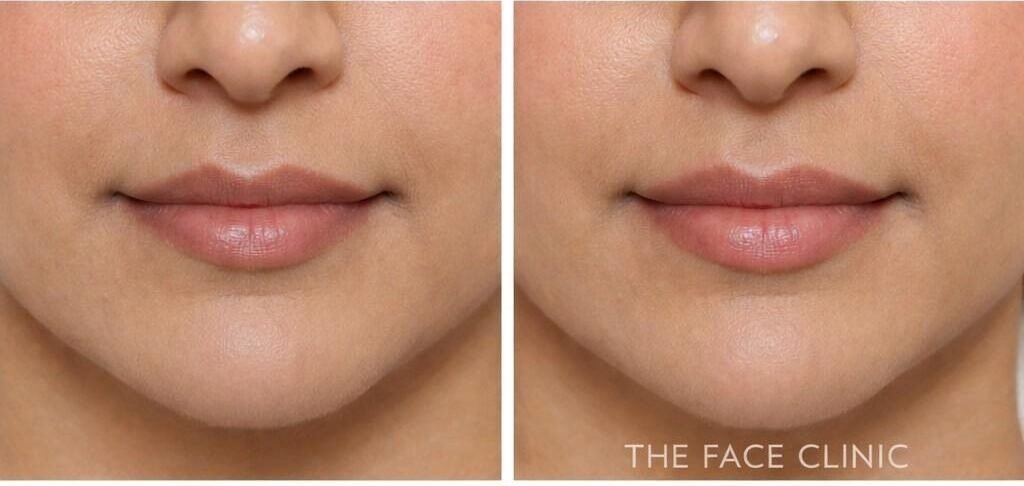
Images are for illustrative purposes only and may not represent actual patients or outcomes. Individual results vary based on anatomy, clinical assessment, and personalised treatment planning.

Images are for illustrative purposes only and may not represent actual patients or outcomes. Individual results vary based on anatomy, clinical assessment, and personalised treatment planning.
A lip filler consultation at The Face Clinic begins with assessing whether treatment is appropriate for the individual patient.
Dr. Reema Arora reviews lip anatomy, facial proportions, skin and tissue characteristics, previous aesthetic treatments, relevant medical history, allergies and medications.
The consultation also considers cold-sore history, active infections, previous filler complications and expectations.
Patients can discuss:
The purpose is to support an informed treatment decision, including the option not to proceed.
There is no single amount of filler suitable for every patient.
The quantity administered depends on the starting lip volume, available tissue, existing shape, previous filler history and intended degree of enhancement.
Some patients may benefit from conservative correction. Others may require a staged treatment plan.
The appropriate volume should be selected after assessment, rather than automatically injecting a complete syringe.
The 0.5 ml vs 1 ml lip filler comparison is common among first-time patients.
A smaller injected amount may be appropriate for limited refinement, while a larger amount may provide greater scope for volume restoration or shaping.
However, identical quantities can produce different outcomes depending on lip anatomy, existing volume, filler characteristics and injection placement.
At The Face Clinic, lip filler pricing follows a 1 ml syringe-based protocol, rather than a separately priced 0.5 ml treatment package.
The amount administered is determined by the patient’s anatomy and clinical objectives. Purchasing a 1 ml syringe-based treatment does not necessarily mean that the entire syringe must be injected.
Unused filler is handled according to the specific manufacturer’s instructions and applicable infection-control requirements. Product from an opened single-use syringe is not retained for subsequent use where those instructions prohibit reuse or storage.
Treatment may be postponed, modified or avoided when:
Treatment is generally deferred during pregnancy or breastfeeding because adequate safety evidence is lacking.
An assessment may therefore result in a recommendation for another approach or no injectable treatment.
Hyaluronic acid dermal fillers vary in softness, flexibility, cohesivity, tissue integration and their ability to provide definition or volume.
The appropriate product is selected according to the patient’s anatomy, treatment objective, tissue characteristics, previous filler history and clinical suitability.
Product choice should not be based solely on brand popularity or quoted price.
Injectable dermal fillers in India are subject to applicable Indian medical-device regulatory requirements.
The approval or marketing authorisation of a particular formulation in another country, including the United States, does not independently establish its authorisation for use in India.
At The Face Clinic, product selection is made with reference to the formulation’s applicable Indian regulatory status, manufacturer instructions, intended use and individual suitability.
Patients are informed about the product selected and the proposed treatment. Relevant product identification, batch information, expiry and treatment details are documented for traceability.
For Indian regulatory information, refer to the Central Drugs Standard Control Organisation (CDSCO).
Preparation begins with an accurate medical history and an understanding of factors that may affect treatment or recovery.
Before your appointment, tell your treating doctor about:
Do not stop prescribed medication, including aspirin or anticoagulants, without guidance from the relevant prescribing clinician.
If you have an active infection or another medical concern, your appointment may need to be postponed.
A typical appointment involves six stages.
Lip anatomy, proportions and treatment objectives are reviewed.
The treatment area is cleansed, and topical anaesthetic may be used when appropriate.
Injection locations are selected according to anatomical features and the intended correction.
Filler is administered using an appropriate needle or cannula technique, depending on the formulation, anatomy and treatment objective.
The treated lips are assessed during the procedure, with adjustments made where clinically appropriate.
Patients receive information about expected recovery, precautions and symptoms requiring medical attention.
Treatment commonly takes approximately 30–45 minutes. The total appointment may be longer when consultation and preparation are included.
Temporary pinching, pressure or discomfort may occur. Anaesthetic measures can help reduce discomfort but cannot guarantee a painless procedure.
Lip filler swelling is common after injectable treatment.
The lips may initially appear fuller, firmer or less symmetrical than the settled result. Temporary tenderness, redness and bruising may also occur.
| Period | What You May Notice |
|---|---|
First 24–48 hours | Swelling, tenderness, redness or bruising |
Days 2–3 | Swelling may begin to reduce; temporary unevenness may remain |
Days 4–7 | Many patients notice improvement in swelling and bruising |
Around 2 weeks | Lip shape and symmetry are generally easier to assess |
These are approximate timelines. Individual recovery varies.
Aftercare instructions depend on the product and treatment performed.
Patients are generally advised to avoid unnecessary pressure or manipulation of the lips and to follow their doctor’s recommendations regarding exercise, heat exposure, skin care and recovery.
Do not massage the lips unless specifically instructed by your treating doctor.
If symptoms become unusual, persistent or progressively worse, seek medical advice.
Severe pain, concerning skin colour changes, visual disturbances or neurological symptoms require immediate emergency assessment.
Hyaluronic acid lip filler results are temporary.
Visible improvement often lasts approximately 6–12 months, although duration varies by product, injected quantity, placement, tissue characteristics and individual factors.
Some filler material may remain beyond the period during which its aesthetic effect is readily visible.
Patients may consider maintenance treatment when the desired effect has diminished, but repeat injections should follow clinical reassessment rather than an automatic schedule.
Lip filler treatment is a medical aesthetic procedure and carries potential complications, even when performed by an experienced clinician.
Common temporary lip filler side effects include swelling, tenderness, bruising, redness and localised firmness.
Other possible complications include infection, inflammatory reactions, nodules, asymmetry, unwanted fullness, persistent filler and migration.
One of the most serious complications is unintended injection into a blood vessel, which can compromise tissue circulation. Rare but severe outcomes reported with dermal fillers include tissue necrosis, visual impairment, blindness and stroke.
Appropriate medical assessment, anatomical knowledge, injection technique, product selection and complication preparedness are important, but no injection procedure is risk-free.
For independent safety information, see the US FDA’s Dermal Filler Patient Guidance. This is a US safety resource, not a statement of Indian product authorisation.
The NHS guidance on choosing a cosmetic practitioner also provides useful questions for patients considering injectable procedures.
Lip filler migration describes filler moving or appearing beyond its intended placement area.
Potential contributing factors include product characteristics, placement, repeated treatment, excessive correction and individual tissue behaviour.
However, fullness above the lip does not necessarily indicate migration. Swelling, residual filler or existing anatomy may create a similar appearance.
Clinical assessment is required before deciding whether observation, correction or dissolving is appropriate.
Seek immediate emergency medical assessment if you experience:
Do not wait for a routine review or WhatsApp response if these symptoms occur.
Contact the treating clinic promptly as well, without delaying emergency care.
Hyaluronic acid fillers can often be reduced or dissolved with hyaluronidase when clinically indicated.
Dissolving may be considered for persistent unwanted filler, selected asymmetries, suspected migration or complications requiring urgent treatment.
However, it is not an instant or completely predictable reversal. The response depends on the product, previous treatment and individual tissue characteristics.
Hyaluronidase also carries potential risks, including allergic reactions, and cannot be relied upon to reverse all filler materials or restore the exact pretreatment appearance.
Elective dissolving requires assessment. Suspected vascular compromise requires urgent medical management.
Lip filler cost in Delhi varies according to the selected hyaluronic acid product, treatment plan and included clinical care.
At The Face Clinic in Hauz Khas, the approved treatment charges are:
| Treatment | Price |
|---|---|
Doctor consultation | ₹1,500 |
Hyaluronic acid lip filler — 1 ml syringe-based protocol | ₹22,000–₹35,000 |
The 1 ml lip filler price at The Face Clinic ranges from ₹22,000 to ₹35,000, depending on the selected product and individual treatment requirements.
The treatment fee covers doctor-performed injection, appropriate anaesthetic preparation, sterile disposables, aftercare guidance and the clinic’s included follow-up review.
Any additional or staged treatment, where clinically appropriate, is discussed before proceeding.
When comparing lip filler prices, patients should consider:
For detailed national pricing information, quantities, variations between clinics and factors affecting costs, read the Lip Filler Cost in India guide.
Considering treatment? Book a consultation with Dr. Reema Arora to discuss suitability, treatment options and costs.
Dr. Reema Arora is the Founder and Medical Director of The Face Clinic, Hauz Khas, South Delhi, with more than 20 years of experience in facial aesthetics.
She holds an MBBS from St. John’s Medical College and an MSc in Facial Aesthetics from Anglia Ruskin University, UK.
Dr. Arora previously served as Medical Head – Facial Aesthetics at Allergan India and has worked as a national and international trainer in injectable aesthetic treatments.
Her published clinical work includes research and case-based discussions of facial aesthetic procedures.
Her approach to lip fillers in Delhi emphasises individual anatomy, conservative treatment planning, natural expression and realistic expectations rather than applying a standardised lip shape to every patient.
For patients considering lip augmentation in Delhi, consultation focuses on identifying the appropriate treatment objective and whether filler is suitable at all.
Patients may experience temporary pinching, pressure or tenderness. Topical anaesthetic may be used, and some products contain lidocaine.
Discomfort varies, and a completely painless procedure cannot be guaranteed.
Yes, suitable first-time patients may consider a conservative approach.
The quantity and technique should be selected according to lip anatomy, desired improvement and clinical suitability rather than assuming that a particular amount guarantees a natural appearance.
Lip movement and facial expression are assessed when planning treatment.
The aim may be to preserve proportionate movement while improving definition or volume, but individual results vary and a particular appearance cannot be guaranteed.
Hyaluronic acid filler may be suitable for selected patients seeking improved fullness, contour or proportion.
However, naturally thin lips do not automatically require significant volume. Dental support, philtrum length and the overall facial profile may also influence the appearance.
Selected volume-related asymmetries may improve with filler.
However, asymmetry related mainly to muscle activity, scarring or underlying structure may not be completely correctable. Perfect symmetry cannot be promised.
No.
Hyaluronic acid lip fillers are injectable products used primarily for volume restoration and contour refinement.
A surgical lip lift changes anatomical relationships through surgery. Lip blush is a pigmentation procedure that changes colour and the visual definition of the lips without adding structural volume.
Each has different indications and risks.
Previous treatment does not automatically prevent additional filler.
Existing product, tissue changes, asymmetry and previous complications should be assessed before recommending further injections.
A change in volume may be visible immediately, but swelling can affect the early appearance.
A review after approximately two weeks is often more useful for assessing the settled shape and symmetry.
If you are considering lip fillers in Delhi, a clinical consultation can help determine whether injectable lip enhancement is appropriate, what degree of change may be realistic and which treatment options are suitable.
For patients comparing clinics through lip filler near me searches, practitioner qualifications, clinical assessment, product authenticity, complication preparedness and aftercare should be considered alongside location and price.
The Face Clinic provides doctor-led assessment for patients seeking lip enhancement in Hauz Khas and South Delhi.
The Face Clinic — Dr. Reema Arora
LGF, C-36, Chaudhary Dilip Singh Marg
Hauz Khas Market, New Delhi – 110016
Clinic hours: Monday–Saturday, 10 AM–6 PM
Doctor consultation: ₹1,500, charged separately
Phone: +91 99580 73900
Book Your Consultation on WhatsApp
A consultation does not obligate you to undergo treatment.
Medical disclaimer: This page provides general educational information and does not replace individual medical advice. Treatment suitability, product selection, risks, recovery and results vary and should be assessed by an appropriately qualified medical practitioner.
All treatments are subject to individual variation. Outcomes are determined following clinical evaluation by a qualified doctor.