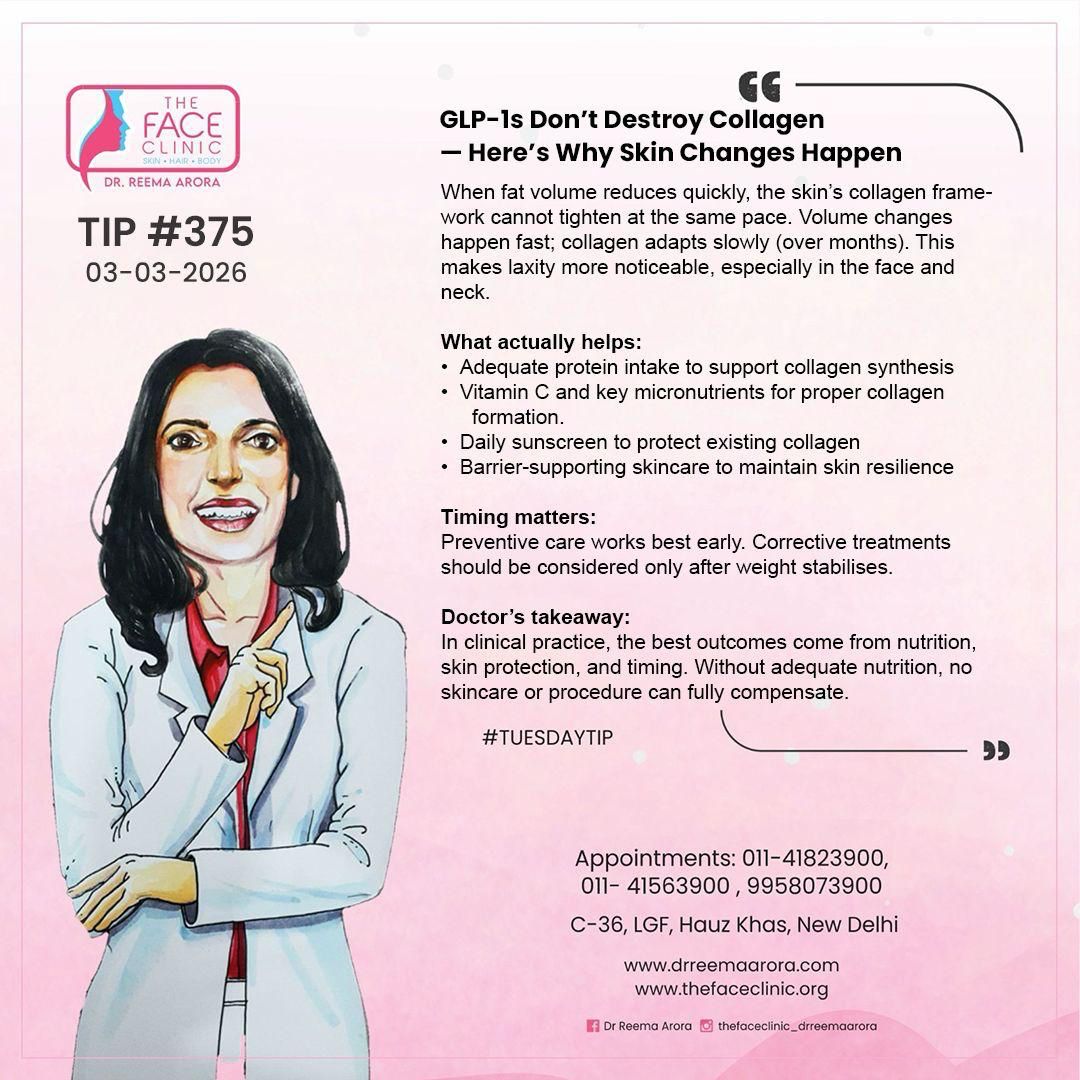
When fat volume reduces quickly, the skin’s collagen frame-work cannot tighten at the same pace. Volume changes happen fast; collagen adapts slowly (over months). This makes laxity more noticeable, especially in the face and neck.
What actually helps:
Adequate protein intake to support collagen synthesis
Vitamin C and key micronutrients for proper collagen formation
Daily sunscreen to protect existing collagen
Barrier-supporting skincare to maintain skin resilience
Timing matters: Preventive care works best early. Corrective treatments should be considered only after weight stabilizes.
Doctor’s takeaway: In clinical practice, the best outcomes come from nutrition, skin protection, and timing. Without adequate nutrition, no skincare or procedure can fully compensate.
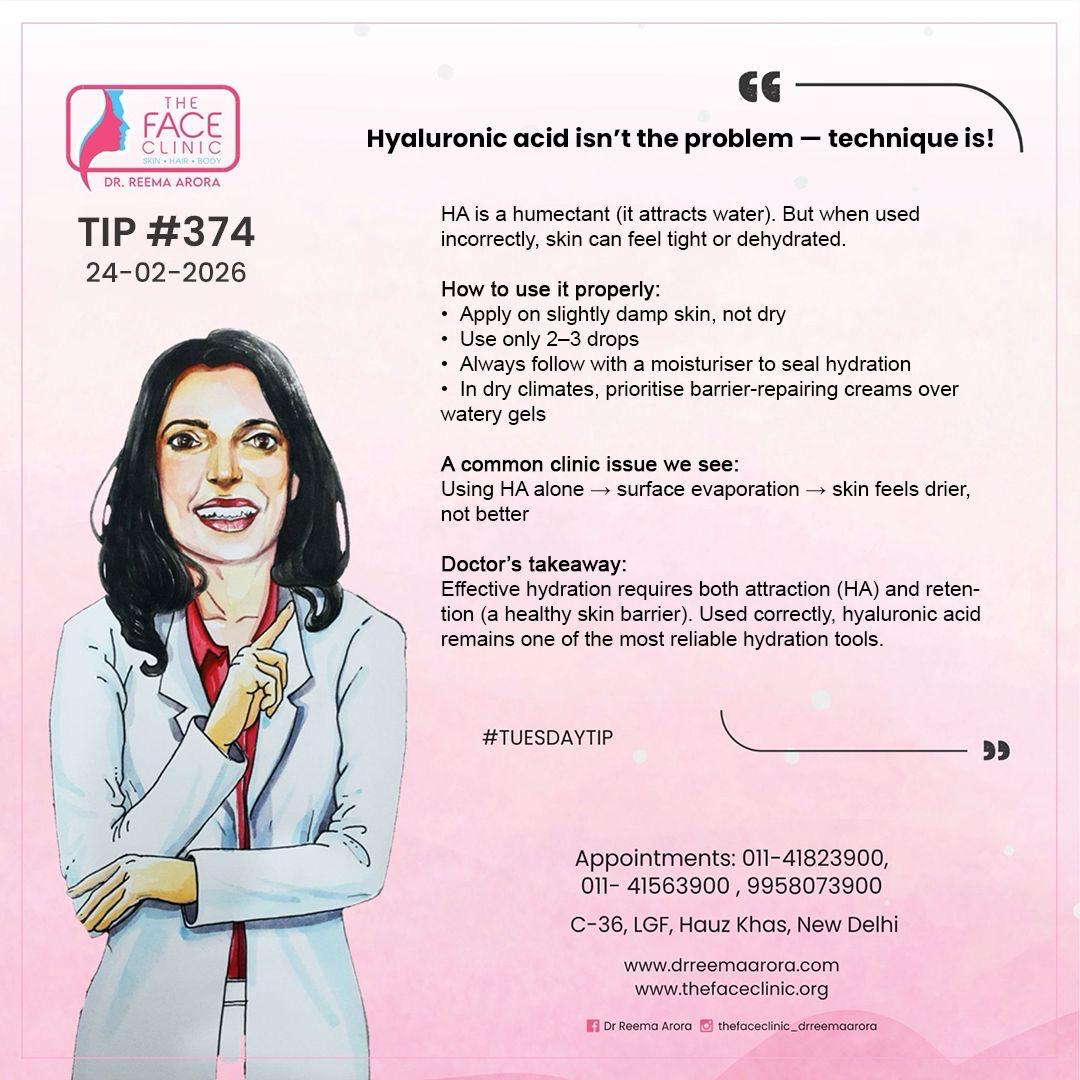
Hyaluronic acid isn’t the problem — technique is!
HA is a humectant (it attracts water). But when used incorrectly, skin can feel tight or dehydrated.
How to use it properly:
Apply on slightly damp skin, not dry
Use only 2–3 drops
Always follow with a moisturiser to seal hydration
In dry climates, prioritise barrier-repairing creams over watery gels
A common clinic issue we see: Using HA alone → surface evaporation → skin feels drier, not better
Doctor’s takeaway: Effective hydration requires both attraction (HA) and retention (a healthy skin barrier). Used correctly, hyaluronic acid remains one of the most reliable hydration tools.
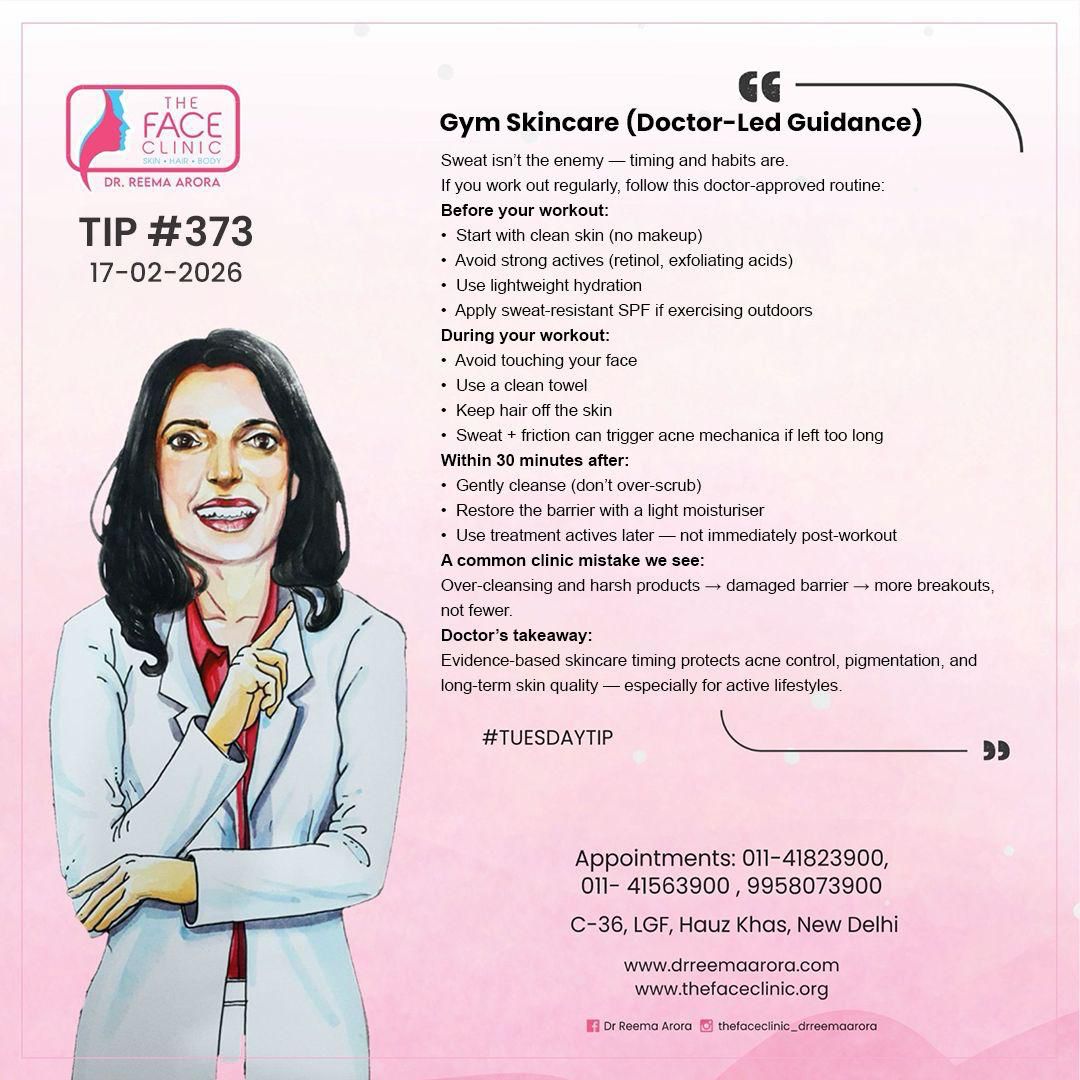
Gym Skincare (Doctor-Led Guidance)
Sweat isn’t the enemy — timing and habits are. If you work out regularly, follow this doctor-approved routine:
Before your workout: • Start with clean skin (no makeup) • Avoid strong actives (retinol, exfoliating acids) • Use lightweight hydration • Apply sweat-resistant SPF if exercising outdoors
During your workout: • Avoid touching your face • Use a clean towel • Keep hair off the skin • Sweat + friction can trigger acne mechanica if left too long
Within 30 minutes after: • Gently cleanse (don’t over-scrub) • Restore the barrier with a light moisturiser • Use treatment actives later — not immediately post-workout
A common clinic mistake we see: Over-cleansing and harsh products → damaged barrier → more breakouts, not fewer.
Doctor’s takeaway: Evidence-based skincare timing protects acne control, pigmentation, and long-term skin quality — especially for active lifestyles.
Your Skin Isn’t Failing — It’s Changing
Understanding skin changes during perimenopause & menopause
Many women notice their usual skincare stops working from their late 30s — often during perimenopause, not just menopause.
Skin repair slows; sensitivity, pigmentation, dullness & fine lines become more noticeable.
SPF & medical-grade skincare support the skin barrier & prevention, but cannot fully reverse deep biological changes.
In clinic, we see the best results with doctor-led, personalised treatments such as skin boosters, RF microneedling, regenerative therapies & collagen stimulators.
For optimal results, the face, neck & décolletage should be treated as one cohesive aesthetic unit.
Doctor’s summary: Skin changes often begin in perimenopause. Prevention helps, but visible ageing usually requires doctor-led clinical care. For balanced rejuvenation, treat the face, neck & décolletage together.
Why your chest (décolletage) often shows age before your face
Many patients notice their face looks youthful, yet the chest subtly reveals ageing.
• The décolletage has thinner skin, fewer oil glands, and naturally lower collagen density. • It is also exposed to high cumulative sun damage, accelerating pigmentation and fine lines. • SPF and topical skincare are essential for prevention, but have limited impact on established ageing. • Clinically, meaningful improvement typically requires doctor-led treatments such as RF microneedling, skin boosters, regenerative injectables, and collagen-stimulating protocols. • For harmonious results, the face, neck and décolletage should be treated as one.
Doctor’s Summary: The décolletage ages faster due to thinner skin, lower collagen and sun exposure. Skincare helps prevent damage, but visible ageing usually requires clinical treatments. For balanced rejuvenation, the face, neck and décolletage should be treated together.
When Skin Stops Whispering and Starts Signalling
Your skin changes all the time – most of it is normal. But some changes are signals, not cosmetic concerns.
Pay attention if you notice:
A spot or patch that doesn’t heal over weeks
A mole that changes in size, shape, colour, or sensation
Sudden pigmentation without an obvious trigger
Persistent redness, scaling, or itching in one area
A rapid texture change that feels unusual for your skin
These signs don’t automatically mean something serious – but they shouldn’t be ignored.
What not to do:
Don’t self-diagnose online
Don’t “wait it out” for months
Don’t mask persistent changes with skincare or makeup
Doctor’s Note: Early evaluation is about clarity and reassurance — not panic. When in doubt, get it checked.
Flaky Scalp? Glycolic Acid—When It Helps & When It Doesn’t
Glycolic acid isn’t just a skincare ingredient. In clinical practice, I use it as a gentle chemical exfoliant to clear dead skin buildup on the scalp that regular shampoos often miss.
What glycolic acid helps with: • Visible flakes and surface scaling • Excess oil and product buildup • Itchy, congested scalps with slow turnover
How to use it safely: • Use once weekly (maximum twice), preferably as a pre-shampoo or rinse-out treatment • Leave on for a short contact time, then rinse thoroughly • Avoid use on broken, inflamed, or highly sensitive skin
Doctor’s Note: Glycolic acid supports scalp hygiene, but it does not replace medicated dandruff treatments. Overuse can disrupt the scalp barrier and worsen irritation. Used selectively and matched to the right scalp type, it can be a useful adjunct—but the real benefit lies not in stronger actives, but in knowing when, and when not, to use them.
Winter Foot Care: Why Skin Health Matters More Than Pedicures
In winter, feet lose moisture faster due to cold air, indoor heating, and prolonged time in socks & closed shoes. The result is dryness, rough skin, & painful cracks. What truly helps in winter:
Daily use of rich foot creams with urea or lactic acid to soften thick, dry skin
Night-time moisturizing followed by cotton socks to seal hydration
Gentle exfoliation once weekly—never aggressive filing
Professional pedicures can support maintenance, but they cannot replace consistent barrier repair at home. Over-filing or frequent salon visits may actually worsen dryness if the skin barrier is already compromised.
Doctor’s Note: Healthy winter feet depend more on repairing the skin barrier than on cosmetic treatments. Pedicures have a role, but disciplined hydration does the real work. As with good skincare, lasting results come from consistency—not intensity.
Confused between chemical & physical exfoliation? — and worried about damaging your skin?
The difference isn’t about strength — it’s about skin barrier health. Chemical exfoliants gently loosen dead skin cells, offering more even exfoliation with less friction. Mechanical exfoliants rely on scrubbing, which can irritate the skin if pressure is uneven. For most skin types, gentle chemical exfoliation, used correctly and sparingly, is better tolerated than frequent physical scrubs — especially if your skin is sensitive, acne-prone, or post-procedure. What many people get wrong:
Exfoliating too often
Scrubbing inflamed skin
Skipping sunscreen after exfoliation
Healthy exfoliation supports glow. Over-exfoliation damages the skin barrier — leading to redness, breakouts, and pigmentation.
Exfoliation is always tailored, controlled, and guided by skin science — not trends.
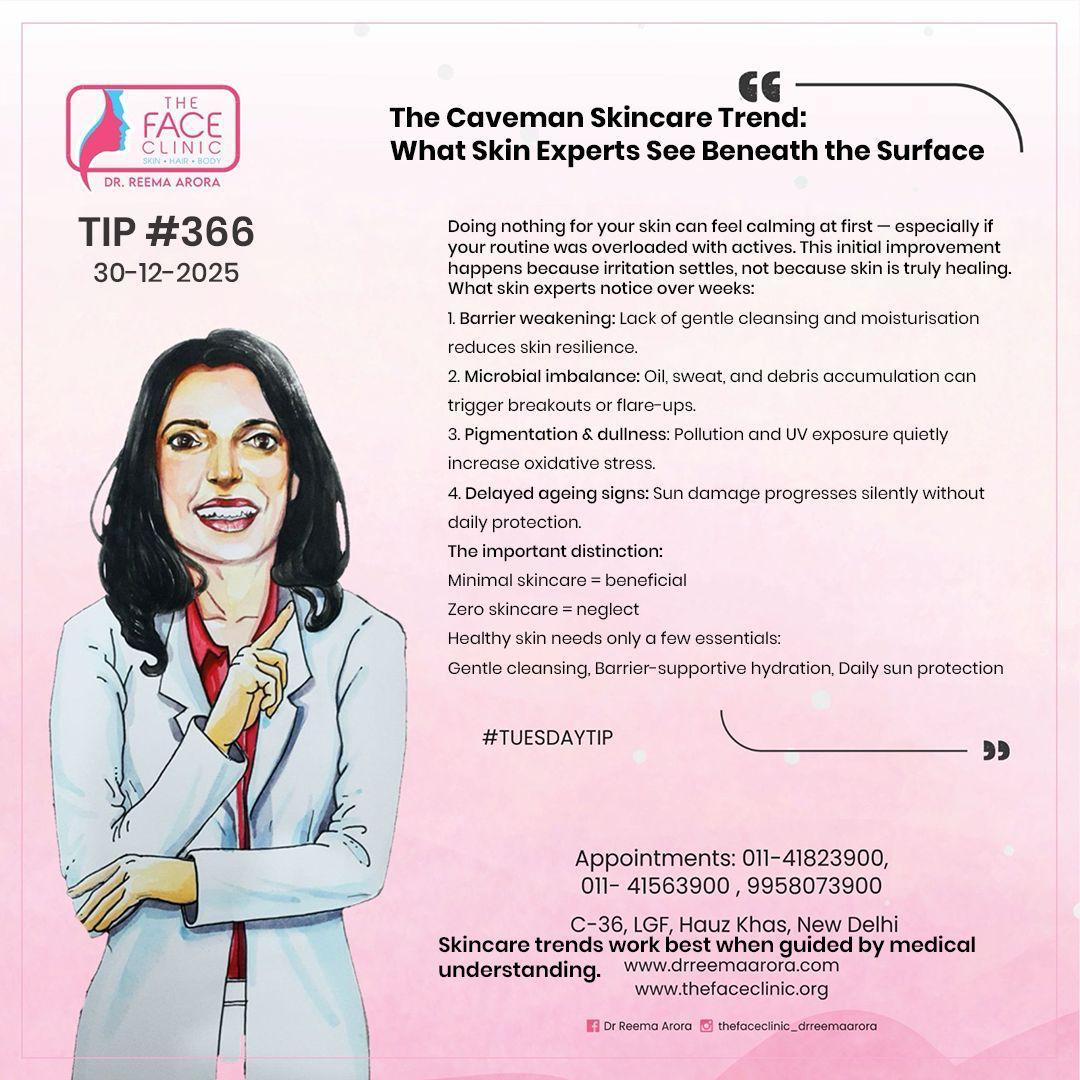
The Caveman Skincare Trend: What Skin Experts See Beneath the Surface
Doing nothing for your skin can feel calming at first – especially if your routine was overloaded with actives. This initial improvement happens because irritation settles, not because skin is truly healing. What skin experts notice over weeks:
Barrier weakening: Lack of gentle cleansing and moisturization reduces skin resilience.
Microbial imbalance: Oil, sweat, and debris accumulation can trigger breakouts or flare-ups.
Delayed aging signs: Sun damage progresses silently without daily protection.
The important distinction: Minimal skincare = beneficial Zero skincare = not good Healthy skin needs only a few essentials: Gentle Cleansing. Barrier-supportive hydration. Daily sun protection