

GFC Hair Growth Treatment in Delhi, India – Doctor-Led Growth Factor Concentrate Therapy (Cost, Results & Safety)
Doctor’s Summary
What it is:
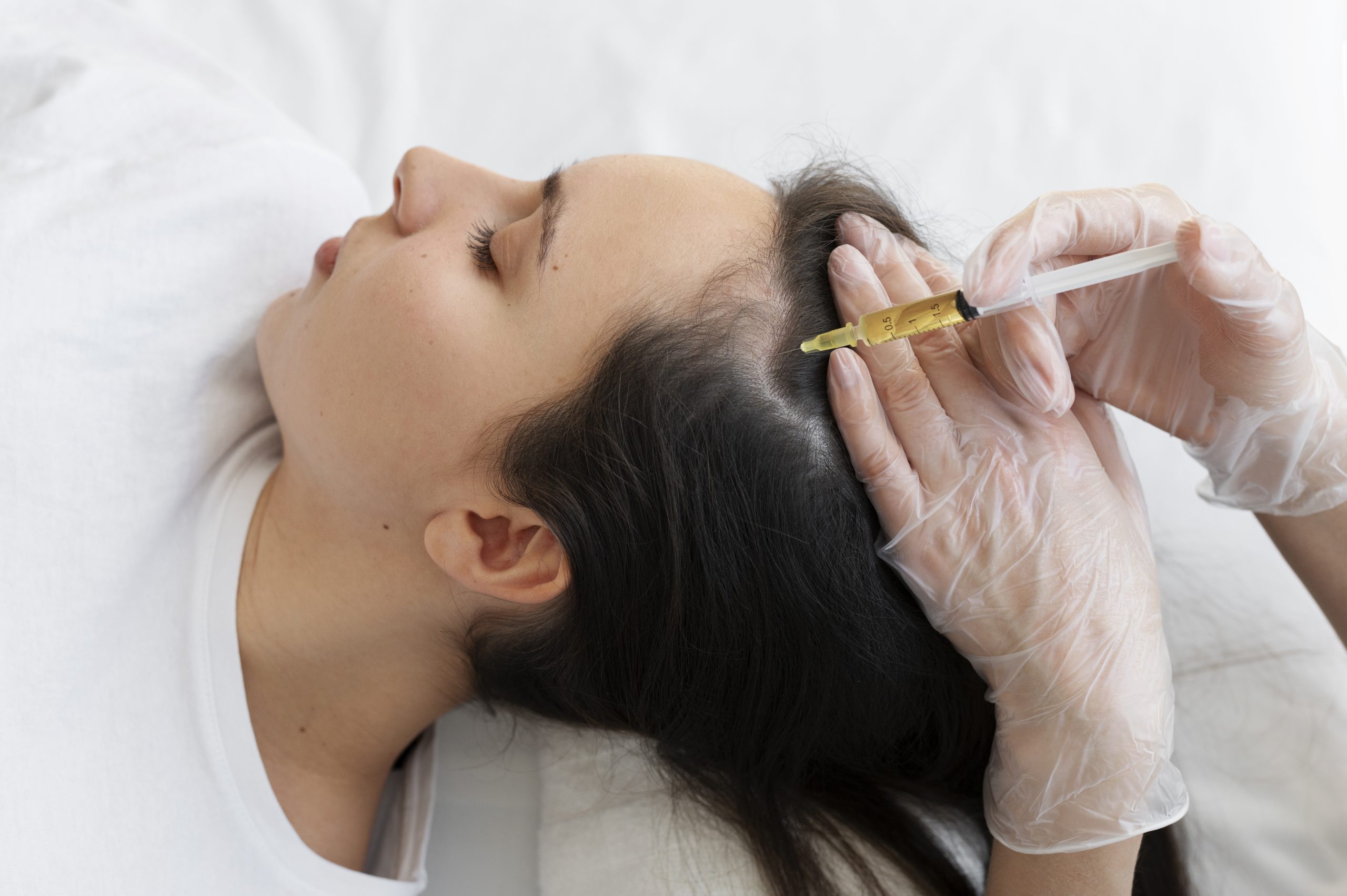
GFC (Growth Factor Concentrate) is an autologous regenerative therapy prepared from a patient’s own blood, delivering a concentrated fraction of growth factors to targeted scalp areas.
Used for:
Early to moderate hair thinning, pattern hair loss support, and selected cases of diffuse or inflammatory shedding—only where viable follicles remain.
Doctor-led:
Outcomes depend on accurate diagnosis, suitability assessment, protocol quality, and medical supervision—not the injection alone.
Sessions:
Often delivered as a structured series, planned after scalp and hair assessment and customised to severity and response.
Results timeline:
Gradual improvement over 2–6 months in suitable candidates, with maintenance planning when indicated.
Cost:
Varies based on severity of hair loss, treatment area, number of sessions, and combination planning.
Patients should exercise caution with unregulated exogenous (lab-derived) growth factor injections, which differ biologically from autologous therapies and carry distinct safety and regulatory considerations.
Diagnosis Comes First: Why Hair Loss Evaluation Matters
Doctor-Led Hair & Scalp Workup Typically Includes:
- Detailed medical and hair-loss history
- Pattern assessment (male vs female pattern, diffuse loss)
- Scalp examination ± trichoscopy
- Review of hormonal, nutritional, inflammatory contributors
- Identification of conditions requiring medical treatment first

What Is GFC (Growth Factor Concentrate) Therapy?
Evidence Snapshot: What Medical Literature Currently Shows
- PRP (Platelet-Rich Plasma) has a broader and longer-established evidence base in hair loss treatment.
- GFC protocols represent an evolving approach designed to deliver a more concentrated growth-factor fraction.
- Comparative clinical studies have shown promising outcomes in selected patients, particularly in early patterned hair loss, though large-scale standardisation is still developing.
GFC should be viewed as regenerative support, not a cure, and should be selected based on diagnosis, severity, and protocol quality rather than marketing claims.

GFC for Hair Loss – Best-Suited Candidates
Common Indications
- Early male or female pattern hair loss
- Diffuse thinning with reduced hair calibre
- Post-partum shedding (after medical evaluation)
- Stress- or inflammation-related shedding as part of a comprehensive plan
Who May Not Be Ideal Candidates
- Advanced bald areas with minimal follicular activity
- Active scalp infections or inflammatory scalp disorders
- Hair loss driven by untreated systemic or nutritional deficiencies
How GFC Works (Mechanism of Action)
- Improving scalp microcirculation
- Supporting follicular cycling
- Enhancing hair shaft thickness
- Reducing inflammatory stress around weakened follicles
Why Results Vary: Protocol Quality Matters
- Blood processing and centrifugation protocols
- Growth-factor concentration method
- Injection depth, mapping, and technique
- Session spacing and total treatment plan
- Documentation (photographs, trichoscopy)
- Combination with medical or scalp-health therapies
Results Expectations & Maintenance Planning
What Success Typically Looks Like
- Reduced hair shedding
- Improved hair shaft thickness
- Better scalp quality
- Stabilisation of progressive thinning
Timeline Overview
- 2–6 weeks: Reduced shedding in some patients
- 2–3 months: Early texture and density changes
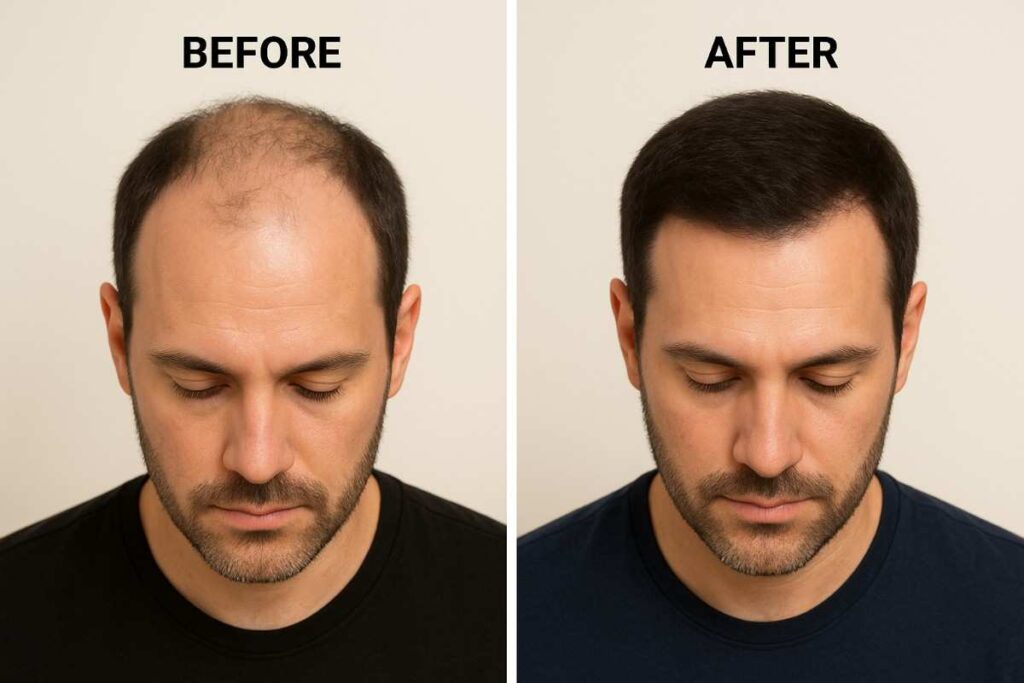
- 3–6 months: More visible improvement in responders

GFC for Skin & Face Rejuvenation (Adjunctive Use)
Autologous vs Exogenous Growth Factors: Understanding the Clinical Distinction
Autologous GFC (Patient-Derived Growth Factors)
- Derived from the patient’s own biological material
- High biocompatibility
- Minimal immunological risk when prepared and delivered correctly
In patients typically in their mid-40s and beyond, or in those with chronic stress, inflammation, metabolic imbalance, or nutritional compromise, the quality and concentration of endogenous growth factors may be reduced. In such cases, regenerative response may be limited despite correct technique and adherence to protocol.

Exogenous (Lab-Derived) Growth Factors: The Evolving Regenerative Frontier
- Consistent and standardised growth-factor concentration
- Independent of patient blood quality
- Particularly valuable in mid-40s and older
patients where autologous yield may be suboptimal - Enables predictable biological signalling when integrated into structured treatment plans
Not all exogenous growth factor products are equivalent. Regulatory oversight varies by product, formulation, and jurisdiction, and safety is closely linked to product provenance, purification standards, dosing rationale, and medical indication. Inappropriate use of non-standardised or poorly regulated products has been associated with complications in the medical literature.
The Responsible Medical Approach
Rather than viewing autologous and exogenous growth factors as competing or opposing options, contemporary regenerative practice treats them as complementary tools within a personalised treatment framework.
- Product selection is based on patient age, biology, diagnosis, and treatment goals
- Only reputable, evidence-aligned formulations are considered
- Patients are counselled transparently on what is being used, why it is chosen, and how it fits into their overall regenerative plan
The critical question is not autologous versus exogenous, but whether the chosen growth factor therapy is appropriate, well-sourced, evidence-aligned, and delivered under proper medical supervision.
Safety, Side Effects & Medical Precautions
Common Short-Term Effects
- Mild scalp tenderness or swelling
- Temporary redness
- Occasional bruising
Red Flags (Seek Medical Review)
- Increasing pain or swelling after 48 hours
- Fever, discharge, or signs of infection
- Worsening scalp inflammation or rash
Safety Standards at Doctor-Led Clinics
- Sterile processing and injection technique
- Medical screening before treatment
- Clear aftercare instructions and follow-up access
Cost of GFC Hair Growth Treatment in Delhi & India
Typical Price Range
In Delhi and South Delhi, GFC hair growth treatment commonly ranges between ₹10,000 and ₹20,000 per session.
What Determines Cost
- Severity and area of hair loss
- Number of sessions required
- Diagnostic assessment and follow-up
- Combination treatment planning
- Doctor-led delivery vs technician-only models
Why Choose The Face Clinic – Hauz Khas, South Delhi
Diagnosis-first, doctor-led care
Evidence-based, conservative protocols
Transparent counselling and expectations
- Structured documentation and follow-up
FAQs: GFC Hair Growth Treatment (Cost, Results, Safety & Sessions)
1. Is GFC better than PRP for hair loss?
PRP has a broader evidence base; GFC is a more concentrated protocol that may benefit selected patients. Suitability depends on diagnosis, severity, and scalp evaluation.
2. How many GFC sessions are usually needed?
Most protocols involve multiple sessions spaced weeks apart, customised after medical assessment.
3. When will I see results after GFC?
4. Is GFC safe?
5. Does GFC work in advanced baldness?
6. Is there downtime after GFC treatment?
Patient Clarifications & Common Consultation Questions
Related Treatments & Internal Resources
- PRP (Platelet-Rich Plasma) Hair Treatment
- PRF Hair Restoration Treatment
- Medical Management of Hair Loss
Scientific & International References
- Safety considerations in autologous versus exogenous growth factor injections in aesthetic medicine
Author & Medical Review
Clinic: The Face Clinic, Hauz Khas, South Delhi
Last Updated: 2026


