Under Eye Fillers
- Home
- Services
- Under Eye Fillers
Don’t think much, have a query? Call us now!
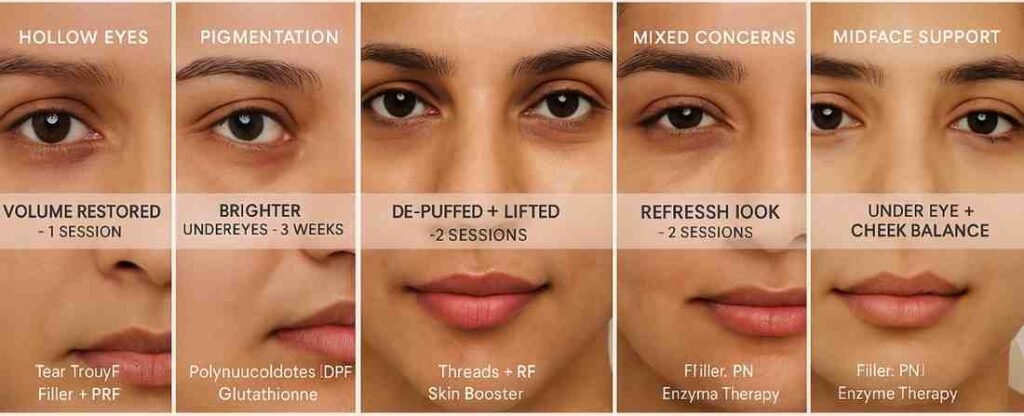
Images are for illustrative purposes only and may not represent actual patients or outcomes. Individual results vary based on anatomy, clinical assessment, and personalised treatment planning.
Under Eye Fillers in Delhi are a safe, non-surgical treatment designed to restore lost volume beneath the eyes, improve tear trough hollows, and reduce shadow-related dark circles caused by volume loss. Hyaluronic acid-based dermal fillers help refresh tired-looking eyes, soften under-eye hollowness, and create a naturally rejuvenated appearance without surgery or prolonged downtime. Many people choose this treatment when eye creams, skincare products, and home remedies fail to improve the appearance of sunken under-eyes or persistent dark circles.
Using advanced hyaluronic acid fillers, the treatment restores volume in the tear trough area and smooths the transition between the lower eyelid and cheek. This reduces the appearance of shadowing while providing a fresher, well-rested, and natural-looking result that complements your facial features.
Under Eye Fillers in Delhi are most suitable for patients with structural dark circles, tear trough hollows, and age-related volume loss. Patients travel from different parts of India to undergo under eye fillers in India at our clinic, especially when under-eye hollowness is the primary cause of dark circles. Since pigmentation, genetics, and skin quality can also contribute to dark circles, a comprehensive facial assessment is essential to determine whether tear trough fillers are the right treatment.
At The Face Clinic, Hauz Khas, South Delhi, every procedure is personally performed by Dr. Reema Arora, a facial aesthetics specialist with over 20 years of experience. Patients looking for under eye fillers South Delhi benefit from personalised treatment plans based on individual facial anatomy, ensuring safe, balanced, and natural-looking under-eye rejuvenation with long-lasting results.
This treatment is most effective for patients whose dark circles are caused by tear trough hollows, structural volume loss, or under-eye shadowing rather than pigmentation alone. Using hyaluronic acid-based dermal fillers, it restores lost volume beneath the eyes, smooths the lower eyelid contour, and creates a fresher, naturally rejuvenated appearance without surgery or significant downtime.
Tear trough hollows and sunken under-eyes
Structural or volume-related dark circles
Age-related loss of under-eye volume
A tired appearance caused by under-eye shadowing
Prominent eye bags caused by fat prolapse
Fluid retention or lymphatic swelling around the eyes
Dark circles primarily caused by skin pigmentation
Significant skin laxity that may require alternative treatment
Results typically last 6–12 months, although longevity varies depending on individual anatomy, metabolism, lifestyle, and the type of hyaluronic acid filler used. The filler gradually breaks down naturally over time, and maintenance treatment may be recommended based on your aesthetic goals and clinical assessment.
At The Face Clinic, Hauz Khas, every procedure is performed personally by Dr. Reema Arora, a facial aesthetics specialist with over 20 years of experience. Her conservative, anatomy-based approach prioritises patient safety, precision, and natural-looking results. Each treatment plan is tailored to the patient’s facial anatomy after a detailed consultation to ensure that under-eye fillers are recommended only when they are the most appropriate treatment option.

Images are for illustrative purposes only and may not represent actual patients or outcomes. Individual results vary based on anatomy, clinical assessment, and personalised treatment planning.
Under Eye Fillers are non-surgical injectable treatments designed to restore lost volume beneath the eyes, particularly in the tear trough area. They are commonly used to improve under-eye hollows, sunken appearance, and shadow-related dark circles caused by volume loss rather than pigmentation.
Using hyaluronic acid-based dermal fillers, the treatment restores support beneath the eyes, smooths tear trough depressions, and improves the transition between the lower eyelid and cheek. This helps soften shadows and creates a brighter, fresher, and naturally rejuvenated appearance.
Unlike pigmentation-focused treatments, under-eye fillers do not alter the colour of the skin. Instead, they address volume deficiency beneath the eyes, allowing light to reflect more evenly and reducing the tired appearance associated with hollowing and shadowing.
This treatment is particularly suitable for patients with structural under-eye concerns such as tear trough hollows, age-related volume loss, and sunken under-eyes. Many patients looking for under eye fillers in Delhi consider this treatment when skincare products and topical solutions cannot improve volume-related changes.
A detailed facial assessment is essential before treatment to determine whether under-eye fillers are appropriate for each patient. When performed with careful product selection and precise placement based on facial anatomy, hyaluronic acid fillers can help achieve balanced, natural-looking under-eye rejuvenation.
Tear trough fillers are a specialised non-surgical treatment designed to improve hollowness beneath the eyes, tear trough deformities, and structural dark circles caused by volume loss. The tear trough refers to the natural groove between the lower eyelid and upper cheek, where volume deficiency can create shadows and a tired appearance.
Using hyaluronic acid-based dermal fillers, the treatment restores appropriate support beneath the eyes, softens hollow areas, and improves the transition between the lower eyelid and cheek. The aim is to create a smoother and more balanced contour while maintaining natural facial movement and expression.
Tear trough filler treatment requires careful assessment because the under-eye area has delicate anatomy and every patient has different volume requirements. A personalised approach helps determine the right filler choice, placement, and amount needed for safe and natural-looking rejuvenation.
At The Face Clinic, Hauz Khas, treatment is customised according to individual facial anatomy, skin quality, and aesthetic goals to achieve balanced under-eye rejuvenation with a refined, natural appearance.
Under Eye Fillers are a non-surgical treatment option designed to improve under-eye hollows, tear trough deformities, and volume loss beneath the eyes. Using hyaluronic acid-based dermal fillers, the treatment restores lost support beneath the eyes, improves contour irregularities, and helps create a smoother transition between the lower eyelid and cheek while maintaining natural facial expressions.
Restoration of lost volume in the tear trough and under-eye area
Reduction in shadow-related dark circles caused by volume deficiency
Improvement in under-eye hollowness and sunken appearance
Smoother transition between the lower eyelid and upper cheek
Fresher and more rested-looking appearance
Visible improvement with minimal downtime
Quick return to normal daily activities
Natural-looking results with careful product selection and precise technique
Under Eye Fillers are particularly beneficial for patients whose dark circles are caused by structural volume loss rather than pigmentation. By restoring appropriate support beneath the eyes, the treatment helps improve light reflection, soften shadows, and create a more balanced facial appearance.
A detailed consultation is important to assess whether fillers are suitable for your concerns, as under-eye rejuvenation depends on individual anatomy, skin quality, and the underlying cause of dark circles.
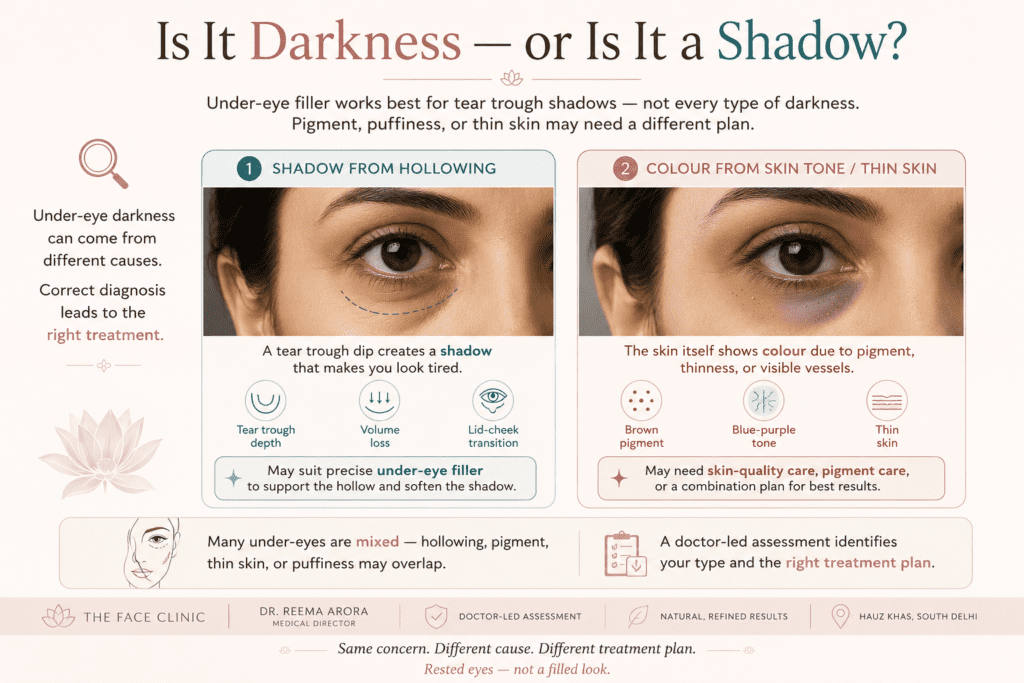
Not all dark circles develop due to the same underlying cause. Identifying the reason behind under-eye darkness is essential before selecting the right treatment approach.
Some patients have dark circles caused by tear trough hollowing and volume loss beneath the eyes, while others may experience concerns related to pigmentation, thin skin, visible blood vessels, eye bags, or fluid retention. Under eye fillers are considered suitable mainly when structural volume deficiency and shadowing are the primary concerns.
| Root Cause | Visual Concern | Possible Treatment Approach |
|---|---|---|
| Tear trough hollowing | Structural volume loss beneath the eyes creating shadows | Under eye fillers may be suitable |
| Thin skin with vascular show | Visible blood vessels beneath delicate under-eye skin | Laser and skin quality treatments |
| Pigmentation (brown dark circles) | Excess melanin causing skin discolouration | Chemical peels, lasers, and topical treatments |
| Eye bags / fat prolapse | Bulging caused by displacement of orbital fat | Surgical or specialised treatments; fillers may not be appropriate |
| Fluid retention / malar edema | Swelling caused by fluid accumulation or lymphatic congestion | Fillers may not be recommended in these cases |
At The Face Clinic, Hauz Khas, treatment decisions are based on detailed assessment of facial anatomy, skin quality, and the underlying cause of dark circles. This personalised approach helps determine whether under-eye fillers are the right option and supports safe, balanced, natural-looking rejuvenation.
Dark circles and under-eye hollows can develop due to a combination of anatomical, genetic, and lifestyle-related factors. Identifying the main cause of under-eye concerns is essential before choosing the most appropriate treatment approach.
Under eye fillers may be most beneficial when structural volume loss contributes to the appearance of dark circles, particularly in patients with tear trough hollowing. In these cases, restoring lost volume beneath the eyes can help reduce shadowing and improve the transition between the lower eyelid and cheek.
Age-related loss of fat, collagen, and structural support around the eyes
Genetic tear trough anatomy that naturally creates under-eye shadowing
Fat atrophy leading to infraorbital hollowing
Thin under-eye skin allowing underlying blood vessels to become more visible
Age-related changes in orbital bone structure that deepen the tear trough area
Other factors such as pigmentation, allergies, fluid retention, sleep patterns, and lifestyle habits may contribute to dark circles. These concerns may require different approaches, including laser treatments, skin quality procedures, or topical therapies, rather than fillers alone.
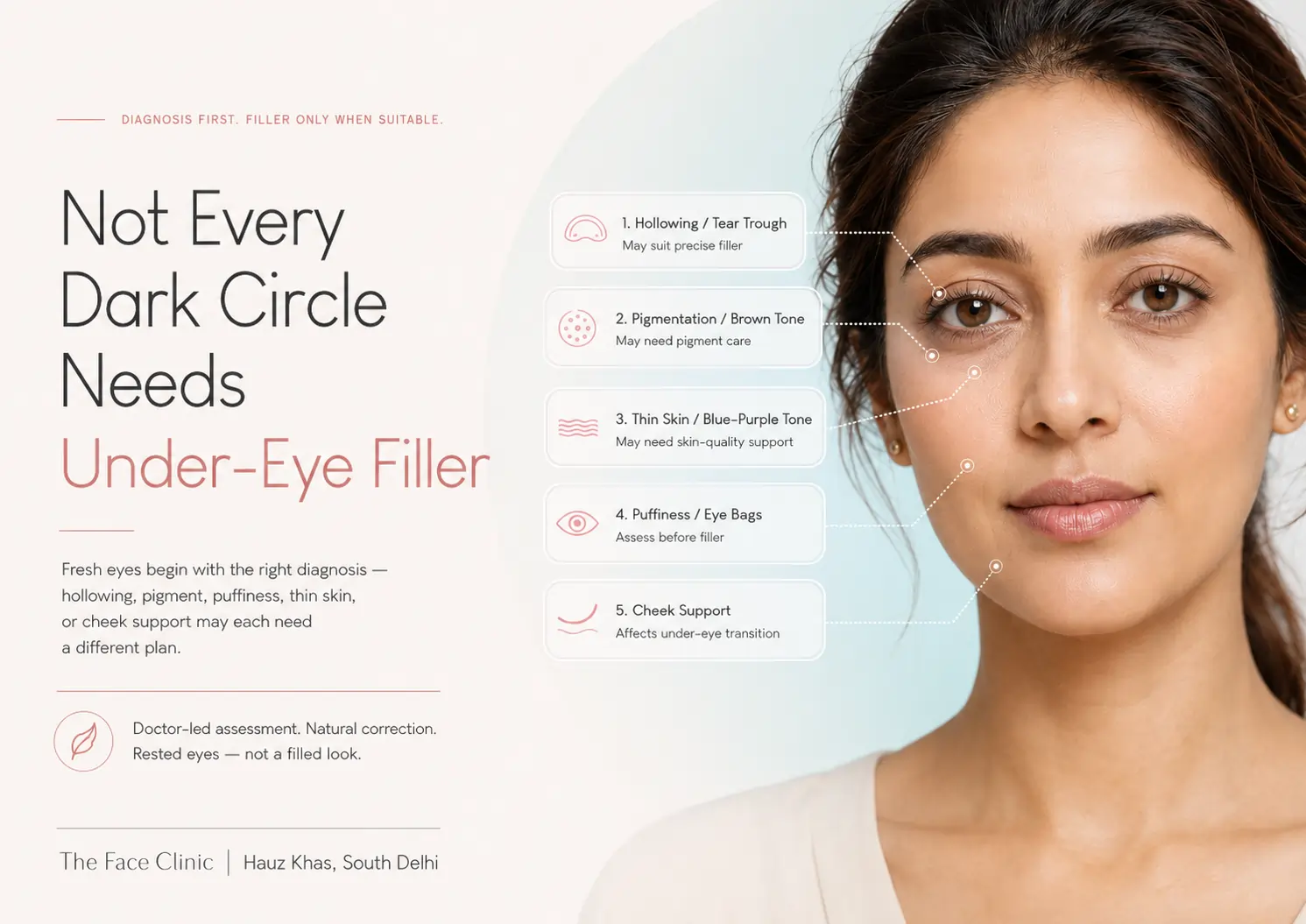
Accurate diagnosis is the foundation of effective under-eye rejuvenation. Dark circles may develop due to several underlying causes, including tear trough hollowing, pigmentation, thin skin, visible blood vessels, eye bags, or a combination of these concerns. Since each condition requires a different treatment approach, a detailed clinical assessment is essential before recommending under-eye fillers or other appropriate treatments.
At The Face Clinic, Hauz Khas, South Delhi, the under-eye area is evaluated through a structured consultation that focuses on facial anatomy, skin quality, volume distribution, and the specific factors contributing to dark circles.
Tear trough hollowing
A depression between the lower eyelid and cheek caused by genetic anatomy or age-related volume loss. This is one of the common concerns where under-eye fillers may be considered after a detailed assessment.
Skin thickness and vascular visibility
Thin under-eye skin can make underlying blood vessels more noticeable, creating a bluish appearance. In these cases, treatments that improve skin quality, including laser-based procedures, may be more suitable than volume correction.
Pigmentation patterns
Brown dark circles caused by increased melanin, sun exposure, or pigmentation concerns generally respond better to treatments such as chemical peels, laser procedures, or topical therapies rather than fillers.
Eye bags or fat prolapse
Prominent under-eye bags caused by displacement of orbital fat can create shadowing and fullness. In these cases, fillers may not be appropriate, and alternative treatment options may be considered.
Midface volume support
Loss of cheek volume can reduce support beneath the eyes and make tear trough hollows appear deeper. In selected patients, improving midface support may enhance overall under-eye balance and facial harmony.
After identifying the primary cause of dark circles, a personalised treatment plan is created based on individual anatomy, skin quality, and aesthetic concerns. Depending on the assessment, treatment may include under-eye fillers, laser therapy, skin rejuvenation procedures, or a combination approach to achieve balanced and natural-looking outcomes.
Many people try creams, fillers, or laser treatments without understanding the actual reason behind their dark circles. To learn more about the structural, vascular, pigmentary, and skin-related factors that can make dark circles persistent, read our detailed guide on Why Dark Circles Don’t Go Away.
Under eye fillers use hyaluronic acid-based dermal fillers that are carefully placed beneath the eyes to restore lost volume, improve tear trough hollows, and reduce the appearance of structural dark circles caused by shadowing.
Restore volume beneath the eyes
Reduce shadowing caused by tear trough hollowing
Smooth the transition between the lower eyelid and cheek
Create a fresher and more rested appearance while maintaining natural facial expressions
A detailed clinical assessment helps differentiate structural dark circles from pigmentation-related or vascular concerns. Treatment outcomes depend on accurate diagnosis and selecting the right approach based on the underlying cause of under-eye concerns.
Under eye fillers may be suitable for patients with:
Hollow or sunken under-eyes with visible shadowing
Mild to moderate structural dark circles caused by volume loss
Under-eye concerns where volume restoration can improve contour
Realistic expectations and preference for a non-surgical treatment option
Treatment may not be recommended for patients with:
Prominent eye bags caused by fat prolapse or significant swelling
Dark circles primarily caused by pigmentation
Active infections or inflammation around the treatment area
Pregnancy or breastfeeding
The treatment involves a carefully planned approach to improve under-eye contours and restore balance while preserving natural facial expressions.
A detailed evaluation of facial anatomy, under-eye hollowness, skin quality, and the cause of dark circles is performed to determine whether treatment is suitable.
Based on the assessment, the doctor selects the appropriate hyaluronic acid filler, placement strategy, and treatment approach according to individual facial structure.
A topical numbing cream may be applied before treatment to improve comfort during the procedure.
The filler is placed using precise techniques in the areas required for correction, which may include the tear trough region depending on individual anatomy. This helps achieve smooth, balanced, and natural-looking results.
Aftercare instructions are provided to support recovery and optimise results. Mild swelling, tenderness, or bruising may occur temporarily after treatment.
Under eye filler treatment is a minimally invasive procedure with minimal downtime, allowing most patients to return to their normal activities shortly after.
The cost of under eye filler treatment varies for every patient depending on facial anatomy, the degree of under-eye hollowing, the amount of filler required, and the expertise of the treating doctor.
The approximate Under Eye Filler Cost in Delhi ranges from ₹11,000 to ₹70,000 per session. The final price is confirmed after consultation because treatment planning depends on individual requirements, filler selection, and the correction needed to achieve balanced results.
Patients comparing filler costs across India should understand that pricing is not determined by filler quantity alone. The quality of product, treatment technique, safety standards, and personalised anatomical assessment all influence the overall cost.
The treatment cost may vary depending on:
Type and quality of hyaluronic acid filler selected
Amount required for tear trough correction
Severity of under-eye hollowness and volume loss
Doctor’s experience and injection precision
Clinical safety protocols and treatment planning
Because the under-eye region has delicate anatomy, appropriate filler selection and precise placement are essential for achieving natural-looking correction.
| Treatment Area | Approximate Filler Requirement | Estimated Cost | Main Purpose |
|---|---|---|---|
| Under Eye / Tear Trough | 0.5–1 ml | ₹11,000–₹35,000 | Improves hollows and shadowing |
| Cheeks / Midface | 1–2 ml | ₹22,000–₹70,000 | Restores facial support |
| Lips | 0.6–1 ml | ₹12,000–₹35,000 | Enhances hydration and contour |
| Jawline / Chin | 1–3 ml | ₹25,000–₹1,20,000 | Improves facial definition |
| Full-Face Rejuvenation | 3–5 ml | ₹66,000–₹1,75,000 | Overall facial balancing |
The final treatment cost is determined after a detailed facial assessment. Factors such as filler type, required volume, treatment complexity, and individual anatomy influence the final pricing.
At The Face Clinic, Hauz Khas, South Delhi, filler procedures are performed by Dr. Reema Arora, MSc (Facial Aesthetics, UK). Authentic hyaluronic acid dermal fillers, including Juvederm®, Restylane®, and Belotero®, are selected according to each patient’s facial anatomy and treatment goals.
Under-eye fillers generally require less product compared with cheek or jawline treatments. During consultation, the appropriate filler volume is selected to achieve proportionate, refined, and natural-looking results.
The under-eye area is one of the most technically demanding regions in aesthetic medicine, requiring detailed anatomical understanding, careful patient selection, and a conservative treatment approach. For this reason, many patients choose to travel for treatment based on specialist expertise, safety standards, and personalised care rather than convenience or cost alone.
At The Face Clinic, Hauz Khas, South Delhi, patients travel from Mumbai, Bangalore, Hyderabad, Chennai, Pune, Chandigarh, Jaipur, Ahmedabad, and other cities across India for personalised under-eye filler treatment. Many seek expert correction for tear trough hollows, under-eye volume loss, and structural dark circles that can contribute to a tired or sunken appearance.
Tear trough hollows and under-eye shadowing
Dark circles caused by structural volume loss
Age-related loss of under-eye volume
Non-surgical under-eye rejuvenation
A refreshed appearance while maintaining natural facial features
Every treatment begins with a detailed facial and anatomical assessment by Dr. Reema Arora, who has over 20 years of experience in advanced facial aesthetics. Factors such as tear trough anatomy, skin quality, facial proportions, and the underlying cause of under-eye concerns are carefully evaluated before treatment is recommended.
Successful outcomes depend not only on the filler product selected but also on accurate diagnosis, personalised treatment planning, and precise injection technique. This anatomy-focused approach helps achieve balanced, natural-looking results while maintaining facial harmony and reducing the risk of overcorrection.
Patients seeking Under Eye Fillers in South Delhi often choose specialist, doctor-led treatment for concerns such as tear trough hollows, under-eye volume loss, and structural dark circles. Since the under-eye area has delicate anatomy, detailed assessment and precise filler placement are essential for achieving balanced and natural-looking outcomes.
At The Face Clinic, Hauz Khas, South Delhi, treatment is personally performed by Dr. Reema Arora using an anatomy-based approach tailored to each patient. Many patients from Delhi NCR and across India choose South Delhi for personalised under-eye rejuvenation, high-quality hyaluronic acid fillers, and a strong focus on precision, patient safety, and natural-looking results.
Under eye fillers are a commonly used treatment for dark circles caused by tear trough hollowing and structural volume loss. By restoring support beneath the eyes, treatment can help improve under-eye shadows and create a more refreshed appearance. When performed for suitable candidates using appropriate techniques, under eye fillers can provide natural-looking improvement; however, the procedure requires advanced anatomical precision due to the delicate structures around the eyes.
At The Face Clinic, all under eye filler treatments for dark circles are performed by Dr. Reema Arora using an anatomy-based safety protocol. This includes detailed candidacy assessment, evaluation of under-eye anatomy, and selection of appropriate injection techniques based on individual requirements. Cannula-based or micro-needle placement may be considered where appropriate. Low-volume, layered injections and precise depth control help reduce the risk of superficial placement, unwanted fullness, and overcorrection. Hyaluronidase is available as part of emergency preparedness, and treatment may be avoided in unsuitable cases such as significant eye bags or lymphatic congestion.
Most side effects are mild and temporary, including slight swelling, bruising, redness, or tenderness. In some cases, superficial filler placement may contribute to a bluish appearance known as the Tyndall effect or minor irregularities if excessive volume is used. Serious complications such as vascular-related issues are rare when treatment is performed with appropriate patient selection, precise technique, and conservative planning.
A safety-focused, doctor-led approach supports balanced, natural-looking outcomes while prioritising correct patient selection and avoiding unnecessary correction.
Under eye fillers are anatomy-dependent treatments recommended for selected patients as part of a broader dark circles treatment approach. Outcomes vary depending on factors such as bone support, fat distribution, skin thickness, and lymphatic drainage patterns rather than age alone.
Bone support, fat distribution, and skin thickness often influence outcomes more than chronological age alone
Some patients may require mid-face or cheek support to improve under-eye balance and support tear trough correction
Conservative, low-volume placement is preferred because overcorrection can create unnatural fullness
Hyaluronic acid fillers are reversible, providing an additional safety option when used appropriately
Patients with fluid-prone anatomy or lymphatic drainage concerns may require careful assessment before treatment
Structural dark circles may coexist with pigmentation or skin quality concerns, requiring combination treatments for optimal improvement
Long-term aesthetic outcomes depend significantly on injector technique, anatomical understanding, and correct filler placement depth rather than filler brand alone
Under eye fillers can improve the appearance of under-eye hollowness and shadowing, helping the eyes appear brighter, smoother, and more refreshed. Results are visible after treatment, with further refinement over the following 1–2 weeks as swelling reduces and the filler integrates with surrounding tissues.
Under eye fillers typically last approximately 6–18 months depending on individual metabolism, product selection, and injection technique. Many patients experience results lasting around 9–12 months, with the under-eye area often retaining filler longer than more mobile facial areas.
At The Face Clinic, Hauz Khas, South Delhi, treatments are performed by Dr. Reema Arora using a conservative, anatomy-based approach. Precise, low-volume placement helps maintain natural facial expressions while supporting balanced under-eye rejuvenation.
It is important to understand that under eye fillers address structural causes of dark circles. When pigmentation, skin laxity, or vascular visibility contribute to under-eye darkness, additional dark circles treatment or dark circles removal approaches may be recommended as part of a personalised treatment plan.
Following proper aftercare instructions after under eye filler treatment helps support healing, reduce temporary swelling, and maintain natural-looking results.
Mild swelling, bruising, redness, or tenderness may occur around the treated area
Most patients can return to routine activities on the same day
Avoid unnecessary pressure on the treated area during the initial recovery period
Patients are generally advised to avoid:
Rubbing, pressing, or massaging the treated area
Strenuous exercise or activities that increase facial flushing
Alcohol consumption
Excessive heat exposure such as sauna, steam rooms, or very hot environments
Follow the personalised aftercare instructions provided by your doctor
Avoid applying excessive pressure around the under-eye area
Attend follow-up appointments if recommended to assess healing and results
Day 0–2:
Temporary swelling, bruising, or mild tenderness may be present.
Day 3–7:
Swelling gradually settles and the treated area begins to look more natural.
Day 7–14:
The filler integrates with surrounding tissues and the final improvement becomes more noticeable.
Recovery experiences vary depending on individual anatomy, filler type, injection technique, and healing response. A carefully planned treatment approach helps achieve balanced and natural-looking under-eye rejuvenation.
The type of filler used for under-eye treatment depends on individual anatomy, skin thickness, tear trough depth, edema risk, and the level of support required. Since the under-eye area has delicate structures, filler selection requires careful assessment to achieve smooth, natural-looking correction.
For under eye fillers, hyaluronic acid-based dermal fillers are commonly preferred because they integrate well with tissues and can be adjusted or reversed when clinically required. These fillers are selected according to the patient’s under-eye anatomy, facial proportions, and treatment goals.
Suitable softness and flexibility for delicate under-eye tissues
Natural integration with the tear trough area
Ability to restore subtle volume without creating heaviness
Appropriate support based on individual volume loss and facial structure
Different hyaluronic acid fillers may be considered depending on factors such as:
Degree of under-eye hollowness
Skin quality and thickness
Risk of swelling or fluid retention
Desired level of correction
Overall facial balance
The specific filler product is selected after a detailed anatomical assessment. The final result depends not only on the filler used but also on correct diagnosis, injection technique, placement depth, and conservative treatment planning.
At The Face Clinic, under eye filler treatment is personalised according to each patient’s anatomy and aesthetic goals to achieve balanced and natural-looking under-eye rejuvenation.
Dark circles and under-eye hollows can develop due to multiple factors, including tear trough deformity, pigmentation, thin skin, vascular visibility, or eye bags. Since each cause requires a different approach, the most appropriate dark circles treatment depends on identifying the underlying anatomical concern.
Under eye fillers are particularly effective for correcting tear trough hollowing and structural volume loss, while other treatments may be recommended for pigmentation, vascular concerns, skin quality issues, or significant eye bags.
| Treatment | Best For | How It Works | When Doctors Recommend It |
|---|---|---|---|
| Under Eye Fillers | Structural hollowness and shadowing | Hyaluronic acid fillers restore volume beneath the eyes and improve the transition between the lower eyelid and cheek | Recommended when dark circles are mainly caused by under-eye hollowness or volume loss |
| Laser Treatments | Vascular dark circles and thin skin | Laser-based treatments may target visible blood vessels and support collagen improvement | Considered when dark circles appear bluish or purple due to vascular visibility |
| Chemical Peels | Pigmentation-related dark circles | Gentle exfoliation helps reduce excess pigmentation and improve skin brightness | Suitable for brown or melanin-related dark circles |
| Skin Quality Treatments (Skin Boosters / Polynucleotides) | Thin, crepey under-eye skin | Improve hydration and support skin quality improvement | Recommended when poor skin quality is present without significant volume loss |
| Surgical Blepharoplasty | Significant eye bags and fat prolapse | Removes or repositions herniated fat pads to improve under-eye contour | Considered when prominent eye bags create persistent shadowing |
In many patients, combination treatments provide the most balanced improvement. For example, under eye fillers may address tear trough hollowing, while lasers or skin quality treatments may improve pigmentation or skin texture concerns.
At The Face Clinic, South Delhi, treatment plans are personalised after detailed anatomical assessment to determine the most appropriate approach for dark circles treatment and under-eye rejuvenation.
Patients looking for Under Eye Fillers in South Delhi often choose doctor-led treatment because the under-eye area requires detailed anatomical understanding, careful patient selection, and precise filler placement.
Anatomy-based treatment planning
Every patient’s under-eye structure is assessed individually to determine whether fillers are suitable and how treatment should be performed.
Experienced aesthetic expertise
Treatment is guided by advanced knowledge of facial anatomy and under-eye rejuvenation principles.
Conservative, safety-focused protocols
Precise techniques and appropriate filler volumes help support natural-looking correction while avoiding overcorrection.
High-quality hyaluronic acid fillers
Authentic products from trusted manufacturers are selected according to individual anatomy and treatment goals.
Honest suitability assessment
Fillers are recommended only when they are appropriate for the patient’s specific concern.
Natural, balanced outcomes
The goal is refreshed under-eye appearance while maintaining facial harmony and natural expressions.

Under eye filler treatment in men requires a customised approach focused on maintaining masculine facial characteristics while improving tired-looking eyes caused by structural volume loss.
Treatment goals include:
Preserving masculine facial structure and natural proportions
Avoiding excessive correction or an overfilled appearance
Achieving subtle, refreshed, and natural-looking results
Male facial anatomy often differs in terms of bone structure, soft tissue distribution, and facial proportions. Treatment planning should consider these factors along with tissue thickness and the underlying cause of under-eye concerns.
A detailed anatomical assessment is essential before selecting the most appropriate dark circles treatment, as different causes require different approaches.
Dermal Fillers
Restore lost volume beneath the eyes and improve tear trough hollows when structural volume loss is the primary concern. Results may last approximately 6–12 months depending on individual factors.
Laser Treatments
May help improve pigmentation concerns, vascular visibility, and overall skin quality depending on the cause of dark circles.
Polynucleotide / PDRN Therapy
May support under-eye skin quality, hydration, and elasticity in patients with thin or poor-quality skin.
PRP / GFC Therapy
Uses growth factor-based approaches to support skin rejuvenation and may require multiple sessions for gradual improvement.
Chemical Peels
May help improve superficial pigmentation-related dark circles.
Exosome-Based Treatments
Emerging regenerative approaches that may support skin quality improvement in selected cases.
Under eye fillers are recommended only when structural correction is required. Patients with pigmentation, thin skin, vascular visibility, or other causes of dark circles may benefit from alternative or combination treatments after proper anatomical evaluation.


Under eye fillers typically last approximately 6–18 months, depending on the filler used, individual metabolism, facial anatomy, injection technique, and the amount of correction required. Longevity varies between patients, and conservative treatment approaches may influence how long results are maintained.
Yes. When performed by an experienced doctor using appropriate filler selection, correct placement depth, and anatomy-based injection techniques, under eye fillers can be a safe and effective treatment for suitable candidates.
Safety depends mainly on proper patient selection, anatomical assessment, and injector expertise rather than the filler product alone.
Under eye fillers can improve the appearance of dark circles when they are caused by structural concerns such as tear trough hollowing or volume loss beneath the eyes.
If dark circles are mainly caused by pigmentation, thin skin, or vascular visibility, alternative treatments such as lasers, chemical peels, or skin quality treatments may be more appropriate.
A detailed medical assessment helps determine the most suitable dark circles treatment approach for each patient.
The cost of under eye fillers in Delhi typically ranges from ₹20,000 to ₹70,000 per session, depending on factors such as filler type, quantity required, treatment complexity, and individual anatomy.
At The Face Clinic, South Delhi, treatment planning and pricing are based on personalised assessment, filler requirements, and the expertise involved in achieving safe, natural-looking results.
You may be a suitable candidate for under eye fillers if you have:
Hollow or sunken under-eyes
Shadow-related dark circles
A tired or aged appearance caused by volume loss
However, under eye fillers are not suitable for everyone. Patients with prominent eye bags, fluid retention, or certain anatomical concerns may benefit from alternative dark circles treatment options.
Patients with tear trough hollows caused by volume loss may be suitable candidates for tear trough filler treatment, which restores support beneath the eyes and reduces shadowing.
Under eye fillers are generally well tolerated when performed with appropriate technique and patient selection. Possible temporary side effects may include:
Mild swelling or bruising
Tenderness around the treated area
Temporary unevenness
Rare concerns may include overcorrection, superficial placement-related discoloration, or other complications. These risks can be reduced through careful assessment, precise technique, and experienced medical supervision.
No. Under eye fillers are recommended only when structural volume loss is the main cause of under-eye concerns.
Patients with pigmentation, significant eye bags, fluid retention, or poor skin quality may require different or combination treatments after proper evaluation.
Yes, this can occur in selected patients.
Individuals with:
Prominent eye bags
Fluid retention
Lymphatic congestion
may experience increased puffiness if fillers are recommended without proper anatomical assessment.
Under eye fillers are most effective for structural dark circles caused by tear trough hollowing or volume loss. A detailed evaluation helps determine whether fillers or alternative treatments are more appropriate.
The Tyndall effect refers to a bluish or greyish discoloration under the eyes that may occur when filler is placed too superficially beneath thin skin.
It can be reduced through:
Correct filler placement depth
Appropriate filler selection
Conservative, anatomy-based injection techniques performed by an experienced doctor
Downtime after under eye filler treatment is usually minimal.
Some patients may experience:
Mild swelling or bruising for a few days
Temporary tenderness around the treated area
Most patients can return to normal daily activities on the same day. Final results generally become more settled within approximately 7–14 days as swelling reduces and the filler integrates with surrounding tissues.
Patients are generally advised to avoid the following for 24–48 hours:
Rubbing, pressing, or massaging the treated area
Strenuous exercise
Alcohol consumption
Excessive heat exposure such as sauna or steam
Following proper aftercare instructions helps reduce temporary swelling and bruising while supporting natural-looking results.
If you are considering Under Eye Fillers in South Delhi, the first step is a detailed doctor-led anatomical assessment to determine whether fillers are suitable for your concern or whether an alternative or combination treatment approach may be more appropriate.
Consultations at The Face Clinic, Hauz Khas, South Delhi, are personalised and assessment-focused, ensuring under eye fillers are recommended only when clinically suitable. Consultations are conducted personally by Dr. Reema Arora, with emphasis on:
Accurate diagnosis of under-eye hollowing versus pigmentation
Honest suitability assessment
Conservative treatment planning
Natural, balanced outcomes
This consultation-first approach helps create a personalised treatment plan based on facial anatomy, the underlying cause of dark circles, and the patient’s aesthetic goals.
For a deeper understanding of the different causes of dark circles and how treatment selection varies, you can explore our detailed guide on dark circles treatment.
Under Eye Fillers for Tear Trough–Related Dark Circles – Targeted correction of hollowness and shadowing caused by tear trough volume loss
Tear Trough Fillers – Anatomy-based filler placement to reduce fatigue, under-eye depressions, and light-shadow contrast
Polynucleotide Under-Eye Treatment – Regenerative therapy for thin, crepey under-eye skin
PDRN Treatment in Delhi – Collagen support and tissue repair
SKINVIVE skin hydration treatment– Injectable hydration for smoother, brighter skin
Picosure laser treatment – Targeted treatment for pigmentation-related dark circles
Related Educational Reads
Polynucleotide Under-Eye Treatments vs Other Regenerative Options
Effects of rapid weight loss on facial fat and under-eye hollowness
Explore Related Treatment Guide
American Academy of Dermatology (AAD) – Dark Circles Under the Eyes
Cleveland Clinic – Dark Circles Under Eyes: Causes and Treatments
Mayo Clinic – Skin Ageing and Eye Health
PubMed (National Library of Medicine) – Tear Trough Fillers & Periorbital Rejuvenation Research
Under Eye Fillers in India are among the most effective non-surgical treatments for tear trough hollows, under-eye volume loss, and structural dark circles. When performed by an experienced doctor, treatment can provide natural-looking and long-lasting rejuvenation.
All treatments are subject to individual variation. Outcomes are determined following clinical evaluation by a qualified doctor.