
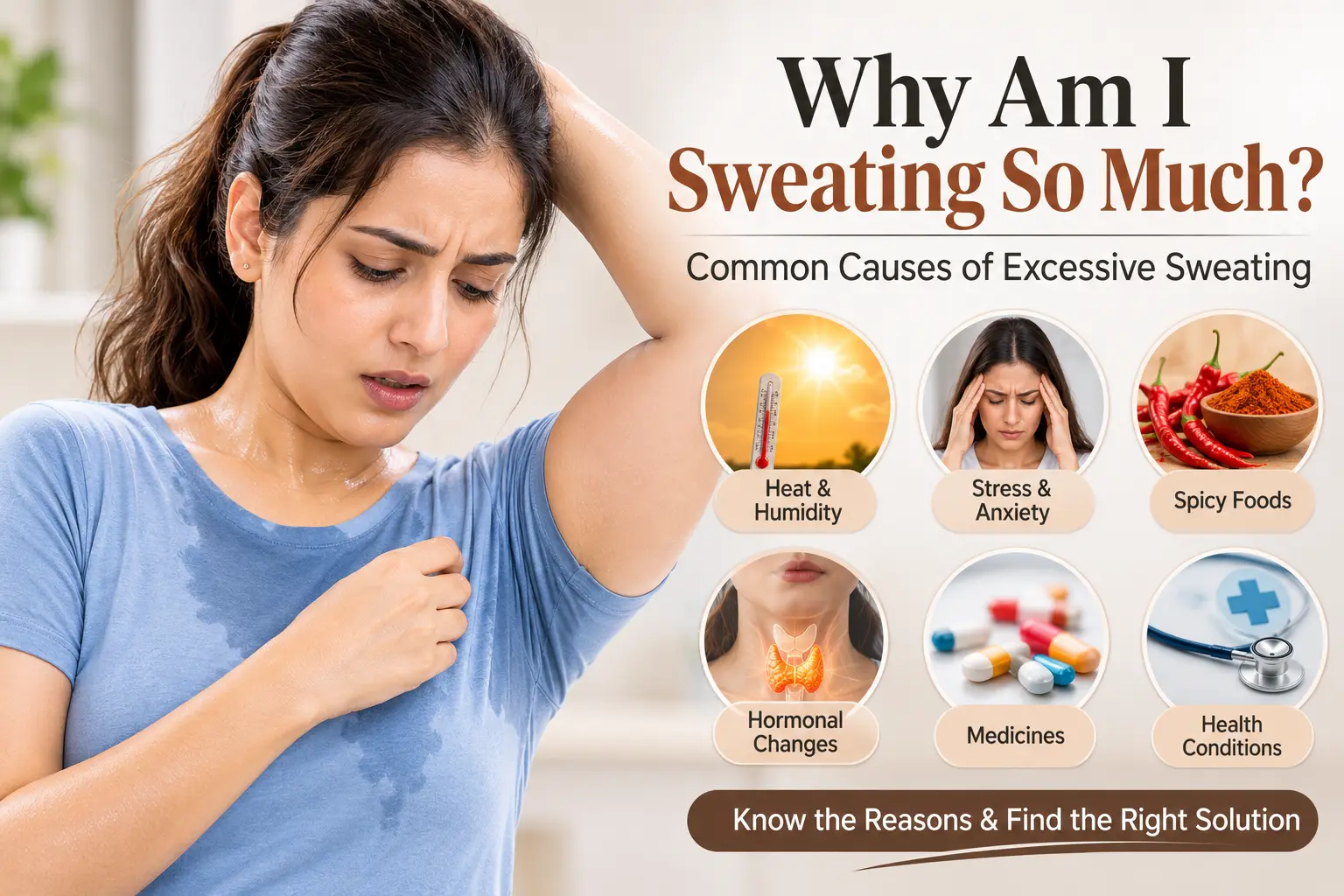
Why Am I Sweating So Much? Common Causes of Excessive Sweating
Sweating is the body’s natural way of regulating temperature. It usually increases during hot weather, physical activity or situations that make you feel nervous or stressed. However, some people notice that they sweat more than expected, even when they are resting or in a cool environment.
If you often wonder, “Why do I sweat so much?”, several factors may be involved. These can include everyday environmental triggers, emotional responses, hormonal changes, certain medicines and underlying health conditions.
The timing, frequency and circumstances of sweating can provide useful clues about its possible cause. Understanding these patterns can help you recognise what may be contributing to the problem and when medical advice may be appropriate.
Why Does the Body Produce Sweat?
Sweating is an important part of the body’s temperature-regulation system. When your body becomes warm, the nervous system signals the sweat glands to release moisture onto the skin. As this moisture evaporates, it helps cool the body.
Sweating can also occur in response to emotional situations. Nervousness, anxiety, fear and excitement can activate the body’s stress response and stimulate sweat production.
The amount of sweat produced varies from person to person. Some people naturally sweat more than others, while changes in health, medication, activity levels and environmental conditions can also influence sweating.
Sweating during exercise or on a hot day is generally expected. Repeated sweating without an obvious trigger may have a different explanation.
What Are the Common Causes of Excessive Sweating?
There is no single explanation for excessive sweating. It may be associated with everyday environmental conditions, emotional responses, hormonal changes, medication effects or certain health conditions.
1. Heat, Humidity and Physical Activity
Warm temperatures increase the body’s need to release heat. High humidity can make sweat evaporate more slowly, leaving the skin feeling damp for longer.
Physical activity also increases heat production. Sweating during exercise, brisk walking or physically demanding work is usually a normal response.
Some people may also sweat more than others while performing the same activity because of individual differences in fitness, body size and temperature regulation.
2. Stress and Anxiety
Emotional sweating is associated with activation of the body’s nervous system. Stress, nervousness and anxiety can stimulate sweat glands even when the surroundings are cool.
This may become noticeable during interviews, presentations, social situations or moments of emotional pressure.
Sweating associated with anxiety may occur alongside a racing heartbeat, nervousness or a feeling of restlessness. The intensity and frequency can vary between individuals.
3. Food and Drinks
Certain foods and beverages can temporarily increase sweating in some people.
Common examples include:
Spicy foods and chilli.
Hot drinks and very hot meals.
Caffeinated beverages such as coffee.
Alcohol.
Spicy foods can stimulate temperature-related nerve responses, while caffeine may increase nervous-system activity in some individuals.
Individual triggers vary. Not everyone experiences increased sweating after consuming these foods or drinks.
4. Hormonal Changes
Hormonal fluctuations can influence the body’s temperature regulation. Some people experience increased sweating or hot flushes during menopause or other periods of hormonal change.
An overactive thyroid (hyperthyroidism) can also increase sweating because of increased metabolic activity.
Other possible symptoms of an overactive thyroid include:
Feeling unusually warm.
A racing heartbeat.
Tremors or shakiness.
Unexplained weight changes.
Increased nervousness.
Persistent sweating accompanied by these symptoms should be discussed with a healthcare professional.
5. Medicines and Certain Health Conditions
Some medicines may cause increased sweating as a side effect. Certain antidepressants, pain medicines and other prescription medicines can contribute.
Sweating may also occur alongside medical conditions such as:
Infections and fever.
Overactive thyroid.
Low blood glucose.
Certain hormonal disorders.
Some neurological conditions.
The possible explanation depends on the person’s symptoms, medical history and medicines.
If sweating begins after starting or changing a medicine, discuss it with the prescribing healthcare professional. Do not stop a prescribed medicine without medical advice.
Why Am I Sweating Without Exercise?
Sweating without exercise can be confusing, particularly when the room is cool and you are not physically active.
Possible reasons include:
Stress, anxiety or emotional responses.
Caffeine, alcohol or spicy foods.
Hormonal changes.
Certain medicines.
Fever or an infection.
Individual differences in sweat production.
An underlying health condition.
The circumstances in which sweating occurs can provide useful clues.
For example, sweating that appears during stressful situations may have a different explanation from sweating that occurs repeatedly while resting or sleeping.
It is also useful to notice whether sweating happens occasionally or becomes a regular pattern. If it begins suddenly, becomes persistent or occurs with other unexplained symptoms, discuss it with a healthcare professional.
Why Do I Sweat While Sleeping?
Some sweating during sleep is normal, particularly if the bedroom is warm, bedding is heavy or nightwear does not allow heat to escape.
However, repeated episodes of heavy sweating during sleep can have other explanations.
Possible contributing factors include:
Hormonal changes, including menopause.
Anxiety or emotional stress.
Certain medicines, including some antidepressants.
Low blood glucose.
Alcohol consumption.
Infections or other underlying health conditions.
The term night sweats generally refers to episodes of sweating that soak nightclothes or bedding even when the sleeping environment is cool.
According to the NHS, regularly waking up with soaking wet sheets should be discussed with a healthcare professional. This is particularly important if night sweats occur with fever, a cough, diarrhoea or unexplained weight loss.
Read the NHS guide to night sweats for further information about possible causes and when to seek medical advice.
When Should Unexplained Sweating Be Checked?
Occasional sweating is usually part of normal temperature regulation. However, persistent or unexplained sweating should not automatically be dismissed as a response to heat.
Consider seeking medical advice if:
Sweating has continued for several months without a clear explanation.
It interferes with everyday activities.
You experience frequent sweating without an obvious trigger.
You regularly wake up with heavy night sweats.
Sweating starts suddenly or changes noticeably.
You also experience symptoms such as fever, unexplained weight loss or a racing heartbeat.
These are reasons to discuss sweating with a healthcare professional. You do not need to experience all these symptoms before seeking advice.
A healthcare professional may ask:
When did the sweating begin?
Does it happen during the day, at night or both?
Does it occur during rest or physical activity?
Have you recently started or changed any medicines?
Are there other symptoms, such as fever, weight changes or palpitations?
Your medical history and the pattern of sweating can help determine whether further assessment or investigations are appropriate.
Seek urgent medical attention if sudden sweating occurs with chest pain, shortness of breath, faintness or other symptoms that may indicate a medical emergency.
Simple Ways to Understand and Reduce Everyday Sweating
A few practical measures may help reduce discomfort and identify patterns in everyday sweating.
Keep a sweating diary: Note when sweating occurs and whether it follows heat, stress, caffeine, spicy foods or alcohol.
Choose breathable clothing: Loose-fitting clothes and breathable fabrics may improve comfort.
Keep your sleeping environment comfortable: Consider room temperature, bedding and nightwear if you tend to sweat during sleep.
Maintain hydration: Replace fluids lost through sweating, especially during hot weather and physical activity.
Notice individual triggers: Patterns can differ between people, so observe what appears to make your sweating worse.
Review medication changes: Discuss new or worsening sweating with your healthcare professional if it began after a medicine was started or changed.
These everyday measures may help with discomfort and make potential triggers easier to recognise. However, they do not identify every possible underlying cause.
The NHS guide to excessive sweating also provides practical advice about managing sweating and when to seek further help.
Frequently Asked Questions
1. Is It Normal to Sweat When I Am Not Exercising?
Yes. Sweating can occur because of heat, emotional stress, hormonal changes, certain foods or medicines. Persistent sweating without an obvious trigger may need medical assessment.
2. Can Anxiety Cause Excessive Sweating?
Yes. Anxiety and nervousness can activate the body’s stress response and stimulate sweat glands. Sweating may occur even when the surroundings are cool and physical activity is minimal.
3. Why Do I Wake Up Sweating at Night?
A warm bedroom, heavy bedding and hormonal changes can contribute. Repeated heavy night sweats may also be associated with medicines or underlying health conditions. Regular unexplained episodes should be discussed with a healthcare professional.
4. Can Medicines Make You Sweat More?
Yes. Some prescription medicines can cause increased sweating as a side effect. If you notice a change after starting or changing medication, speak to the prescribing healthcare professional rather than stopping it yourself.
5. Can an Overactive Thyroid Cause Sweating?
Yes. An overactive thyroid can increase the body’s metabolic activity and cause increased sweating. Other symptoms may include a racing heartbeat, tremors, feeling unusually warm and unexplained weight changes.
6. When Should Unexplained Sweating Be Taken Seriously?
Seek medical advice if sweating is persistent, unexplained, affects everyday activities or regularly occurs during sleep. Sweating accompanied by chest pain, breathlessness or faintness requires urgent medical attention.
Conclusion
Sweating is an essential part of the body’s temperature-regulation system, but excessive or unexplained sweating can sometimes have causes beyond heat or physical activity.
Stress, hormonal changes, medicines, everyday triggers and certain health conditions may all contribute. Paying attention to when sweating happens, what circumstances trigger it and whether other symptoms are present can help clarify the pattern.
If sweating is persistent, disruptive or unexplained, a medical assessment can help identify possible contributing factors. For further information about the clinical assessment of persistent excessive sweating, read our separate guide to hyperhidrosis assessment and care.
Medical References
This article provides general health information and does not replace an individual medical assessment.