Biostimulators: Redefining Anti-Ageing with Natural Collagen Stimulation

Best biostimulators treatment in Delhi for face and jowls – collagen stimulating injections with Sculptra and Profhilo before and after
Home / Categories / Biostimulators: Redefining Anti-Ageing with Natural Collagen Stimulation

Biostimulators for Face in Delhi: Cost, Sculptra, Profhilo, Radiesse & Results

Biostimulators Treatment in Delhi: Collagen-Stimulating Injections for Natural Facial Rejuvenation

Biostimulators are advanced injectable treatments designed to stimulate the skin’s natural collagen production and improve structural skin support over time. Unlike traditional dermal fillers that create immediate volume beneath the skin, collagen-stimulating injections activate fibroblasts within the dermis, encouraging the gradual formation of new collagen fibres that strengthen the skin’s extracellular matrix.
 
As collagen production increases, the skin may become firmer, more elastic, and better supported, helping restore facial contours while maintaining natural expression. Because these treatments work through the body’s own regenerative processes, the improvements typically develop progressively and often appear more subtle and natural than treatments focused on instant volumisation.
 
In modern aesthetic medicine, commonly used biostimulators include Sculptra, Radiesse, and Profhilo. These treatments differ in composition and mechanism, but all aim to improve skin quality, collagen support, and facial rejuvenation through biological stimulation rather than simply filling space beneath the skin.
 
At The Face Clinic in Hauz Khas, South Delhi, biostimulator treatments are performed under the guidance of Dr Reema Arora (MBBS, MSc Facial Aesthetics, UK) using a doctor-led, anatomy-based approach designed to achieve refined, natural-looking facial rejuvenation.

Doctor’s Overview

Biostimulators represent a regenerative approach to facial rejuvenation, focusing on improving the skin’s structural quality rather than simply restoring lost volume. By stimulating collagen production within the dermis, these treatments gradually strengthen the skin and support natural facial contours over time.

At The Face Clinic in Hauz Khas, South Delhi, biostimulator treatments are performed using personalised treatment planning based on skin quality, facial anatomy, and long-term ageing patterns. The goal is to improve skin firmness, dermal support, and facial balance while preserving natural expression and individual facial harmony.

Quick Facts: Biostimulators Treatment

Key Detail
Information
Treatment Type
Collagen-stimulating injectable treatment
Common Products Used
Sculptra, Radiesse, Profhilo
Primary Goal
Stimulate collagen production and improve skin firmness
Best For
Skin laxity, reduced elasticity, early facial ageing
Common Treatment Areas
Cheeks, jawline, jowls, temples, lower face, neck
Results Timeline
Gradual improvements over 4–12 weeks
Duration of Results
Approximately 12–24 months depending on treatment
Downtime
Minimal; mild swelling or redness may occur temporarily
Sessions Required
Often 1–3 sessions depending on product and treatment plan
Treatment Approach at The Face Clinic
Doctor-led, personalised regenerative aesthetic treatment
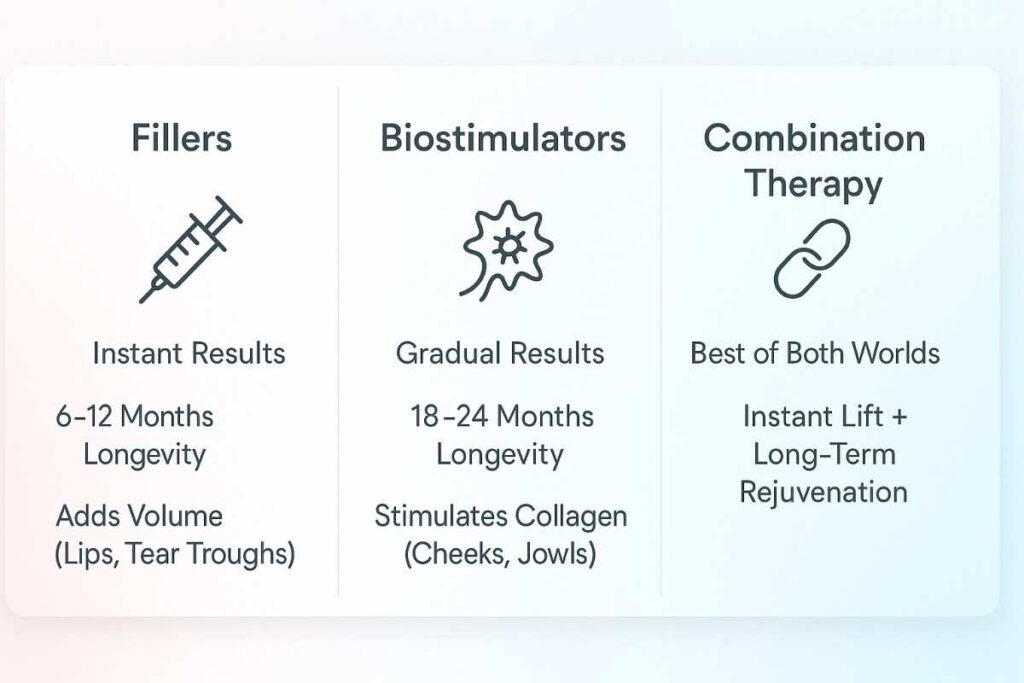
Dermal fillers vs biostimulators vs combination therapy infographic for face rejuvenation in Delhi

What Are Biostimulators?

Biostimulators are injectable aesthetic treatments designed to stimulate the skin’s natural collagen production and strengthen the skin’s structural framework over time. Rather than providing immediate volumisation, these treatments activate the skin’s regenerative processes, encouraging the gradual formation of new collagen fibres within the dermis.

Collagen is one of the key structural proteins responsible for maintaining skin firmness, elasticity, and dermal strength. As collagen levels decline with age, the skin gradually becomes thinner and less supportive, contributing to changes such as skin laxity, reduced facial definition, and fine lines. Biostimulator injections help address these changes by activating fibroblasts — the cells responsible for producing collagen and elastin — allowing the skin to rebuild its internal support structure.

Because these treatments stimulate collagen regeneration rather than simply filling space beneath the skin, improvements develop progressively as new collagen forms. Over time, this process can enhance skin quality, dermal thickness, and facial structural support, producing subtle and natural-looking rejuvenation.

Biostimulators are therefore often considered part of regenerative aesthetic medicine, where treatments aim to improve the skin’s underlying biology rather than only altering surface appearance. By supporting collagen regeneration within the dermal matrix, biostimulator injections can help restore skin strength and maintain more youthful facial contours.

How Collagen Biostimulators Work

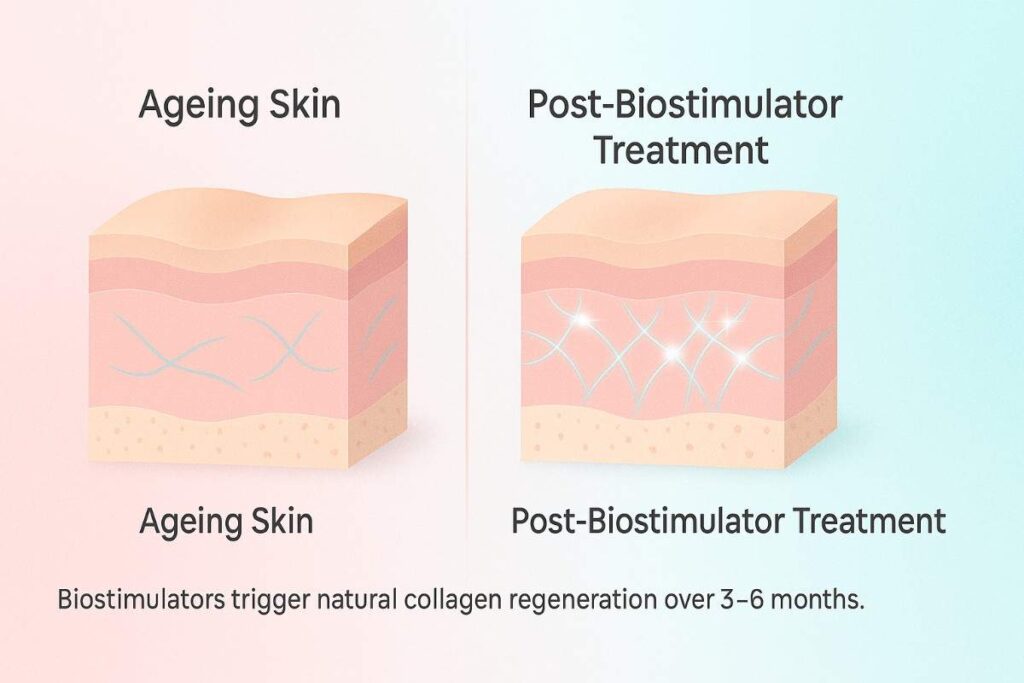
Collagen biostimulators are injectable treatments designed to activate the skin’s natural regenerative processes, encouraging the gradual production of new collagen within the dermis. Instead of simply filling space beneath the skin, these treatments stimulate fibroblasts — the specialised cells responsible for producing collagen and elastin — allowing the skin to rebuild structural support over time.
 
When biostimulators are injected into the dermal or subdermal layers, they trigger a controlled biological response that promotes collagen formation within the skin’s extracellular matrix. This process strengthens the dermal framework, improving skin firmness, elasticity, and overall facial support as new collagen fibres develop.
 
Because collagen regeneration occurs gradually, the improvements from collagen-stimulating injections develop progressively rather than appearing immediately. Over several weeks and months, the skin becomes thicker, more resilient, and better supported, leading to natural-looking improvements in skin quality and facial contours.
 
Different types of biostimulators stimulate collagen through distinct biological mechanisms. Some materials act as biodegradable microparticles that encourage fibroblast activity and collagen formation within the dermis, while others improve dermal hydration and tissue signalling, indirectly supporting collagen regeneration and skin quality.
 
As the body produces new collagen, the skin’s internal support structure becomes stronger and more stable. This regenerative process is what allows biostimulator treatments to produce progressive, natural-looking facial rejuvenation rather than temporary surface-level changes.
 

Fibroblast Activation and Collagen Regeneration

Fibroblasts play a central role in maintaining the skin’s structural integrity. These cells are responsible for producing collagen, elastin, and other proteins that form the extracellular matrix — the supportive framework that gives the skin its strength and elasticity.
 
Biostimulator injections activate fibroblasts within the dermis, encouraging them to produce new collagen fibres. As collagen production increases, the dermal matrix becomes stronger and more supportive, helping improve skin firmness and reduce the visible effects of collagen loss.
 

Dermal Matrix Strengthening and Skin Quality Improvement

The extracellular matrix is the network of proteins that provides structural support to the skin. With age, this matrix gradually weakens as collagen and elastin levels decline, contributing to skin laxity and reduced dermal strength.
 
By stimulating collagen production within the dermal matrix, biostimulators help reinforce the skin’s internal support structure. Over time, this can improve skin density, elasticity, and overall skin quality, leading to smoother and more resilient skin.
 

Why Biostimulator Results Develop Gradually

Unlike dermal fillers that produce immediate volume correction, biostimulators rely on the body’s natural collagen production, which takes time to develop. The process of fibroblast activation, collagen synthesis, and dermal remodelling occurs gradually over several weeks to months.
 
Because of this biological process, improvements appear progressively rather than instantly. Many patients begin noticing subtle changes within a few weeks, with continued improvement as collagen regeneration strengthens the skin’s structural framework.
 
This gradual progression is one of the reasons biostimulator treatments are often preferred by individuals seeking natural-looking facial rejuvenation without sudden or dramatic changes in appearance.
Collagen stimulation science diagram showing before and after effects of biostimulators for face and jowls in Delhi

Types of Biostimulators Used in Aesthetic Medicine

In aesthetic medicine, biostimulators refer to injectable treatments that stimulate the skin’s natural collagen production and improve structural support within the dermal matrix. Although these treatments share the common goal of enhancing skin quality and encouraging collagen regeneration, they differ in their composition, biological mechanism, and clinical applications.
 
The most widely used collagen-stimulating injectables in modern aesthetic practice include poly-L-lactic acid (PLLA) stimulators such as Sculptra, calcium hydroxyapatite (CaHA) stimulators such as Radiesse, and hyaluronic-acid bio-remodelling treatments such as Profhilo. Each of these treatments supports skin rejuvenation through a different biological pathway and may be selected depending on the patient’s skin condition, degree of collagen loss, and aesthetic goals.
 
Understanding the differences between these treatments helps physicians determine the most appropriate approach for improving skin firmness, dermal strength, and overall facial structure.
 

Sculptra (Poly-L-Lactic Acid Biostimulator)

Sculptra is a collagen-stimulating injectable treatment composed of poly-L-lactic acid (PLLA), a biodegradable material that has been used in medical applications for many years. Unlike traditional dermal fillers, Sculptra works by stimulating fibroblasts within the dermis, encouraging the gradual formation of new collagen fibres.
 
After injection, microscopic PLLA particles activate the body’s natural regenerative response, leading to progressive collagen production over time. As new collagen develops, the skin’s structural support improves, helping restore facial firmness and enhance areas affected by age-related volume loss.
 
Because the collagen regeneration process occurs gradually, the results of Sculptra typically develop over several months. This progressive improvement allows facial rejuvenation to appear subtle and natural, making it a popular option for individuals seeking long-term structural skin improvement rather than immediate volumisation.
 

Radiesse (Calcium Hydroxyapatite Collagen Stimulator)

Radiesse is a collagen biostimulator composed of calcium hydroxyapatite (CaHA) microspheres suspended within a gel carrier. These microspheres act as a temporary structural scaffold within the dermis while also stimulating the body’s natural collagen production.
 
Immediately after injection, the gel carrier provides subtle structural support in the treated area. Over time, the CaHA microspheres stimulate fibroblast activity and encourage the formation of new collagen within the dermal matrix. As the gel component is gradually absorbed by the body, the newly formed collagen continues to support the skin’s structure.
 
Because of this dual mechanism — immediate support combined with long-term collagen stimulation — Radiesse is often used to improve facial contour and skin firmness in areas such as the cheeks, jawline, and lower face.
 

Profhilo (Hyaluronic Acid Bio-Remodelling Treatment)

Profhilo is a unique injectable treatment based on highly stabilised hyaluronic acid, designed primarily for skin bio-remodelling rather than volumisation. Instead of creating structural volume beneath the skin, Profhilo spreads evenly through the dermis to improve hydration and support tissue quality.
 
By increasing hydration within the skin and stimulating fibroblast activity, Profhilo helps improve skin elasticity, texture, and overall dermal quality. The treatment is commonly used in patients experiencing early skin laxity or reduced skin firmness, particularly in areas such as the cheeks, lower face, and neck.
 
Because Profhilo focuses on improving skin quality rather than structural volume, it is often considered a complementary treatment within regenerative aesthetic medicine and may be combined with other collagen-stimulating procedures as part of a comprehensive facial rejuvenation plan.
Profhilo vs Sculptra biostimulators cost comparison in Delhi India with longevity and value per year

Sculptra vs Radiesse vs Profhilo: Understanding the Differences

Although Sculptra, Radiesse, and Profhilo are often grouped under the broader category of biostimulators or collagen-stimulating injectable treatments, they differ significantly in their composition, mechanism of action, and clinical applications.
 
Each treatment stimulates collagen production through a different biological pathway. Some primarily act as structural collagen stimulators, while others focus on bio-remodelling and skin hydration. Because of these differences, the most appropriate treatment depends on the patient’s skin quality, facial anatomy, and aesthetic goals.
 
In modern aesthetic practice, experienced physicians often select a specific biostimulator based on whether the primary goal is to improve skin firmness, hydration, structural support, or overall facial rejuvenation.
 

Key Differences Between Major Biostimulators

 
Treatment
Main Ingredient
Primary Action
Best Suited For
Result Development
Sculptra
Poly-L-lactic acid (PLLA)
Stimulates fibroblasts to produce new collagen fibres
Gradual facial rejuvenation, structural collagen support, volume restoration
Progressive improvement over several months
Radiesse
Calcium hydroxyapatite (CaHA) microspheres
Provides structural support and stimulates collagen production
Skin tightening, contour enhancement, lower-face support
Immediate support with gradual collagen stimulation
Profhilo
Stabilised hyaluronic acid
Bio-remodelling treatment that improves hydration and stimulates collagen and elastin
Skin hydration, early skin laxity, overall skin quality improvement
Gradual skin quality improvement over several weeks
While all three treatments support collagen production, they are not identical in their clinical effects. Sculptra focuses on long-term collagen stimulation and gradual structural improvement, Radiesse provides a combination of immediate support and collagen stimulation, and Profhilo primarily improves skin hydration and tissue quality through bio-remodelling.
 

Which Biostimulator Is Best for Skin Quality and Facial Rejuvenation?

The most suitable biostimulator depends on the individual’s skin condition and treatment goals.
 
Patients experiencing generalised skin thinning or gradual collagen loss may benefit from treatments designed to stimulate long-term collagen regeneration. Individuals with early skin laxity or reduced skin hydration may benefit from bio-remodelling treatments that improve skin elasticity and texture.
 
In some cases, experienced aesthetic physicians may combine different regenerative treatments within a broader facial rejuvenation plan to address both skin quality and structural support.
 
Because facial ageing affects multiple layers of tissue, selecting the appropriate collagen-stimulating treatment requires a detailed facial assessment and personalised treatment planning.

Biostimulators vs Dermal Fillers: Key Differences in Facial Rejuvenation

Biostimulators and dermal fillers are both injectable treatments used in aesthetic medicine to improve facial appearance, but they work through different biological mechanisms and treatment goals.

Dermal fillers are primarily designed to restore lost facial volume and reshape facial contours. These treatments typically use hyaluronic acid –based gels that add structure beneath the skin, producing immediate visible improvement in areas such as the cheeks, lips, chin, and under-eye region.
 

Biostimulators, in contrast, focus on stimulating the skin’s natural collagen production rather than directly adding volume. By activating fibroblasts within the dermis, these treatments encourage the gradual formation of new collagen fibres, strengthening the skin’s structural framework over time.

Because of these differences, the results develop differently. Dermal fillers provide immediate contour enhancement, while biostimulators produce progressive improvements in skin firmness, elasticity, and dermal strength as collagen regeneration occurs.

In modern aesthetic practice, these treatments are often complementary rather than mutually exclusive. Experienced aesthetic physicians may combine dermal fillers with collagen-stimulating treatments to address multiple aspects of facial ageing, including volume loss, skin laxity, and declining skin quality.

Comparison Table
 
Feature
Biostimulators
Dermal Fillers
Primary purpose
Stimulate natural collagen production to improve skin structure and firmness
Restore lost facial volume and reshape facial contours
Mechanism of action
Activate fibroblasts to stimulate collagen regeneration within the dermal matrix
Physically add volume beneath the skin using injectable gels
Materials used
Poly-L-lactic acid (PLLA), calcium hydroxyapatite (CaHA), regenerative injectable agents
Hyaluronic acid–based fillers and other volumising gels
Speed of results
Gradual improvements as new collagen forms over time
Immediate visible correction after treatment
Effect on collagen
Stimulates new collagen formation and dermal regeneration
Minimal direct collagen stimulation
Duration of improvement
Long-term collagen stimulation that continues for months
Temporary volume correction lasting several months to a year
Best suited for
Skin laxity, reduced skin quality, early facial ageing
Volume loss, contour enhancement, facial shaping
Typical treatment areas
Cheeks, jawline, temples, lower face
Lips, cheeks, chin, jawline, tear trough
Result appearance
Progressive, natural improvement in skin firmness and quality
Immediate contour enhancement and volumisation
Core difference
Regenerative treatment that stimulates collagen production within the skin
Structural treatment that restores lost volume beneath the skin

When Biostimulators Are Preferred

Biostimulators are often recommended for patients experiencing gradual collagen loss, early skin laxity, or declining skin quality. These treatments are particularly suitable for individuals seeking natural-looking rejuvenation that develops progressively over time.
 
By stimulating collagen regeneration within the dermis, biostimulators can improve skin firmness, elasticity, and dermal support while preserving natural facial expression.
 

When Dermal Fillers Are More Suitable

Dermal fillers are typically preferred when the primary concern is volume loss or facial contour changes. Because fillers provide immediate structural support, they are commonly used to enhance areas such as the lips, cheeks, chin, and under-eye region.
 
These treatments are especially useful when facial ageing results from loss of soft-tissue volume or changes in facial structure.
 

Why Many Treatment Plans Combine Both

Facial ageing is a complex process involving multiple tissue layers, including skin, fat, connective tissue, and bone. For this reason, many modern treatment plans combine different aesthetic approaches to achieve balanced results.
 
Dermal fillers  may restore structural support and contour, while biostimulators help improve skin quality and collagen density over time. When used together in carefully planned treatments, these approaches can provide more comprehensive facial rejuvenation.

Benefits of Biostimulators for Face and Jowls

Biostimulators are increasingly used in aesthetic medicine as collagen-stimulating injectable treatments that improve skin quality and structural support. Rather than simply adding volume beneath the skin, these treatments activate fibroblasts and stimulate the gradual production of new collagen within the dermal matrix.
 
As collagen levels increase, the skin becomes firmer, more elastic, and better supported, helping improve facial contours while maintaining natural facial expression. Because these treatments work by stimulating the body’s own regenerative processes, the results develop progressively and often appear subtle and natural.
 
For patients experiencing early facial ageing, particularly in the lower face, jawline, and jowl area, biostimulators can support structural skin improvement and help restore a more defined facial profile.
 

Improved Skin Firmness and Elasticity

Collagen plays a central role in maintaining the skin’s structural strength. As collagen production declines with age, the skin gradually becomes thinner and less elastic, contributing to laxity and loss of facial definition.
 
Biostimulator injections encourage fibroblasts to produce new collagen fibres, strengthening the dermal matrix and improving skin firmness. Over time, this regenerative process helps the skin appear denser, more resilient, and better supported.
 

Gradual and Natural-Looking Facial Rejuvenation

One of the key advantages of biostimulator treatments is that improvements develop gradually as collagen production increases. Because the skin’s structure is strengthened progressively, the results tend to appear subtle and natural rather than immediately volumised.
 
This gradual process allows facial rejuvenation to occur in a way that maintains natural expression and facial harmony.
 

Enhanced Jawline Definition and Reduced Jowls

Collagen depletion in the lower face contributes to softening of the jawline and the gradual development of jowls. As dermal support weakens, the skin may begin to lose definition along the jawline.
 
By stimulating collagen production within the dermis, biostimulators help reinforce the skin’s structural framework. This can improve skin firmness in the lower face and support more defined jawline contours, particularly in individuals experiencing mild to moderate skin laxity.
 

Long-Term Improvement in Skin Quality

Unlike treatments that provide temporary surface-level correction, biostimulators improve the underlying structural quality of the skin. As new collagen forms within the dermal matrix, the skin may gradually become thicker and more resilient.
 
These changes can enhance skin texture, elasticity, and overall dermal strength, contributing to healthier-looking skin over time.
 

Regenerative Support for Ageing Skin

Biostimulators are often considered part of regenerative aesthetic medicine, where treatments aim to support the skin’s natural repair processes rather than simply altering its appearance.
 
By stimulating collagen production and strengthening the dermal matrix, these treatments help address one of the fundamental biological changes associated with ageing — the gradual loss of collagen.
 
For individuals seeking non-surgical facial rejuvenation, this regenerative approach can provide balanced improvement in both skin quality and facial structure.

Treatment Areas for Biostimulators

Biostimulators are versatile injectable treatments used in multiple facial regions where collagen depletion contributes to reduced skin firmness, structural weakening, and early skin laxity. By stimulating fibroblast activity and encouraging the gradual formation of new collagen within the dermis, these treatments help strengthen the skin’s support framework over time.
 
Because collagen loss affects different areas of the face in distinct ways, treatment plans are typically personalised based on the patient’s skin quality, facial anatomy, and ageing patterns. In aesthetic practice, collagen-stimulating injections are most commonly used in areas where improving dermal strength and skin density can support more defined facial contours.
 

Cheeks and Mid-Face

The mid-face plays a key role in maintaining youthful facial structure. With age, declining collagen levels can reduce skin support in this region, contributing to flattening of the cheeks and softening of facial contours.
 
Biostimulators can help improve dermal strength and skin quality in the mid-face, supporting better structural integrity and enhancing the appearance of the cheeks over time.
 

Jawline and Lower Face

Loss of collagen in the lower face can lead to reduced skin firmness and diminished jawline definition. As dermal support weakens, the transition between the face and neck may become less defined.
 
Collagen-stimulating injections can help improve skin firmness in this region, supporting more defined jawline contours and improved lower-face structure.
 

Jowls

Jowl formation often occurs when collagen loss and skin laxity affect the lower face. As the skin loses elasticity and structural support, tissue may begin to descend along the jawline.
 
By stimulating collagen production within the dermis, biostimulators can help strengthen skin support in the lower face. This may improve skin firmness and the appearance of early jowling, particularly in individuals with mild to moderate skin laxity.
 

Temples

Age-related collagen depletion in the temple region can lead to reduced skin thickness and a hollowed appearance. In selected cases, improving skin quality and dermal support in this area can contribute to better overall facial balance.
 
Collagen stimulation treatments may be used to support skin quality in the temple region as part of a broader facial rejuvenation strategy.
 

Nasolabial Folds

Nasolabial folds develop as a result of multiple ageing processes, including collagen loss, volume changes, and skin laxity. While dermal fillers are often used to restore structural support in this area, collagen stimulation treatments may help improve skin quality and dermal strength in the surrounding tissue.
 
By supporting collagen regeneration, biostimulators can contribute to gradual improvement in overall skin firmness in this region.
 

Neck and Lower Facial Skin

Collagen depletion also affects the skin of the neck and lower face, where reduced dermal strength may lead to early skin laxity and loss of elasticity.

Certain biostimulator treatments are used to improve skin texture, firmness, and dermal density in the neck region, helping support smoother and healthier-looking skin over time.

Who Is a Good Candidate for Biostimulator Treatments?

Biostimulator treatments are most suitable for individuals experiencing gradual collagen loss, reduced skin firmness, and early facial ageing. Unlike dermal fillers that primarily restore lost volume, biostimulators focus on improving the skin’s structural quality by stimulating the body’s natural collagen production.
 
As collagen levels decline with age, the skin gradually becomes thinner, less elastic, and more prone to laxity. Biostimulator injections help address these changes by activating fibroblasts within the dermis and encouraging the regeneration of new collagen fibres. This process strengthens the skin’s extracellular matrix and improves overall facial support over time.
 
Because the results develop progressively, these treatments are often recommended for patients seeking subtle, natural-looking facial rejuvenation rather than dramatic structural changes.
 

Early Signs of Skin Laxity

Biostimulators are commonly recommended for individuals beginning to notice early signs of skin laxity, particularly in areas such as the lower face, jawline, cheeks, and neck. As collagen levels decline, the skin may lose firmness and facial contours may appear softer or less defined.
 
Collagen-stimulating injections help reinforce dermal structure, improving skin strength and elasticity while supporting gradual tightening of the skin.
 

Patients Seeking Natural-Looking Rejuvenation

Many patients prefer treatments that enhance facial appearance without obvious or immediate volumisation. Because biostimulators stimulate the skin’s natural regenerative processes, the improvements appear gradually as collagen production increases.
 
This progressive approach helps maintain natural facial movement and expression while improving skin quality and structural support.
 

Individuals With Gradual Collagen Loss

Collagen depletion typically begins in the late twenties and accelerates with age, contributing to reduced skin density, fine lines, and subtle facial volume changes. Biostimulator treatments help support collagen regeneration within the dermis, improving skin firmness, elasticity, and overall facial structure over time.
 
For individuals experiencing these gradual changes, collagen stimulation treatments can provide long-term improvement in skin quality.
 

Patients Looking for Long-Term Skin Quality Improvement

Biostimulators are particularly suitable for patients interested in regenerative aesthetic treatments that strengthen the skin rather than simply filling space beneath it. Because these injections stimulate the body’s own collagen production, the results often develop gradually but may last longer than many temporary volumising treatments.
 
For many individuals seeking non-surgical facial rejuvenation, biostimulators offer a balanced approach that improves skin quality, dermal strength, and facial support while preserving a natural appearance.

Results Timeline: When Do Biostimulators Work?

Biostimulators work differently from traditional dermal fillers because they stimulate the body’s natural collagen production rather than creating immediate volume beneath the skin. These collagen-stimulating injections activate fibroblasts within the dermis, encouraging the gradual formation of new collagen fibres that strengthen the skin’s structural framework.
 
Because collagen regeneration is a biological process, improvements develop progressively over time. The timeline can vary depending on the type of biostimulator used, the treatment area, and the individual’s collagen response, but most patients begin noticing subtle changes within several weeks as the skin’s internal support structure improves.
 
As collagen production increases, the skin may gradually appear firmer, smoother, and better supported, with continued improvement as the dermal matrix strengthens.
 

Immediate Post-Treatment Phase

Immediately after treatment, patients may notice temporary swelling or mild fullness at the injection sites. These effects are related to the injection process itself and typically settle within a few days.
 
At this stage, visible changes do not yet reflect collagen stimulation, as the biological process of collagen formation requires time to develop.
 

Early Collagen Stimulation (3–4 Weeks)

During the first few weeks after treatment, fibroblast activity increases and the early stages of collagen synthesis begin within the dermis. Some individuals may start to notice subtle improvements in skin texture or firmness during this phase.
 
These changes are typically gradual and may appear as the skin begins to regain structural support.
 

Visible Skin Improvement (6–8 Weeks)

By six to eight weeks, the effects of collagen regeneration may become more noticeable. As new collagen fibres develop within the dermal matrix, the skin may appear firmer and more resilient, particularly in areas such as the cheeks, jawline, and lower face.
 
At this stage, many patients begin seeing clearer improvements in overall skin quality.
 

Peak Collagen Regeneration (3–6 Months)

Collagen production continues to increase over several months following treatment. During this period, the dermal matrix becomes progressively stronger as new collagen fibres mature and integrate within the skin’s structural framework.
 
For many individuals, the most visible improvements in skin firmness, elasticity, and facial support occur during this stage.
 

Long-Term Skin Strengthening (6–12 Months)

Collagen remodelling may continue for several months after treatment, helping maintain improved dermal strength and skin elasticity. Because biostimulators support the body’s natural regenerative processes, the results often appear gradual and natural rather than immediate.
 
In some cases, physicians may recommend additional sessions spaced several weeks apart to optimise collagen stimulation and maintain long-term skin quality.

Biostimulators Before and After Results: What Changes to Expect

Biostimulators produce progressive and natural-looking facial rejuvenation by stimulating the skin’s own collagen production. Unlike dermal fillers, which create immediate structural changes by adding volume beneath the skin, biostimulator treatments work by activating fibroblasts within the dermis and encouraging the gradual formation of new collagen fibres.
 
As collagen regeneration strengthens the skin’s extracellular matrix, the visible changes typically occur slowly and subtly. Rather than dramatically altering facial contours in a single session, the goal of biostimulator treatments is to improve skin quality, dermal support, and facial firmness over time.
 
For many patients, the “before and after” results are characterised by healthier-looking skin, improved structural support, and more refined facial contours, while maintaining natural expression and facial harmony.
 

Improvements in Skin Firmness and Density

One of the most noticeable changes after biostimulator treatments is an improvement in skin firmness and dermal density. As new collagen fibres develop within the dermal matrix, the skin gradually becomes thicker and more resilient.
 
These structural improvements can help restore the skin’s ability to maintain support, which may reduce the appearance of mild skin laxity and contribute to a firmer overall skin texture.
 

Subtle Enhancement of Facial Contours

Because collagen stimulation strengthens the skin’s internal support framework, biostimulators may contribute to gradual improvements in facial contours. Areas such as the cheeks, jawline, and lower face may appear more defined as dermal support improves.
 
Unlike treatments designed to create dramatic volume changes, the improvements produced by collagen-stimulating injections tend to appear balanced and natural, enhancing facial structure without obvious signs of treatment.
 

Progressive and Natural-Looking Results

Biostimulator treatments are often chosen by patients who prefer gradual, regenerative improvement rather than immediate transformation. As collagen production increases over several weeks and months, the skin progressively becomes firmer and more structurally supported.
 
Because these changes occur gradually, the results often appear subtle and natural. Many individuals notice that their skin looks healthier, smoother, and more resilient, rather than dramatically altered.

Safety, Side Effects and Downtime of Biostimulator Treatments

Biostimulator injections such as Sculptra, Radiesse, and Profhilo are widely used in aesthetic medicine and are generally considered safe when performed by experienced medical professionals trained in facial anatomy and injection techniques. These treatments are designed to stimulate the skin’s natural collagen production while improving skin structure and quality over time.
 
As with any injectable aesthetic procedure, mild temporary side effects may occur after treatment. Most reactions are related to the injection process itself and typically resolve within a short period as the skin heals.
 
Understanding the expected recovery process and possible side effects helps patients approach treatment with realistic expectations and confidence.
 

Common Temporary Side Effects

Following biostimulator injections, patients may experience mild and temporary reactions in the treated area. These effects are usually short-lived and resolve naturally within a few days.
 
Common temporary side effects may include:
  • mild swelling at the injection sites
  • temporary redness or skin sensitivity
  • minor bruising
  • tenderness in the treated area
These reactions occur as part of the body’s natural response to injections and typically improve as the skin recovers.
 

Recovery Time After Treatment

One of the reasons biostimulators are popular in aesthetic medicine is that they generally involve minimal downtime. Most individuals are able to return to their normal daily activities shortly after treatment.
 
Mild swelling or redness may be noticeable for a short period, but these effects usually settle within a few days. Practitioners may provide specific aftercare instructions depending on the product used and the treatment area.
 
Because collagen regeneration occurs gradually over time, the visible improvements from biostimulator treatments develop progressively over several weeks to months.
 

Importance of Treatment by an Experienced Aesthetic Doctor: 

Although biostimulators are widely used in aesthetic medicine, treatment outcomes depend significantly on proper product selection, injection technique, and facial anatomical knowledge.
 
Collagen-stimulating injections influence the skin’s deeper structural layers and require careful placement within the appropriate tissue planes. Experienced aesthetic physicians evaluate facial anatomy, skin quality, and ageing patterns before selecting the most suitable treatment approach.
 
Receiving treatment at a doctor-led medical aesthetic clinic helps ensure appropriate technique, patient safety, and balanced, natural-looking outcomes.

Sculptra & Biostimulators Cost in Delhi (Face & Buttocks) — 2026

Transparent pricing for Sculptra (PLLA) and related biostimulators at The Face Clinic — per vial, full-face plans, maintenance top-ups, and buttock volumization.
Updated: 28 Oct 2026.

Sculptra & Biostimulators Price Table — cost of Sculptra treatment by vial, full-face plan, maintenance, and buttocks pricing (Delhi).
Treatment Unit Typical Areas / Plan Price (INR)
Sculptra Filler Cost — Per Vial (PLLA) Per vial Cheeks, temples, jawline; series of 2–3 sessions advised From ₹ 35,000
Sculptra Face Cost — Full-Face Plan (2–3 Vials) Per plan (2–3 vials, 2–3 sessions) Cheeks + temples ± jawline; 4–6 weeks between sessions ₹ 70,000 – ₹ 1,20,000
Sculptra Dermal Filler Cost — Maintenance / Top-Up Per session (1 vial typical) Top-ups at 12–18 months for collagen support From ₹ 35,000
Sculptra Cost for Buttocks — Volumization Plan Per plan (8–16 vials over 2–3 sessions) Both buttocks; dosing individualized for projection and shape ₹ 2,40,000 – ₹ 4,80,000
Calcium Hydroxyapatite (CaHA) — Biostimulator Per syringe Lower face contouring, jawline; dilute CaHA for neck & hands From ₹ 30,000
* Prices are indicative for South Delhi and vary by areas treated and number of vials/sessions. Plans typically involve 2–3 sessions, 4–6 weeks apart, with results building gradually as collagen forms.
Prices are exclusive of applicable taxes. EMI/financing available on request. Valid through 31 June 2026.

Biostimulators Treatment Cost in Delhi: Price Guide for Collagen-Stimulating Injections

The cost of biostimulator treatments in Delhi can vary depending on the type of injectable used, the treatment area, and the number of vials required to achieve optimal collagen stimulation. Collagen-stimulating injections such as Sculptra, Radiesse, and Profhilo are advanced regenerative treatments designed to strengthen the skin’s dermal structure and improve facial firmness over time.
 
Because these treatments work by activating the skin’s natural collagen regeneration processes, treatment plans are usually personalised based on the individual’s skin quality, degree of collagen loss, and facial ageing patterns. For this reason, the overall cost may differ between patients depending on the number of sessions or vials required to achieve the desired improvement.
 
The following table provides a general overview of the average price range for biostimulator treatments in Delhi.
 
Average Cost of Biostimulators in Delhi
 
Treatment
Average Cost in Delhi
Typical Sessions Required
Primary Treatment Goal
Sculptra
₹45,000 – ₹65,000 per vial
2–3 sessions over several months
Collagen stimulation and gradual facial volume restoration
Radiesse
₹40,000 – ₹60,000 per syringe
1–2 sessions
Structural support and collagen stimulation
Profhilo
₹30,000 – ₹45,000 per session
2 sessions spaced 4 weeks apart
Skin hydration and collagen stimulation

Average Cost of Sculptra in Delhi

Sculptra is typically priced per vial, and most treatment plans require two or more sessions spaced over several months to achieve optimal collagen stimulation. Because the treatment works gradually by stimulating collagen production, physicians often recommend a series of sessions to support progressive skin improvement.
 

Average Cost of Radiesse in Delhi

Radiesse treatments are usually priced per syringe. Because Radiesse provides both immediate structural support and long-term collagen stimulation, many patients achieve visible improvement with one or two treatment sessions depending on the treatment area and aesthetic goals.

Average Cost of Profhilo in Delhi

Profhilo treatments are commonly performed as a two-session protocol, with sessions spaced approximately four weeks apart. The treatment is designed to improve skin hydration and dermal quality through bio-remodelling, and many patients notice improvements in skin elasticity and texture after the full treatment cycle.
 

Factors That Influence Biostimulator Treatment Cost

Several factors can influence the total cost of collagen-stimulating treatments:
  • the specific product used

  • the treatment area and degree of skin laxity

  • the number of vials required

  • the number of treatment sessions recommended

  • the practitioner’s experience and clinic setting
Because facial ageing patterns and collagen loss vary between individuals, a personalised consultation with an experienced aesthetic doctor is typically required to determine the most appropriate treatment plan and cost.

Why Choose The Face Clinic for Biostimulator Treatments in Delhi

Selecting the right clinic is one of the most important factors influencing the safety and effectiveness of biostimulator treatments. Collagen-stimulating injections work within the skin’s deeper structural layers, which means that treatment outcomes depend heavily on accurate facial assessment, product selection, and precise injection techniques.
 
At The Face Clinic in Hauz Khas, South Delhi, biostimulator treatments are performed using a doctor-led, anatomy-based approach designed to improve skin quality while maintaining natural facial balance. Rather than focusing on isolated treatment areas, the clinic’s approach considers the overall facial structure, skin quality, and long-term ageing patterns.
 
Treatments are performed under the guidance of Dr Reema Arora (MBBS, MSc Facial Aesthetics, UK), whose clinical approach emphasises subtle structural enhancement, collagen regeneration, and natural-looking facial rejuvenation.
 

Doctor-Led Aesthetic Treatments

Biostimulators influence the skin’s deeper structural layers and require careful placement within specific tissue planes. At The Face Clinic, treatments are performed within a medical aesthetic setting, ensuring that each procedure is guided by a detailed understanding of facial anatomy and skin biology.
 
A doctor-led approach allows treatment plans to be tailored to each patient’s skin condition, facial structure, and aesthetic goals.
 

Advanced Facial Anatomy Expertise

Successful collagen-stimulating treatments depend on precise product placement and anatomical awareness. Improper injection techniques can affect both treatment outcomes and patient safety.
 
By applying detailed anatomical knowledge and careful injection planning, treatments are designed to support balanced facial rejuvenation and structural skin improvement.
 

Personalised Regenerative Treatment Planning

Collagen loss and skin ageing affect individuals differently depending on factors such as genetics, lifestyle, and skin quality. For this reason, treatment plans at The Face Clinic are personalised following a detailed consultation and facial assessment.
 
Rather than using a standardised approach, treatments are tailored to address specific concerns such as skin laxity, dermal thinning, or reduced facial support.
 

Natural-Looking Results Philosophy

A key principle of treatment at The Face Clinic in Hauz Khas, South Delhi is achieving refined, natural-looking outcomes. Biostimulators are selected and administered with the goal of improving skin structure gradually while preserving natural facial movement and expression.
 
By focusing on subtle collagen stimulation and balanced facial rejuvenation, treatments aim to enhance the skin’s appearance without creating an artificial or over-treated look.

Biostimulators Treatment: Key Takeaways

Biostimulators are injectable treatments designed to stimulate the skin’s natural collagen production and improve structural skin support over time. Rather than providing immediate volumisation, these treatments activate fibroblasts within the dermis, encouraging the gradual formation of new collagen fibres that strengthen the skin’s extracellular matrix.
 
Key points to understand about biostimulator treatments include:
  • collagen stimulation rather than immediate volume
  • progressive and natural-looking results

  • common treatments include Sculptra, Radiesse, and Profhilo

  • best suited for early skin laxity and collagen loss

  • results often last 12–24 months

  • minimal downtime with a return to normal activities soon after treatment
For individuals seeking non-surgical facial rejuvenation, biostimulators offer a regenerative approach that improves skin quality while maintaining natural facial expression.

FAQs on Biostimulator Treatments

What are biostimulators and how do they work?

Biostimulators are injectable treatments designed to stimulate the skin’s natural collagen production. Instead of adding immediate volume beneath the skin, these treatments activate fibroblasts within the dermis, encouraging the gradual formation of new collagen fibres that strengthen the skin’s structural framework.
 
As collagen levels increase over time, the skin may appear firmer, more elastic, and better supported, contributing to natural-looking facial rejuvenation.
 

How long do biostimulators take to show results?

Biostimulator treatments typically produce gradual improvements rather than immediate visible changes. Early improvements in skin texture or firmness may appear within three to four weeks, while more noticeable results often develop between six and twelve weeks as collagen production increases.
 
Because collagen regeneration continues over time, improvements may continue to develop over several months following treatment.
 

How long do biostimulator treatments last?

The longevity of biostimulator treatments depends on the specific product used and the individual’s collagen response. In many patients, results may last 12 to 24 months, as these treatments stimulate the body’s own collagen production rather than simply adding temporary volume.
 
Maintenance sessions may sometimes be recommended to sustain collagen stimulation and maintain improvements in skin quality.
 

Biostimulators vs dermal fillers: which is better?

Biostimulators and dermal fillers serve different purposes in aesthetic medicine. Dermal fillers primarily restore lost facial volume and reshape facial contours, while biostimulators focus on stimulating collagen production and improving skin quality over time.
 
In many treatment plans, both approaches may be combined to address multiple aspects of facial ageing, including volume loss, skin laxity, and declining skin quality.
 

Are biostimulator injections safe?

Biostimulator injections are generally considered safe when performed by qualified medical professionals trained in facial anatomy and injection techniques. These treatments have been widely used in aesthetic medicine to stimulate collagen production and improve skin structure.
 
As with any injectable treatment, procedures should be performed in a medical clinic under experienced supervision to ensure proper technique, patient safety, and optimal outcomes.
 

Who is a good candidate for biostimulator treatments?

Biostimulator treatments are often suitable for individuals experiencing early to moderate skin laxity, collagen loss, or reduced skin firmness. They are particularly beneficial for patients seeking natural-looking facial rejuvenation and improved skin quality rather than dramatic volume changes.
 
A consultation with an experienced aesthetic physician helps determine whether collagen-stimulating injections are appropriate based on the patient’s skin condition, facial anatomy, and aesthetic goals.

Related Non-Surgical Treatments

Biostimulators are often part of a broader group of non-surgical aesthetic treatments designed to improve skin quality, restore facial structure, and support collagen regeneration. Because facial ageing involves multiple tissue layers — including skin, fat, connective tissue, and bone — many treatment plans combine different approaches to achieve balanced and natural-looking results.
 
Depending on the individual’s concerns, aesthetic physicians may recommend combining collagen-stimulating treatments with other non-surgical procedures that address volume loss, skin laxity, or declining skin quality.
 

Dermal Fillers for Structural Support

Dermal fillers are injectable treatments used to restore lost facial volume and improve facial contours. Hyaluronic acid–based fillers are commonly used to enhance areas such as the cheeks, jawline, chin, and under-eye region, helping restore structural balance to the face.
 
While biostimulators gradually stimulate collagen production, dermal fillers provide immediate contour improvement. For this reason, both treatments are often combined in comprehensive facial rejuvenation plans.
 

Skin Boosters for Skin Quality Improvement

Skin boosters are injectable treatments designed to improve skin hydration, elasticity, and overall skin texture. Unlike dermal fillers, which primarily add volume, skin boosters deliver hydrating molecules within the dermis to enhance skin quality.
 
Treatments such as SkinVive and other hyaluronic-acid skin boosters are often used to complement collagen-stimulating procedures, helping improve skin smoothness and hydration.
 

Thread Lift for Non-Surgical Skin Tightening

Thread lift procedures use specialised dissolvable threads to provide mechanical lifting and collagen stimulation in areas affected by skin laxity. These treatments are commonly used for jawline definition, mid-face lifting, and lower-face tightening.
 
Because thread lifts provide immediate lifting while biostimulators support long-term collagen regeneration, the two treatments may sometimes be used together as part of a personalised facial rejuvenation strategy.
 

Energy-Based Skin Tightening Treatments

Non-surgical facelift treatments, energy-based technologies such as ultrasound and radiofrequency treatments stimulate collagen production within deeper tissue layers without surgery. These treatments help improve skin firmness and facial contour by encouraging gradual tissue tightening.
 
When combined with collagen-stimulating injections, energy-based treatments can enhance overall rejuvenation by supporting both dermal collagen stimulation and deeper tissue tightening.

Biostimulators: A Regenerative Approach to Facial Rejuvenation

Biostimulators represent an important advancement in modern aesthetic medicine, offering a regenerative approach to facial rejuvenation that focuses on improving the skin’s structural quality rather than simply adding temporary volume.
 
By stimulating fibroblast activity and encouraging the gradual formation of new collagen within the dermis, these treatments help strengthen the skin’s extracellular matrix and improve skin firmness, elasticity, and facial support over time. Because the improvements develop progressively, the results often appear subtle, balanced, and natural.
 
For individuals experiencing early skin laxity, declining skin quality, or gradual collagen loss, biostimulator treatments can support long-term improvement in both skin structure and facial contours.
 
When performed by experienced aesthetic physicians, collagen-stimulating injections can play an important role in comprehensive non-surgical rejuvenation strategies, often complementing treatments such as dermal fillers, skin boosters, thread lifts, and energy-based skin tightening procedures.
 
For individuals considering regenerative aesthetic treatments, a personalised consultation  with Dr Reema Arora helps determine the most appropriate treatment plan based on skin condition, facial anatomy, and long-term aesthetic goals.