
- Home
- Services
- PDRN Treatment
Have Any Question?
Don’t think much, have a query? Call us now!
Connect with us
Images are for illustrative purposes only and may not represent actual patients or outcomes. Individual results vary based on anatomy, clinical assessment, and personalised treatment planning.
PDRN Treatment in Delhi for Skin Repair & Rejuvenation
Medically reviewed by Dr Reema Arora · Last updated: October 2026
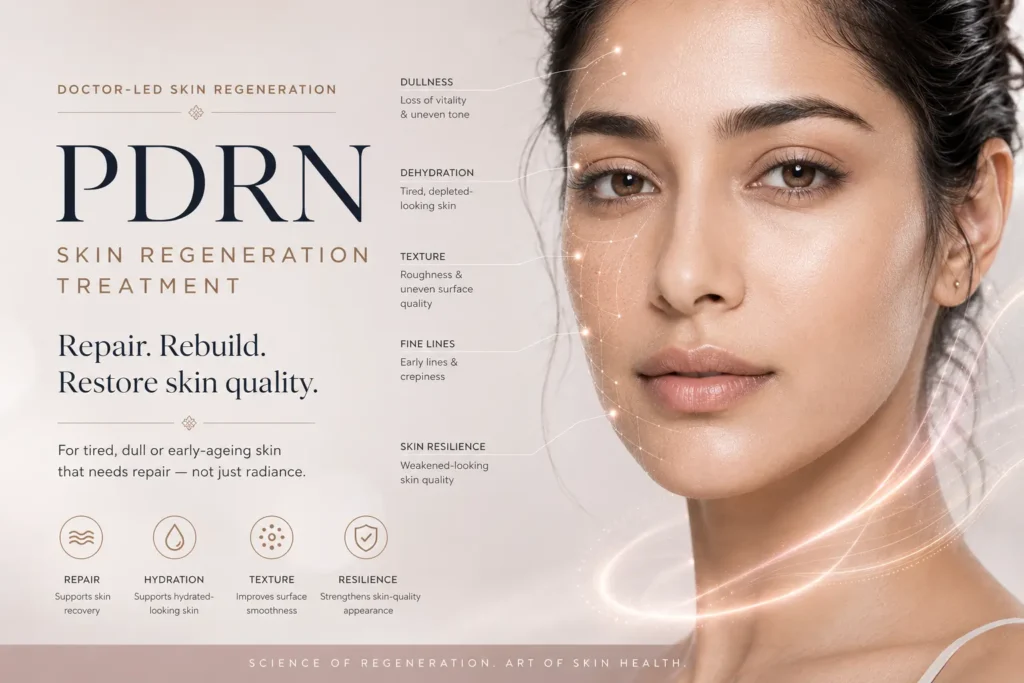
PDRN treatment, also called PDRN skin treatment, is a regenerative injectable treatment (polydeoxyribonucleotide) used to support skin repair, hydration, texture and overall skin quality.
At The Face Clinic in Hauz Khas, South Delhi, PDRN skin treatment is planned after a detailed clinical assessment rather than offered as a one-size-fits-all procedure. It may be considered for concerns such as early signs of skin ageing, dull or compromised skin quality, fine lines, post-acne skin changes and selected under-eye concerns.
The objective of PDRN skin rejuvenation is progressive, natural-looking improvement in skin quality rather than an immediate change in facial shape or volume. Treatment suitability, technique, formulation, number of sessions and expected results depend on the skin condition, area being treated and individual treatment goals.
For patients considering PDRN treatment in Delhi, this guide explains what PDRN is, how it works, who may benefit, treatment areas, results, downtime, sessions, before-and-after expectations, cost, and how PDRN differs from other polynucleotide treatments.
What Is PDRN? Full Form, Meaning & Uses
It is a highly purified DNA-derived ingredient, commonly sourced from salmonid DNA, that is most often injected into the skin to support repair, hydration and texture. PDRN does not add volume or change facial shape; it aims to gradually improve overall skin quality.
What does PDRN treatment involve? After a doctor-led skin assessment and numbing cream, small amounts of a PDRN formulation are placed into the skin through multiple tiny injections (sometimes called PDRN mesotherapy or a PDRN skin booster). Most plans involve 2–3 sessions, 3–4 weeks apart.
PDRN may be considered for:
Dull, dehydrated or rough-textured skin
Fine lines and early skin ageing
Reduced elasticity and skin resilience
Selected post-acne skin changes (once active acne is controlled)Thin or crepey under-eye skin
As part of a planned protocol to support skin recovery after selected procedures such as lasers or microneedling
Table of Contents
PDRN Treatment at a Glance
| Question | Quick Answer |
|---|---|
| What is PDRN? | PDRN stands for Polydeoxyribonucleotide, a DNA-derived regenerative compound used to support tissue recovery and skin-quality improvement. |
| What is PDRN skin treatment used for? | It may be considered when the goal is to improve hydration, texture, fine lines, resilience and overall skin quality rather than add facial volume. |
| Where can PDRN be used? | Common treatment areas include the face and selected under-eye concerns, depending on clinical assessment and formulation. |
| Are PDRN results immediate? | Improvement is generally progressive rather than immediate and varies according to skin condition and treatment protocol. |
| Is there downtime? | Temporary redness, swelling, tenderness or small injection-site marks may occur. |
| How many sessions are usually needed? | A common treatment course is 2–3 sessions approximately 3–4 weeks apart, although the protocol may vary according to formulation, treatment area and individual response. |
| How much does PDRN treatment cost? | PDRN treatment cost in Delhi is ₹15,000–₹35,000 per session, depending on the formulation, treatment area and number of sessions. |
Book Your Expert Consultation
Speak directly with our clinic team to know the exact treatment plan, cost, and availability. Quick response on call or WhatsApp.
How PDRN Fits Into a Skin Treatment Plan
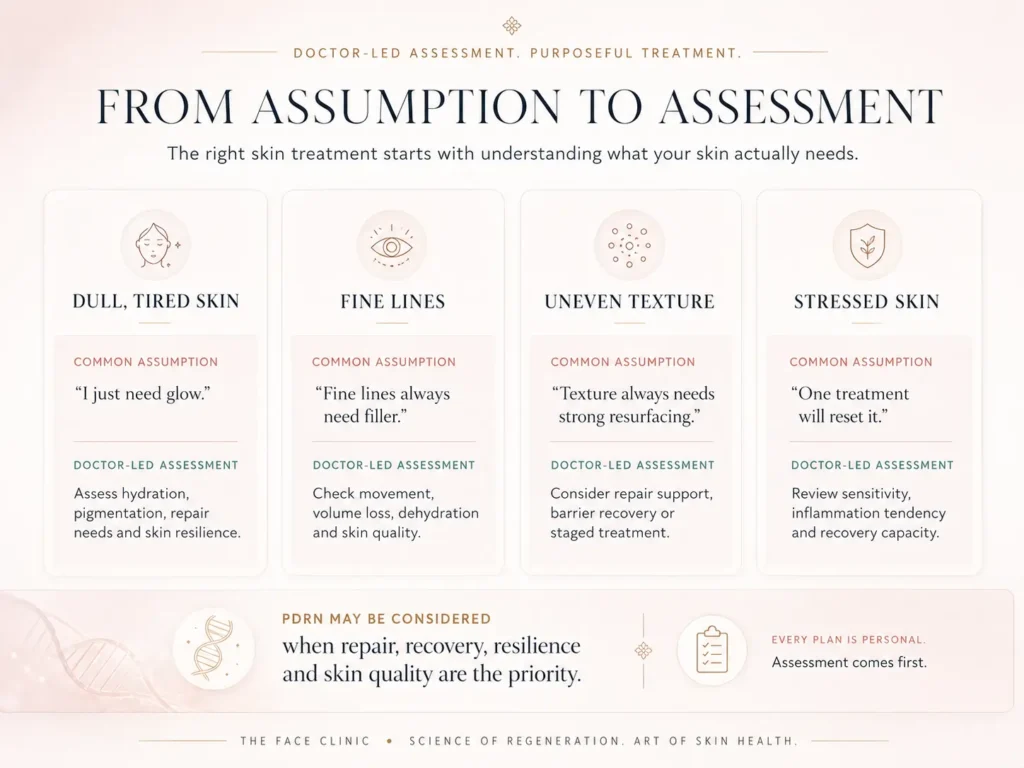
PDRN is best understood as a regenerative skin-quality treatment, rather than a treatment intended to add facial volume, change facial contours or produce an immediate lifting effect.
In clinical practice, the important question is not simply whether a patient can have PDRN, but whether PDRN is appropriate for the concern being treated. At The Face Clinic, Dr. Reema Arora assesses factors such as skin quality, barrier condition, inflammation, texture, treatment area, previous procedures and the patient’s expectations before recommending a treatment plan.
PDRN may be considered when the objective is gradual improvement in hydration, texture, fine lines and overall skin resilience. In the under-eye area, for example, it may be useful for selected concerns involving skin quality, fine lines or crepey texture. However, PDRN does not correct every cause of dark circles and is not a substitute for structural correction when true under-eye hollowing or volume loss is the primary concern.
Similarly, melasma, pigmentation and acne scarring require accurate diagnosis before treatment. PDRN may sometimes form part of a broader skin-repair or rejuvenation strategy, but is not a universal or standalone treatment for these concerns.
At The Face Clinic in Hauz Khas, South Delhi, PDRN treatment is medically supervised by Dr. Reema Arora, an aesthetic doctor with over 20 years of clinical experience. Treatment is individualised according to the patient’s skin, indication and goals, with emphasis on appropriate patient selection, realistic expectations and natural-looking outcomes.
Images are for illustrative purposes only and may not represent actual patients or outcomes. Individual results vary based on anatomy, clinical assessment, and personalised treatment planning.
PDRN Treatment in Regenerative Medicine: Research Background
PDRN (Polydeoxyribonucleotide) is composed of highly purified DNA fragments, commonly derived from salmonid sources. PDRN has a longer history of use in regenerative medicine and has increasingly been studied in dermatology and aesthetic medicine for its potential role in tissue recovery and skin-quality improvement.
Rather than creating volume or producing an immediate cosmetic correction, PDRN treatment is intended to support regenerative processes within the skin. Research into PDRN and related polynucleotide injections has reported potential improvements in parameters such as skin texture, elasticity, hydration and fine lines, although outcomes depend on the product, treatment protocol and individual patient.
PDRN and polynucleotides (PN) are closely related DNA-derived materials, but the terms should not automatically be treated as interchangeable. They may differ in molecular characteristics, formulation and intended clinical use. These differences — including where treatments such as Rejuran and Nucleofill fit — are explained later in this guide.
For this reason, selecting a regenerative treatment should begin with the skin concern and clinical objective, rather than with a product name alone.
How Does PDRN Work in the Skin?
PDRN has biological activity involving pathways associated with tissue repair and regenerative processes within the skin.
Research into PDRN has identified mechanisms involving adenosine A2A receptor activity and the nucleotide salvage pathway. These pathways are associated with processes involved in tissue recovery, inflammatory regulation, fibroblast activity and extracellular-matrix repair.
A review comparing PDRN and polynucleotides in dermatology discusses these mechanisms as well as important molecular and formulation differences between PDRN and PN.
The clinical effect nevertheless depends on several factors, including the PDRN formulation, treatment technique, area treated, underlying skin condition and individual response.
Supports Skin Repair and Recovery
PDRN has been studied for its potential to support biological processes involved in tissue recovery and regeneration. This regenerative rationale has contributed to its use in medical applications and, more recently, dermatology and aesthetic medicine.
In aesthetic practice, this may be relevant when the aim is to support the condition and recovery of the skin rather than produce an immediate structural correction.
May Support Fibroblast Activity and Skin Structure
Fibroblasts play an important role in maintaining the skin’s extracellular matrix, including collagen and other structural components that influence firmness, elasticity and texture.
Research suggests that PDRN may support fibroblast activity and pathways involved in extracellular-matrix recovery. This may contribute to improvements in parameters such as texture, elasticity and resilience, although the degree of improvement varies between patients and treatment protocols.
What Can PDRN Treatment Help Improve?
PDRN treatment is primarily considered when the objective is to improve the condition and quality of the skin.
Depending on the patient’s skin condition, treatment area and protocol, it may be considered for concerns involving hydration, texture, fine lines, reduced resilience and selected post-acne skin changes.
The available evidence for PDRN and related polynucleotide treatments is encouraging but still developing. A systematic review of polynucleotides in aesthetic medicine reported promising outcomes while also highlighting limitations in the quantity and quality of available evidence. Treatment recommendations should therefore remain formulation- and indication-specific.
Skin Hydration, Texture and Overall Quality
PDRN may be considered for skin that appears dull, dehydrated, rough or reduced in resilience, particularly when the treatment objective is gradual improvement in overall skin condition.
In selected patients with compromised or sensitised skin, its regenerative properties may also be relevant as part of a broader treatment strategy.
However, sensitive skin is not itself a diagnosis. Persistent redness, itching, dermatitis, rosacea, active inflammation or infection should first be assessed before an injectable regenerative treatment is considered.
Fine Lines and Early Skin Ageing
PDRN may form part of a treatment plan for fine lines, early textural changes and declining skin quality or elasticity, particularly when the aim is subtle rejuvenation rather than structural correction.
Significant facial volume loss, deeper folds, tissue descent and marked laxity represent different ageing concerns and may call for other treatment approaches.
Post-Acne Skin and Selected Textural Concerns
PDRN may also be considered as part of a broader treatment strategy for post-acne skin changes and selected textural concerns, depending on the type and severity of the problem.
Active acne, post-inflammatory redness, pigmentation and true atrophic acne scars are different clinical concerns and should not be grouped together as “post-acne damage.”
Deeper or established acne scars may require treatments such as subcision, microneedling, energy-based procedures or carefully planned combination protocols.
A note on pigmentation and melasma: PDRN is not a primary or standalone treatment for melasma or pigmentation. These concerns have multiple possible causes and require accurate diagnosis. Patients whose principal concern is pigmentation can read more about pigmentation treatment in Delhi.
PDRN Treatment for the Face
PDRN treatment for the face may be considered when the objective is to improve hydration, texture, fine lines and early skin-quality changes without adding significant facial volume.
PDRN skin rejuvenation may involve the full face or selected areas depending on where changes are present. PDRN is not necessarily administered uniformly across the face; the treatment pattern, formulation and technique should reflect the patient’s skin condition and the anatomy of the area being treated.
PDRN is therefore most relevant where the treatment goal concerns the skin itself rather than significant volume loss, deeper folds or marked tissue laxity.
Images are for illustrative purposes only and may not represent actual patients or outcomes. Individual results vary based on anatomy, clinical assessment, and personalised treatment planning.
PDRN Treatment for Under-Eye Skin
The under-eye area requires particularly careful assessment because concerns that appear similar can have very different causes.
PDRN treatment may be considered for selected under-eye skin-quality concerns, depending on the formulation used, the patient’s anatomy and clinical assessment. It is generally more relevant when the concern involves the quality of the thin under-eye skin rather than significant structural volume loss.
What Can PDRN Help With Under the Eyes?
In appropriately selected patients, PDRN may be considered for:
- Fine under-eye lines
- Crepey or thin-looking skin
- Reduced hydration and skin quality
- Early textural ageing
- Selected dark-circle appearances where skin quality contributes to the concern
The objective is typically subtle improvement rather than an immediate change in under-eye shape or volume.
What PDRN Cannot Correct Under the Eyes
Not every under-eye concern is caused by poor skin quality.
Dark circles may be influenced by pigmentation, visible blood vessels, shadowing, facial anatomy, skin thickness or a combination of factors. A true tear trough or under-eye hollow caused by structural volume loss is also different from fine or crepey skin.
PDRN is not a treatment for every type of dark circle or under-eye hollowing.
For a cause-based assessment of pigment, vascular visibility, shadowing and skin-quality changes, patients can read more about dark circle treatment in Delhi. Where true structural hollowing is the dominant problem, under-eye fillers for structural hollowing may be considered in appropriately selected patients.
A systematic review of recent under-eye treatments also reinforces the importance of identifying the underlying anatomical and clinical cause before selecting treatment.
Can PDRN Help With Acne Scars or Post-Acne Skin?
PDRN may have a role in selected patients with post-acne skin changes, particularly where the objective includes improving skin quality, texture or regenerative recovery after active acne has been controlled.
However, active acne, persistent redness, post-inflammatory pigmentation and established acne scars are different clinical conditions and may require different treatment strategies.
Established atrophic acne scars involve structural changes within the skin. PDRN is not a standalone solution for deeper or established scars.
Depending on scar type and severity, treatment may require subcision, microneedling, energy-based procedures or carefully planned combination approaches.
Where PDRN is incorporated, its role is generally supportive rather than a replacement for treatment directed specifically at scar structure.
Patients with established scars can explore acne scar treatment in Delhi for a more detailed discussion of scar-specific treatment options.
Who Is PDRN Treatment Suitable For?
PDRN treatment may be suitable for adults whose main concern is declining skin quality rather than significant facial volume loss or structural ageing.
It may be considered in appropriately selected patients with:
- Dull, dehydrated or rough-looking skin
- Reduced skin resilience
- Fine lines and early textural ageing
- Selected post-acne skin changes
- Selected under-eye concerns involving fine lines or crepey texture
- A preference for gradual skin-quality improvement rather than structural correction
In selected patients with compromised or sensitised skin, PDRN may also have a role. However, persistent redness, irritation or inflammation should first be assessed to identify the underlying cause.
Suitability ultimately depends on what is causing the concern, what PDRN can realistically improve and whether another treatment would address the problem more effectively.
When Should PDRN Treatment Be Avoided or Postponed?
PDRN is an injectable treatment, and there are situations in which treatment should be delayed or reviewed more carefully.
Treatment May Need to Be Postponed
PDRN treatment would generally be deferred when there is:
- Active infection in or around the treatment area
- Significant active inflammation or an uncontrolled skin condition at the treatment site
- An acutely disrupted, injured or poorly healed skin barrier
- A recent procedure that has left the skin significantly inflamed or still recovering
- Pregnancy or breastfeeding, where elective treatment is generally deferred because adequate safety data are limited
Recent chemical peels, lasers, microneedling or other aesthetic procedures do not automatically rule out PDRN treatment. The appropriate interval depends on the procedure performed, skin recovery and the treatment protocol being considered.
When Individual Medical Assessment Is Particularly Important
Additional medical review may be appropriate in patients with:
- Significant allergies or previous injectable reactions
- Certain immune-related or other significant medical conditions where disease activity or treatment may affect healing or procedural safety
- Medicines or medical conditions that may influence bruising, healing or injectable-procedure risk
- Previous complications from aesthetic injections
- Unexplained persistent redness, swelling, sensitivity or recurrent reactions
The specific PDRN formulation should also be reviewed where there is a relevant allergy or hypersensitivity concern.
The goal of assessment is not simply to determine whether someone can receive PDRN, but whether PDRN has a clinically appropriate role for the concern being treated.
How Is PDRN Treatment Performed?
PDRN treatment begins with a doctor-led assessment of the skin concern, treatment area and expected outcome. The formulation and delivery technique are then selected according to the individual patient.
PDRN is commonly delivered through multiple small injections within the skin. Depending on the product and treatment protocol, patients may also encounter this described as PDRN mesotherapy or a PDRN skin-booster treatment.
Consultation and Clinical Skin Assessment
Before treatment, the doctor considers factors such as:
- Primary skin concern
- Skin quality and barrier condition
- Area being treated
- Previous aesthetic or dermatological procedures
- Relevant medical and allergy history
- Expected results and treatment goals
At The Face Clinic, digital or AI-assisted skin imaging may also be used where clinically useful.
However, technology supports the assessment; it does not replace clinical examination or doctor-led treatment selection.
Skin Preparation and Numbing
The treatment area is cleansed and prepared using an appropriate sterile protocol.
A topical numbing cream may be applied before treatment, particularly where multiple injections are planned or a more sensitive area such as the under-eye region is being treated.
Patients should inform the doctor about current medicines, recent procedures, previous injectable reactions and any active irritation or infection.
How PDRN Is Injected
A PDRN injection treatment usually involves placing multiple small amounts of the selected formulation within the skin.
The depth, distribution and amount used depend on the formulation, treatment area and individual skin condition.
Small temporary raised areas or injection marks may be visible immediately afterwards, particularly when a micro-droplet technique is used.
PDRN Mesotherapy and PDRN With Microneedling
PDRN mesotherapy generally refers to delivery of small amounts of an appropriate PDRN formulation through multiple superficial injections across a treatment area.
PDRN with microneedling is a different delivery approach. Microneedling creates controlled micro-channels in the skin, and a PDRN formulation designed for this use is applied during or after the procedure. It may be considered when texture, post-acne skin changes or post-procedure recovery are the focus. Only formulations intended for this route should be used — injectable and topical PDRN products are not interchangeable. Read more about microneedling treatment.
Does PDRN Treatment Hurt?
PDRN treatment is generally well tolerated, but it is not completely sensation-free.
Patients may experience brief pinching, stinging or pressure as the product is injected. The level of discomfort varies according to the treatment area, technique, formulation and individual sensitivity.
Topical anaesthetic is commonly used before treatment to improve comfort.
Is Under-Eye PDRN More Sensitive?
The under-eye area may feel more sensitive because the skin is thin and the anatomy is delicate.
Topical anaesthetic, careful treatment planning and an appropriate injection technique can help improve comfort, although sensitivity varies between patients.
PDRN Side Effects, Downtime & Aftercare
Most expected reactions after injectable PDRN treatment are temporary and related to the injections themselves.
Common Temporary Reactions
Patients may experience:
- Redness
- Mild swelling
- Small raised injection-site bumps
- Tenderness
- Minor bruising
- Temporary sensitivity
These reactions generally settle progressively, although duration varies between patients, treatment areas and techniques.
Less Common Risks
As with any injectable procedure, less common complications may occur.
The specific risk profile depends on the product, treatment area, technique and patient’s medical history. Unexpected or persistent swelling, increasing pain, significant redness or other concerning symptoms should be assessed by the treating clinic.
A 2026 review of PDRN in post-procedure recovery discusses the emerging clinical evidence as well as current limitations, including formulation variability and the need for further high-quality aesthetic studies.
How Much Downtime Should You Expect?
Many patients can return to routine daily activity shortly after treatment.
However, visible injection marks, bumps, redness, swelling or bruising can remain temporarily, so treatment should not be planned with the assumption of zero visible downtime.
Aftercare After PDRN Treatment
Aftercare is individualised according to the treatment performed. Typical clinic guidance may include:
- Keeping the treated area clean
- Using gentle moisturising skincare
- Applying daily sunscreen
- Avoiding unnecessary rubbing or manipulation of injection sites
- Temporarily avoiding makeup, intense exercise, steam or sauna where advised
- Temporarily reducing irritating active skincare where appropriate
Patients should follow the specific aftercare instructions provided for their treatment, as recommendations may differ according to technique and formulation.
PDRN Results — What Should You Expect?
PDRN is intended to produce progressive rather than immediate skin-quality improvement.
The treatment should not be assessed in the same way as a dermal filler, where structural change may be visible immediately.
Immediately After Treatment
Injection-related redness, swelling or small bumps may temporarily affect how the skin looks.
Any immediate “plumpness” should therefore not be interpreted as the final regenerative result.
Over the Following Weeks
As the skin recovers, patients may begin to notice changes in parameters such as hydration, texture and overall skin quality.
The timing and degree of improvement vary according to formulation, treatment area, starting skin condition and treatment protocol.
After a Treatment Course
Where a planned course is recommended, improvement is best assessed across the treatment course rather than after a single session alone.
The aim is typically healthier-looking, more resilient skin with subtle improvement rather than an obvious change in facial identity.
How Long Do PDRN Results Last?
There is no single duration that applies to every patient or PDRN formulation.
Longevity depends on the product used, treatment course, starting skin condition, ageing, lifestyle and individual response. Further treatment should therefore be considered according to clinical response rather than an automatic maintenance timetable.
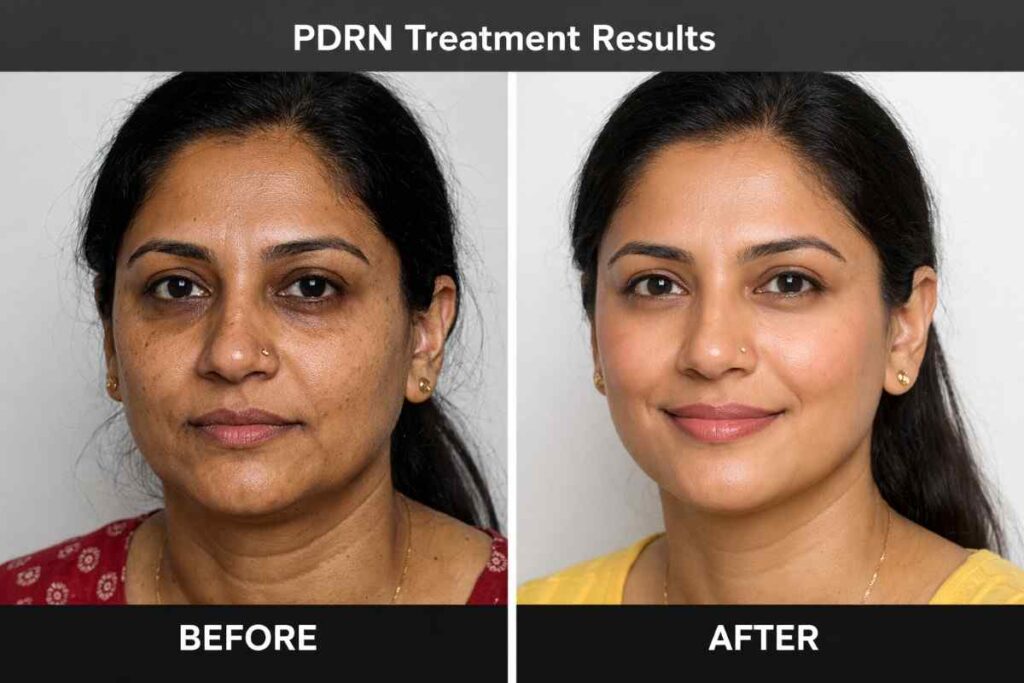
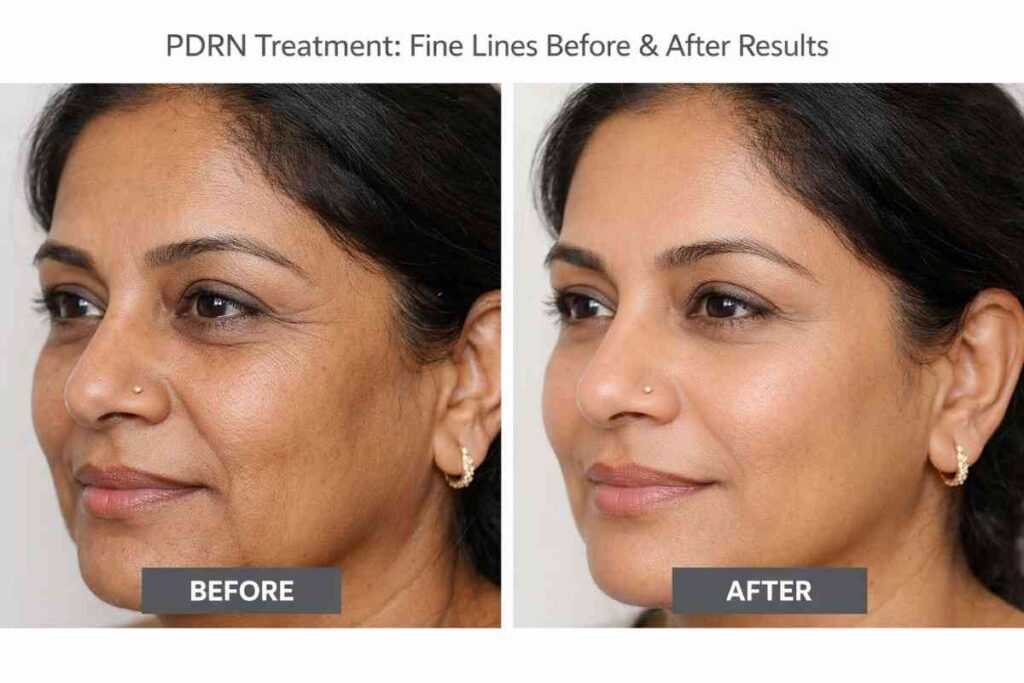
PDRN Injection Before and After Results
PDRN injection before and after results should be interpreted in the context of the concern treated, number of sessions, formulation used and time elapsed after treatment.
For fine lines, texture and skin-quality concerns, changes may be subtle rather than dramatic.
Where genuine clinical before-and-after photographs are displayed, they should ideally identify:
- Concern treated
- Number of sessions
- Approximate treatment interval
- Time between treatment and the after photograph
- Any relevant combination treatment
Individual results vary, and clinical photographs should not be interpreted as a guarantee of the result another patient will achieve.
Clinical before-and-after photographs from The Face Clinic can be viewed in our Before & After Gallery.
How Many PDRN Sessions Are Usually Needed?
A PDRN treatment plan is commonly structured as 2–3 sessions approximately 3–4 weeks apart, although the protocol may be adjusted according to the formulation, treatment area, skin condition and individual response.
Some patients may require a different number of sessions or interval depending on the product being used and the clinical objective.
Maintenance treatment is not automatically required on a fixed timetable. Further treatment should be based on the patient’s response, ongoing skin changes and long-term treatment goals.
Images are for illustrative purposes only and may not represent actual patients or outcomes. Individual results vary based on anatomy, clinical assessment, and personalised treatment planning.
PDRN Treatment Cost in Delhi & India
PDRN treatment cost varies according to the formulation used, treatment area, quantity required, treating doctor and number of sessions in the treatment plan.
Indicative pricing per session:
| Category | Indicative Price Per Session |
|---|---|
| PDRN injection price in India | ₹10,000–₹35,000 |
| PDRN treatment cost in Delhi | ₹15,000–₹35,000 |
These figures should be treated as indicative ranges rather than a fixed tariff for every patient or clinic. A personalised quotation should be provided after the product, treatment area and protocol are established.
What Influences PDRN Treatment Price?
Formulation and product selected PDRN and PN formulations differ in composition, concentration, quantity and manufacturer.
Treatment area and amount required A targeted under-eye treatment and a broader facial treatment may require different quantities and approaches.
Doctor expertise and treatment planning PDRN is an injectable medical procedure, so assessment, product selection and technique form part of treatment value.
Treatment technique The technique should be appropriate to the product, area and objective rather than selected simply because it is described as “advanced.”
Number of sessions Total treatment-course cost depends on how many sessions are clinically appropriate.
Clinic and procedural standards Sterile technique, appropriate product handling, single-use consumables, follow-up and medical oversight form part of responsible injectable care.
The cheapest PDRN injection price should therefore not be the only factor used when comparing treatment options. Equally, a higher price alone does not prove that one treatment will produce better results.
PDRN vs Polynucleotides (PN): What Is the Difference?
PDRN and PN are closely related DNA-derived regenerative materials, but the two terms describe different molecules with different characteristics.
Broadly, PDRN preparations tend to contain relatively shorter/lower-molecular-weight DNA fragments, while PN formulations generally contain longer-chain material. Product characteristics nevertheless vary between formulations.
Patients who want a more detailed guide to PN treatments can read about polynucleotide treatment in Delhi. The scientific comparison of PDRN and PN in dermatology provides additional discussion of their molecular and clinical differences.
| Aspect | PDRN | Polynucleotides (PN) |
|---|---|---|
| Molecular characteristics | Generally relatively shorter/lower-molecular-weight fragments | Generally longer-chain/higher-molecular-weight material |
| Treatment rationale | Regenerative and tissue-recovery pathways are prominently described | Regenerative, matrix and product-dependent biostimulatory properties |
| Physical characteristics | Product dependent | Product dependent; some PN formulations have greater viscoelastic characteristics |
| Treatment selection | Based on formulation, area and indication | Based on formulation, area and indication |
| Universally “better”? | No | No |
The distinction should therefore not be reduced to “PDRN repairs while PN is stronger.”
Where Does Rejuran Fit?
Rejuran is a branded polynucleotide-based injectable used in regenerative aesthetic practice.
Its formulation and clinical evidence are best considered on their own merits rather than used interchangeably with every product described online as PDRN.
Where Does Nucleofill Fit?
Nucleofill is also a polynucleotide-based product, with product-specific characteristics and protocols.
It is not biologically identical to either PDRN generally or Rejuran simply because all belong to the broader DNA-derived regenerative treatment category.
Patients comparing these products can read the dedicated Rejuran vs Nucleofill guide.
Which Is Better — PDRN or PN?
Neither is universally better.
Treatment choice should depend on:
- Specific product
- Skin concern
- Treatment area
- Skin thickness and quality
- Clinical objective
- Evidence and intended use of the formulation
- Doctor’s assessment
Choosing a product because it is currently popular is less useful than determining whether its characteristics match the patient’s actual treatment need.
PDRN vs Profhilo vs Skin Boosters: What Is the Difference?
All three are injectable skin-quality treatments, but they work differently and suit different concerns.
Aspect | PDRN | Profhilo | Skin boosters |
|---|---|---|---|
Main ingredient | DNA-derived fragments | High-concentration hyaluronic acid | Usually hyaluronic acid |
Main aim | Skin repair and regeneration | Hydration with firmness | Hydration and glow |
Often considered for | Fine lines, texture, selected under-eye concerns | Early laxity, crepey skin | Dull, dehydrated skin |
Typical course | 2–3 sessions, 3–4 weeks apart | Usually 2 sessions, about 4 weeks apart | Varies by product |
PDRN vs Profhilo
PDRN vs Profhilo is a choice between regeneration and hydration-led remodelling. PDRN is considered when repair, texture and fine lines are the priority. Profhilo is considered when the skin mainly needs deep hydration and firmness. Neither is universally better, and some patients have both in a planned sequence. Read more about Profhilo treatment in Delhi.
PDRN vs Skin Booster
“Skin booster” is a broad term, and most are hyaluronic-acid based and designed to hydrate. PDRN is sometimes called a PDRN skin booster, but its aim is regenerative, not purely hydrating. PDRN vs skin booster therefore depends on whether the skin needs repair or moisture.
Is PDRN Suitable for Indian Skin?
PDRN treatment does not depend on thermal energy or direct pigment targeting, which can be relevant when planning treatment for patients with higher Fitzpatrick phototypes.
However, this does not make PDRN universally risk-free or automatically suitable for every Indian patient.
Indian skin encompasses a wide range of skin tones, sensitivities and pigmentation tendencies. Treatment planning should consider:
- Baseline pigmentation
- Post-inflammatory pigmentation tendency
- Active inflammation
- Skin-barrier condition
- Previous procedures
- Treatment area
- Product formulation
- Individual medical history
PDRN is not promoted as a primary treatment for melasma simply because a patient has pigmentation-prone skin.
The appropriate approach is diagnosis first, then treatment selection.
Is PDRN Derived From Salmon or Fish DNA?
Many PDRN and polynucleotide formulations are produced from highly purified salmonid-derived DNA — which is why the treatment is often searched for online as salmon DNA injection treatment. The consumer term and the clinical formulation refer to the same underlying source material.
Because products differ, patients who have relevant allergy concerns or dietary, ethical or religious preferences regarding animal-derived materials should ask which specific formulation is being proposed before treatment.
PDRN should not be described as “vegetarian-safe” simply because the DNA has been highly purified.
Why Choose The Face Clinic for PDRN Treatment in Delhi?
Many clinics offer PDRN skin treatment in Delhi, but the difference is not simply the name of the product being injected.
At The Face Clinic, treatment planning begins with what the skin concern actually requires.
Doctor-Led Assessment Before Product Selection
Dr. Reema Arora evaluates whether the concern is primarily related to skin quality, pigmentation, scarring, structural ageing, under-eye anatomy or another factor before deciding whether PDRN has an appropriate role.
This helps avoid using a regenerative injectable for a problem that requires a different treatment altogether.
Formulation and Technique Selected for the Treatment Goal
PDRN and polynucleotide formulations are not treated as interchangeable products.
The formulation, treatment area and delivery method are selected according to the clinical indication rather than simply according to popularity or trend.
Natural-Looking, Skin-Quality-Focused Treatment
Where PDRN is appropriate, the focus is on realistic, medically supervised improvement while preserving natural facial identity.
“Our goal is simple: repair first, enhance naturally, and maintain gracefully.” — Dr. Reema Arora
Frequently Asked Questions About PDRN Treatment
Is PDRN the same as a dermal filler?
No.
PDRN is primarily used with the aim of improving skin quality and supporting regenerative processes. Traditional dermal fillers are generally used where structural support, contour or volume correction is required.
Can PDRN help dark circles?
PDRN may be relevant where under-eye skin quality, fine lines or thin/crepey skin contribute to the appearance.
It will not correct every cause of dark circles. Pigmentation, vascular visibility, shadowing, puffiness and structural hollowing may require different approaches.
Can PDRN be combined with other aesthetic treatments?
PDRN may be combined or sequenced with other aesthetic procedures in selected patients.
Timing and treatment order should be planned according to the formulation, treatment area and overall clinical objective rather than assuming every combination is appropriate.
Where hydration-focused injectable treatment is being considered, patients can also explore skin booster treatment in Delhi.
Is PDRN a one-session treatment?
Not necessarily.
Although some patients may notice changes after an individual treatment, PDRN is commonly planned as a course where clinically appropriate. The number of sessions depends on the formulation, treatment area and individual treatment goal.
How much does PDRN treatment cost in Delhi?
PDRN treatment cost in Delhi is usually ₹15,000–₹35,000 per session. Most plans involve 2–3 sessions, so the total PDRN cost in Delhi depends on the formulation, treatment area and number of sessions. An exact quotation is given after consultation.
Is PDRN better than Profhilo?
Neither is better for everyone. PDRN focuses on skin repair and regeneration, while Profhilo focuses on hydration and firmness. The right choice depends on the skin concern.
What is the difference between PDRN and a skin booster?
Most skin boosters hydrate the skin with hyaluronic acid. PDRN is a DNA-derived treatment that supports skin repair. Some patients benefit from one, some from both.
When are PDRN before and after results visible?
PDRN results are gradual. Changes in hydration and texture are best judged across the full treatment course, not after one session.
What is the full form of PDRN?
PDRN stands for polydeoxyribonucleotide, a purified DNA-derived ingredient used in regenerative skin treatments to support skin repair, hydration and texture.
Related PDRN & Skin Treatment Resources
- Polynucleotide Treatment in Delhi — for more detailed information about PN formulations and treatment.
- Rejuran vs Nucleofill — for product-specific comparison.
- Skin Booster Treatment in Delhi — for hydration-focused injectable skin treatments.
- Acne Scar Treatment in Delhi — where structural acne scarring is the primary concern.
- Dark Circle Treatment in Delhi — for diagnosis-led treatment of pigmentation, skin-quality, vascular and structural causes of under-eye darkness.
Medical Evidence & References
The scientific basis for PDRN and related polynucleotide treatments continues to evolve. Key evidence used to inform this page includes:
- Comparison of Polynucleotide and Polydeoxyribonucleotide in Dermatology: Molecular Mechanisms and Clinical Perspectives
- The Effectiveness of Polynucleotides in Esthetic Medicine: A Systematic Review
- What’s New With Under Eye Treatment: A Multispecialty Systematic Review of Recent Under Eye Treatments
- Polydeoxyribonucleotide (PDRN) in Post-procedure Recovery in Aesthetic Medicine: A Narrative Review
These publications support the biological rationale and emerging clinical role of PDRN and PN while also showing why treatment claims should remain appropriately qualified: products and protocols vary, and high-quality aesthetic evidence remains more limited than the popularity of these treatments may sometimes suggest.
Considering PDRN Treatment in Delhi?
If you are considering PDRN for skin quality, fine lines, post-acne changes or selected under-eye concerns, the first step is to establish whether PDRN is actually appropriate for the problem you want to treat.
At The Face Clinic, Hauz Khas, South Delhi, consultation is doctor-led and treatment is planned according to the skin concern, formulation, treatment area and realistic expected outcome.
Book a PDRN consultation with Dr. Reema Arora to assess your suitability and discuss an individual treatment plan.