
Anti-Aging Treatments in Delhi: A Doctor-Led Guide to Facial Rejuvenation & Wrinkle Prevention
Understanding facial ageing, non-surgical treatment options and the role of long-term skin preservation.
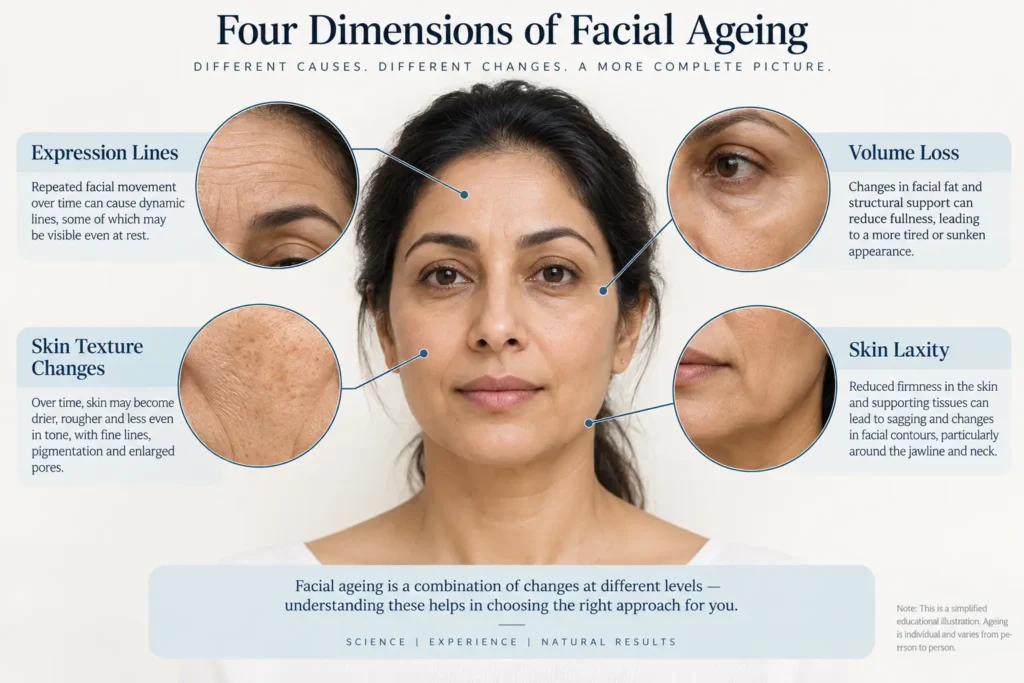
Facial ageing is not a single process. Expression lines, changes in skin texture and pigmentation, loss of facial volume and skin laxity can develop for different reasons. Although these concerns may appear together, they do not necessarily benefit from the same treatment.
Today, anti-aging treatments in Delhi include a range of non-surgical options—from wrinkle-relaxing injections and dermal fillers to skin-quality treatments, microneedling and selected energy-based procedures.
The more important question is not simply which treatment is available? It is:
What is actually causing the change—and which approach, if any, is appropriate for it?
At The Face Clinic in Hauz Khas, South Delhi, Dr Reema Arora approaches facial rejuvenation through individual assessment of facial movement, anatomy, skin quality, medical suitability and treatment goals.
An important part of this approach is understanding the difference between prevention, maintenance and correction. The concept often described as wrinkle banking fits within this broader philosophy: reducing avoidable skin damage, preserving skin quality where possible and considering treatment when there is a meaningful clinical reason—not simply because someone has reached a particular age.
The aim is not to stop ageing. It is to understand what is changing, preserve what can reasonably be maintained and make proportionate treatment decisions.
Understanding Facial Ageing: Why Different Changes Need Different Treatments
The face changes at several levels over time.
Skin properties evolve, repeated muscle movement contributes to expression lines, and changes in facial fat, connective tissues and structural support can influence facial proportions.
Genetics, hormonal changes, ultraviolet exposure, smoking and other environmental factors can also affect how these changes become visible.
This is why choosing an anti aging treatment for the face should begin with identifying the dominant concern rather than selecting a treatment by name.
Expression Lines and Wrinkles
Dynamic wrinkles appear with facial movement—for example when smiling, frowning or raising the eyebrows.
Common examples include forehead lines, frown lines between the eyebrows and crow’s feet.
Over time, some lines may remain visible even when the face is relaxed. These are commonly described as static wrinkles.
The distinction matters. Reducing muscle activity may soften selected expression lines, but it does not automatically remove a deeply established crease or correct unrelated changes in skin quality.
Skin Texture, Pigmentation and Photoageing
Changes within the skin may lead to fine lines, roughness, dryness, uneven pigmentation or reduced elasticity.
Ultraviolet exposure is an important contributor to photoageing. Inflammation, skincare practices and individual skin characteristics can also influence pigmentation and texture.
A person concerned primarily about uneven skin tone therefore requires a different assessment from someone whose main concern is crepey skin, dehydration or facial hollowing.
Facial Volume Loss and Skin Laxity
Changes below the skin can affect areas such as the cheeks, temples, under-eye region, jawline and lower face.
Volume loss, tissue descent and reduced skin elasticity can all contribute to an altered facial contour—but they are not the same anatomical problem.
Restoring volume may help selected areas of hollowing or structural support, but adding filler does not automatically correct significant loose skin.
Similarly, a skin-tightening procedure cannot reliably restore substantial lost facial volume.
The treatment should follow the underlying change—not the patient’s age and not the popularity of a procedure.
Images are for illustrative purposes only and may not represent actual patients or outcomes. Individual results vary based on anatomy, clinical assessment, and personalised treatment planning.
The Same Facial Concern May Require a Different Treatment
One of the most important principles in facial aesthetics is that similar-looking concerns can have very different causes.
This is where clinical assessment becomes more valuable than choosing a treatment from a menu.
“My Forehead Lines Are Becoming More Noticeable”
Lines that appear primarily when the eyebrows move may be predominantly related to muscle activity.
Lines that remain visible at rest may additionally involve changes within the skin itself.
That distinction can influence whether wrinkle-relaxing treatment is appropriate, whether skin quality also needs consideration—or whether the individual prefers no procedure at all.
“My Face Looks Tired”
A tired appearance can be associated with several different factors:
- uneven skin tone,
- under-eye pigmentation,
- tear-trough or midface hollowing,
- changes in skin texture,
- facial volume loss,
- or a combination of these.
Treating pigmentation cannot correct structural hollowing.
Conversely, adding volume is not the correct treatment for every form of dark circle or tired appearance.
The first decision is therefore diagnostic: which component is actually creating the appearance?
“My Jawline Is Losing Definition”
Reduced jawline definition may reflect loose skin, tissue descent, changes in facial volume, submental fullness, skeletal proportions—or more than one of these.
A tightening treatment may have limited benefit where structural factors dominate.
Equally, adding volume may be inappropriate where the main concern is tissue descent or fullness.
These examples are illustrative clinical scenarios rather than individual patient cases or treatment prescriptions.
A well-planned anti-ageing treatment therefore begins by identifying the problem before deciding on the procedure.
Which Anti-Aging Treatments Address Different Facial Concerns?
There is no single treatment that addresses every component of facial ageing.
Different procedures act on different anatomical or skin-related concerns, and their evidence, expected results, recovery and risks are not identical.
Main Concern | Treatment Category That May Be Considered | Important Limitation |
|---|---|---|
Expression-related lines | Wrinkle-relaxing injections | Do not restore facial volume or correct every static line |
Facial volume loss | Dermal fillers | Do not primarily treat pigmentation or significant laxity |
Dehydration and selected skin-quality concerns | Skincare or appropriate skin boosters | Do not replace lost facial structure |
Uneven texture or selected acne scars | Microneedling or appropriate resurfacing | Suitability depends on the concern and skin characteristics |
Mild-to-moderate laxity | Selected RF or ultrasound-based treatments | Cannot reproduce surgical lifting |
Selected pigmentation and photoageing | Topical therapy, peels or selected laser/light procedures | Requires appropriate diagnosis and pigmentation-risk assessment |
The useful question is therefore not Which anti-aging treatment is the most advanced?
It is:
Which treatment has a reasonable prospect of addressing the change that actually matters?
Wrinkle-Relaxing Injections
Botulinum toxin treatments, including Botox®, temporarily reduce activity in selected facial muscles.
They may be considered for expression-related forehead lines, frown lines and crow’s feet when clinically appropriate.
Planning should consider muscle strength, facial movement, anatomy and the desired degree of correction.
Botulinum toxin does not restore lost facial volume, significantly tighten loose skin or eliminate every established wrinkle.
For procedure-specific information, read our guide to Botox treatment in Delhi.
Dermal Fillers and Facial Volume Restoration
Hyaluronic acid dermal fillers may be considered where the dominant concern involves selected volume loss, hollowing or structural support.
Depending on anatomy and treatment goals, areas assessed may include the cheeks, chin, temples and other facial regions.
Fillers serve a different purpose from wrinkle-relaxing injections. They primarily provide selected volume or structural support rather than reduce muscular movement.
Product selection, quantity and placement are important. More filler does not automatically create a better or more youthful result.
Our detailed guide to dermal fillers in Delhi explains facial volume restoration, suitability and treatment cost.
Skin Boosters and Injectable Skin-Quality Treatments
Some people are more concerned about dehydration, fine texture changes or a crepey appearance than facial volume.
Selected injectable skin-quality treatments may be considered in appropriate patients.
However, different products have different compositions, mechanisms, intended uses and evidence.
Skin boosters should also be distinguished from structural fillers. A treatment intended primarily to improve skin hydration or smoothness should not be expected to produce the same contour change as a volume-restoring filler.
Learn more about formulations, indications and pricing in our guide to skin booster treatment in Delhi.
Microneedling and RF Microneedling
Conventional microneedling creates controlled micro-injuries within the skin to stimulate a repair response.
It may be considered for selected texture concerns and other appropriate indications.
Radiofrequency microneedling—also called MNRF—combines microneedles with controlled RF energy delivered at selected tissue depths.
Depending on the device, treatment parameters and patient characteristics, MNRF may be considered for concerns including selected acne scars, enlarged pores, uneven texture and mild skin laxity.
The two procedures are not equivalent. Their energy delivery, treatment depth, recovery and risk profiles differ.
For treatment-specific information, see our MNRF treatment in Delhi guide.
Non-Surgical Skin Tightening and HIFU
Where reduced firmness or mild-to-moderate laxity is the dominant concern, selected energy-based treatments may be considered.
Radiofrequency and focused ultrasound technologies work through different mechanisms and at different tissue depths. The choice between them depends on individual anatomy, skin characteristics and the degree of laxity. Our guide to skin-tightening treatments in Delhi explains the available approaches and their respective roles.
High-intensity focused ultrasound, or HIFU, delivers focused ultrasound energy to selected tissue layers. In appropriately selected patients, treatment may produce gradual improvement in certain laxity concerns. For a more detailed explanation of the procedure, suitability and expected outcomes, see our dedicated page on HIFU treatment in Delhi.
However, HIFU and other non-surgical tightening procedures cannot reliably reproduce the degree of correction achievable with surgery where significant tissue descent is present.
Treatment selection should also consider existing facial volume. A tightening technology should not simply be applied because laxity is visible without considering the tissues underneath.
Anti-Ageing Facial Treatments, Peels and Laser Procedures
Not every anti aging skin treatment involves injections or deeper energy delivery.
Appropriate skincare, selected in-clinic facial treatments and superficial chemical peels may have a role in improving certain surface concerns.
These options are different from treatments intended primarily to restore structural volume or address significant tissue laxity.
Laser procedures also vary considerably. Depending on the technology, selected lasers may be considered for pigmentation, texture, resurfacing or photoageing concerns.
A laser appropriate for one pigmentation problem is not automatically appropriate for another.
The categories should therefore be viewed as different tools for different problems—not interchangeable versions of the same “anti-aging treatment.”
A personalised plan may involve one treatment, staged interventions or no in-clinic procedure. Combination treatment is not automatically necessary or better.
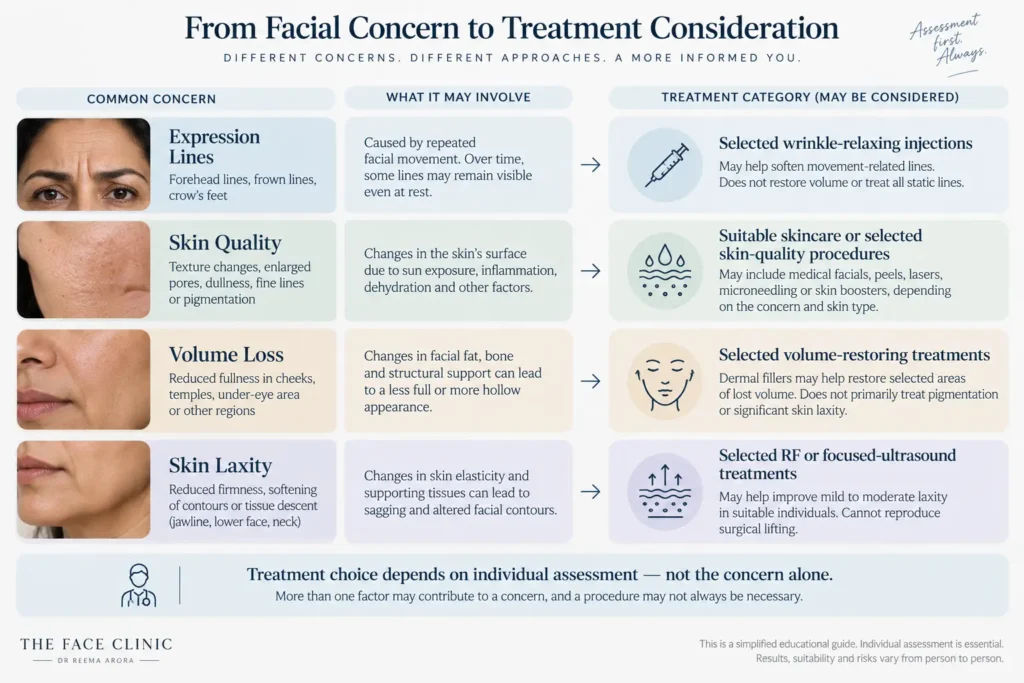
Images are for illustrative purposes only and may not represent actual patients or outcomes. Individual results vary based on anatomy, clinical assessment, and personalised treatment planning.
Improving Skin Quality: Beyond Wrinkle Correction
Facial rejuvenation involves more than reducing expression lines. Skin hydration, texture, elasticity and firmness can influence how the face looks and feels, while changes in facial volume and structural support affect its overall contours.
Different treatments address different aspects of these changes. Some primarily improve skin quality, others encourage collagen-associated tissue remodelling, and structural fillers restore selected volume.
These approaches can contribute to a personalised facial rejuvenation plan, but they are not interchangeable.
Where Does Regenerative Aesthetics Fit?
Regenerative aesthetics is an emerging term for approaches that aim to influence biological processes involved in tissue repair and remodelling.
It includes several treatments with different mechanisms and levels of clinical evidence. The term should not imply complete tissue regeneration, reversal of ageing or guaranteed improvement.
A 2026 scientific review, Regeneration in Aesthetic Medicine: Mechanisms, Evidence, and Clinical Boundaries, distinguishes biological regeneration from temporary changes in appearance and highlights the importance of mechanism-specific evidence.
The following comparison explains where selected regenerative injectables and conventional approaches differ.
Approach | Primary objective | Important distinction |
|---|---|---|
HA skin boosters | Improve hydration and selected skin-quality concerns | Product-specific effects; not equivalent to structural volume restoration |
PDRN / polynucleotides | Support selected skin-quality and tissue-response objectives | Related DNA-derived materials; formulations and clinical evidence vary |
PRF | Use autologous platelet and fibrin components in selected applications | Preparation and outcomes vary; not a dependable substitute for structural filler |
PLLA / Sculptra | Encourage gradual collagen-associated remodelling | Effects develop progressively; not equivalent to immediate HA volumisation |
Conventional HA fillers | Restore selected facial volume and support | Primarily structural correction rather than a regenerative treatment |
These approaches are not alternatives for every concern, and the biological activity of a product does not establish that it can correct all forms of facial ageing.
For further information, explore PDRN treatment for facial skin quality and PRF treatment for facial rejuvenation.
For the underlying science, read how PLLA stimulates collagen. If you are considering the procedure itself, our guide to Sculptra treatment in Delhi explains its clinical role and treatment considerations.
Natural-looking rejuvenation is a treatment-planning objective, not a guaranteed outcome. Improving skin quality, stimulating collagen and restoring structural volume serve different purposes; individual assessment determines whether any of these approaches is appropriate.
Anti-Aging Treatments for Indian Skin: Why Pigmentation Risk Matters
Local relevance in aesthetic medicine should involve more than adding “Delhi” to a treatment name.
Skin characteristics can materially influence treatment selection.
In medium-to-deeper skin tones, inflammation or injury may sometimes trigger post-inflammatory hyperpigmentation, or PIH.
This is particularly relevant when considering treatments that intentionally produce controlled skin injury, including selected peels, resurfacing procedures, lasers and microneedling.
A history of melasma, post-inflammatory pigmentation or significant skin sensitivity can therefore influence treatment planning.
The pigmentary problem itself should also be identified. Melasma, post-acne pigmentation and sun-related pigmentation are not identical conditions and should not automatically receive the same treatment.
The American Academy of Dermatology provides useful guidance on managing dark marks in darker skin tones, including the role of photoprotection and selected tinted sunscreens containing iron oxides. For further information, see the American Academy of Dermatology guidance on dark spots in darker skin tones.
For some people, the appropriate first step may be controlling an underlying skin problem and establishing suitable skincare before considering an in-clinic procedure.
Indian skin is not one uniform skin type. Treatment planning should reflect the individual’s pigmentation tendency, previous reactions, skin condition and treatment goals—not ethnicity alone.
Wrinkle Banking: What Can Preventive Anti-Aging Really Achieve?
Wrinkle banking offers a different way of thinking about facial ageing.
Instead of focusing only on correcting changes once they are established, it asks what can reasonably be done to reduce avoidable damage and maintain skin quality over time.
However, wrinkle banking is an informal term. It is not a standard medical protocol, and it should not imply that everyone needs to begin aesthetic procedures early.
What Is Wrinkle Banking?
A clinically sensible interpretation of wrinkle banking is straightforward:
- protect the skin from avoidable damage,
- maintain an appropriate skincare routine,
- identify changes correctly,
- consider treatment only when there is a meaningful indication,
- and reassess rather than automatically repeat procedures.
Wrinkle banking does not mean physically “storing” collagen.
It cannot guarantee that wrinkles will not develop.
And it does not establish that beginning cosmetic procedures earlier will necessarily reduce lifetime treatment costs.
The Foundations of Preventive Skin Care
1. Consistent Photoprotection
Ultraviolet exposure contributes to premature skin ageing.
A randomised controlled trial published in Annals of Internal Medicine found less progression of photoageing among participants assigned to daily sunscreen use over 4.5 years than among those using sunscreen at their discretion.
The study supports prevention of additional photoageing. It does not demonstrate reversal of biological skin age.
Suitable broad-spectrum sunscreen, generally SPF 30 or higher, should be combined with sensible sun-protective measures.
2. A Sustainable Skincare Routine
An appropriate routine may include a gentle cleanser, moisturiser, sunscreen and selected active ingredients.
Topical retinoids have evidence for improving certain photoageing-related changes and fine lines, but formulation, skin tolerance and individual circumstances matter.
Prescription retinoids and over-the-counter retinol are not identical.
Irritation is possible, particularly when multiple active ingredients are introduced simultaneously.
Retinoids should be avoided during pregnancy. Someone who is pregnant, planning pregnancy or considering prescription treatment should discuss suitability with their clinician.
For further information on choosing and using retinoids appropriately, see the American Academy of Dermatology guidance on retinoids and retinol.
3. Avoiding Unnecessary Irritation
A more intensive skincare routine is not necessarily a more effective one.
Excessive exfoliation, inappropriate combinations of active ingredients or repeatedly treating already irritated skin can impair tolerance.
This is particularly relevant in pigmentation-prone skin, where inflammation may itself contribute to visible discoloration.
4. General Health and Modifiable Exposures
Avoiding smoking and maintaining sustainable general-health habits can support overall health, including skin health.
These measures should not be presented as substitutes for medical assessment where a specific skin condition requires evaluation.
Can Preventive Botox Stop Future Wrinkles?
Preventive Botox is commonly discussed in relation to wrinkle banking.
Botulinum toxin has established evidence for temporarily improving selected existing expression lines.
A Cochrane systematic review found evidence of benefit for glabellar frown lines while also identifying adverse effects and limitations in the available longer-term evidence. For a detailed examination of the research, see the Cochrane review of botulinum toxin for facial wrinkles.
Reducing repeated muscular folding may plausibly influence how certain expression lines develop.
However, this does not establish that everyone should begin injections in their 20s or 30s, nor that starting earlier guarantees fewer wrinkles or lower treatment expenditure later.
Age alone is not an indication for treatment.
The decision should follow an assessment of facial movement, anatomy, treatment goals, medical suitability and the potential benefits and risks.
What Wrinkle Banking Cannot Do
Wrinkle banking cannot stop intrinsic ageing, guarantee collagen preservation or remove the possibility of needing treatment later.
Topical skincare cannot replace significant lost facial volume.
Preventive injections cannot correct every type of skin laxity.
And performing procedures more frequently does not automatically produce better long-term results.
The more useful principle is:
Protect what can reasonably be protected, treat what genuinely warrants treatment and reassess before adding more.
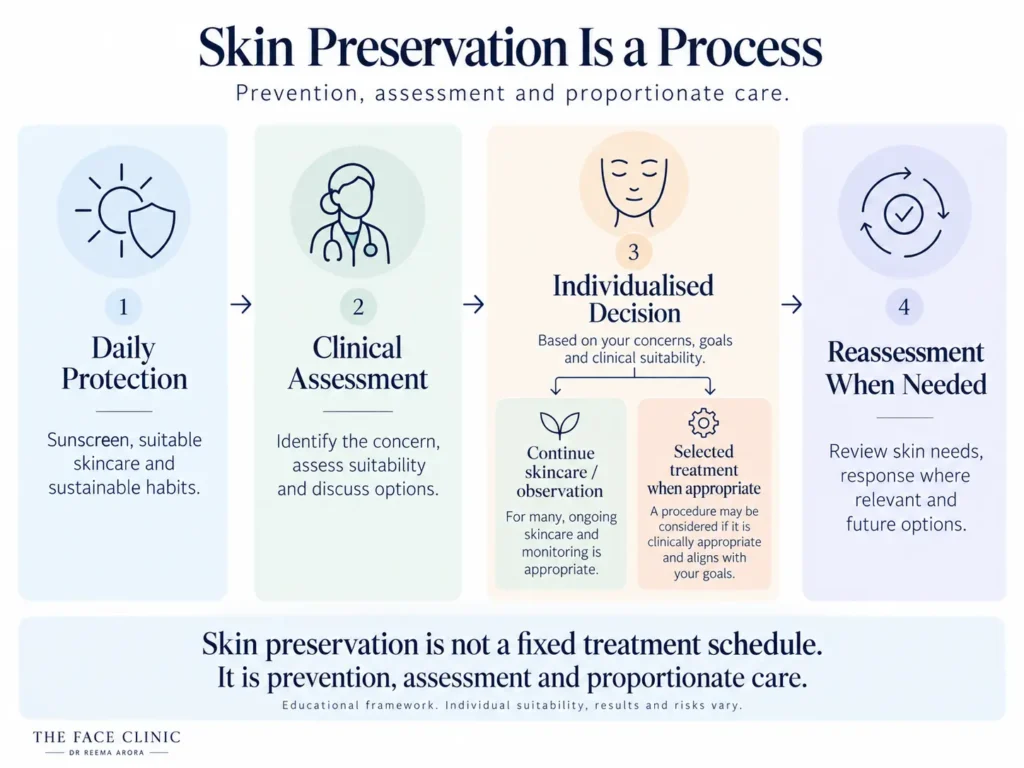
Images are for illustrative purposes only and may not represent actual patients or outcomes. Individual results vary based on anatomy, clinical assessment, and personalised treatment planning.
When Should You Consider Professional Anti-Aging Treatment?
There is no universally correct age to begin professional aesthetic treatment.
Some people develop noticeable expression-related lines relatively early.
Others may have minimal wrinkles but develop pigmentation, textural change, volume loss or laxity at a different stage.
Chronological age provides context. It does not identify the treatment required.
A professional anti-ageing consultation may be useful when:
- an expression-related line becomes a persistent concern;
- pigmentation or textural changes are difficult to understand or manage;
- facial volume or contour appears to be changing;
- laxity is becoming noticeable;
- previous treatments require reassessment;
- or several different procedures are being considered and their respective roles are unclear.
A consultation can also reasonably conclude that no procedure is currently necessary.
For people whose principal concern is established wrinkles or expression lines, our dedicated guide to anti-wrinkle treatment in Delhi provides more focused information.
The decision to proceed should reflect the underlying concern, expected benefit, risks and personal preferences—not pressure to start treatment before a particular birthday.
How Does Dr Reema Approach a Personalised Anti-Ageing Consultation?
A personalised consultation should establish what is contributing to the concern before choosing the treatment.
At The Face Clinic, Dr Reema Arora’s approach to facial aesthetics begins with assessment rather than a predetermined combination of products or technologies.
Facial Movement, Structure and Skin Quality
The face is evaluated both at rest and during expression.
Skin texture, pigmentation, existing facial volume, tissue support and facial proportions are considered together.
This helps distinguish whether the dominant concern is associated primarily with:
- muscular movement,
- skin quality,
- loss of structural support,
- laxity or tissue descent,
- or a combination.
That distinction can completely change the treatment conversation.
Medical Suitability and Treatment Goals
Relevant medical history, medication use, previous procedures and treatment goals are also important.
The consultation should establish what the individual actually wishes to improve and whether the expected degree of improvement is proportionate to the treatment required.
A procedure can be technically available without being the appropriate choice for that person.
The Dominant-Concern Principle
One useful way of approaching facial rejuvenation is to identify the dominant concern first.
If poor skin quality is driving the appearance, simply adding facial volume may offer little benefit.
If reduced jawline definition is largely caused by tissue descent, increasing volume indiscriminately may worsen heaviness rather than improve definition.
If expression lines are minimal, commencing regular injections simply because of age may not provide a meaningful benefit.
The treatment plan should therefore answer three questions:
What is producing the concern?
Which intervention, if any, addresses that cause?
Is the likely benefit worth the treatment, recovery, cost and risk?
This also means that sometimes less treatment—or no treatment—is the more appropriate recommendation.
How Much Does Anti-Aging Treatment Cost in Delhi?
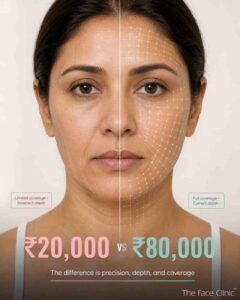
There is no single anti ageing treatment cost because facial rejuvenation encompasses very different procedures.
Current indicative pricing at The Face Clinic for selected treatment categories includes:
Treatment Category | Current Indicative Clinic Price |
|---|---|
Skin booster treatment | From approximately ₹15,000 per session |
MNRF / RF microneedling | ₹12,000–₹25,000 per session |
HIFU | From ₹22,000 |
Dermal fillers | Approximately ₹20,000–₹75,000+ depending on treatment |
These are indicative prices for individual treatment categories—not the price of a combined anti-aging programme or wrinkle-banking package.
The final cost depends on factors including:
- the underlying concern;
- treatment area;
- product or technology selected;
- treatment intensity;
- quantity of injectable product required;
- number of sessions where relevant;
- and the individual treatment plan.
For example, treating a small area of mild laxity is fundamentally different from a multi-area filler treatment or a course of skin-quality procedures.
Equally, someone whose needs can be appropriately addressed through skincare may not require an in-clinic treatment at all.
There is no universal annual price for wrinkle banking, and beginning procedures earlier does not guarantee lower lifetime treatment expenditure.
For more detailed pricing related specifically to wrinkle treatment, see our anti-wrinkle treatment cost guide.
Final treatment costs should be confirmed after assessment when the proposed procedure and its purpose are clear.
Results, Recovery, Risks and Maintenance: What Should You Expect?
Different anti-aging treatments have different timelines.
Some injectable treatments may produce relatively early visible changes.
Procedures that rely on tissue remodelling generally develop their effects more gradually.
“Non-surgical” should also not automatically be interpreted as “risk-free” or “no downtime.”
Treatment Category | General Pattern | Important Consideration |
|---|---|---|
Wrinkle-relaxing injections | Effects develop over days and are temporary | Reassess as muscular activity returns |
Hyaluronic acid fillers | Volume change may be visible early | Swelling or bruising may temporarily influence appearance |
Skin boosters | Skin-quality effects may develop progressively | Product and protocol matter |
Microneedling / RF microneedling | Improvement develops during skin remodelling | Recovery and risks vary by treatment intensity and technology |
HIFU / selected tightening procedures | Where achieved, improvement develops gradually | Results depend on anatomy, device and treatment parameters |
These are general patterns, not guaranteed timelines.
Maintenance should be based on reassessment rather than an automatic calendar.
Important Risks and Limitations
Medical aesthetic procedures can cause adverse effects.
Depending on the treatment, these may include temporary redness, discomfort, swelling, bruising, pigmentation changes, infection, asymmetry or an unsatisfactory aesthetic result.
Certain procedures also carry uncommon but potentially serious risks.
With dermal fillers, unintended injection into a blood vessel can cause tissue injury and, rarely, visual impairment or stroke. For further information, see the US FDA dermal filler safety information.
For RF microneedling, the US FDA issued a safety communication in October 2025 following reports of complications with certain uses, including burns, scarring, fat loss and nerve damage. These risks are discussed in the FDA safety communication on RF microneedling.
These are US safety references and should not be interpreted as blanket regulatory determinations for every product or device in India.
The relevant risk discussion depends on the specific treatment, product or technology and the individual being treated.
How Should You Interpret Before-and-After Results?
Before-and-after photographs can demonstrate the type of change achieved in an individual case.
They cannot predict another person’s result.
Baseline anatomy, skin characteristics, treatment technique, healing and the timing of photography can all influence appearance.
Lighting, facial expression and camera angle may also affect comparisons.
Genuine patient images should be used only with appropriate permission and in accordance with applicable medical-advertising requirements.
Educational illustrations should be clearly labelled and should never be represented as actual patient outcomes.
Five Questions to Ask Before Choosing an Anti-Aging Treatment
A useful consultation should provide enough information for an informed decision—not simply introduce a procedure.
Before proceeding, consider asking:
1. What is actually causing my concern?
Is it related primarily to facial movement, skin quality, pigmentation, volume, laxity or more than one factor?
2. Why is this particular treatment being recommended?
What alternatives exist—including skincare, a different procedure, observation or no treatment?
3. What degree of improvement is realistic?
What is likely to change, what may not change and how variable are the results?
4. What product or device will be used, and what are the relevant risks?
Who will perform the procedure, what recovery should be expected and how would a complication be managed?
5. What is the likely total cost?
Does the proposed cost include the recommended treatment course, follow-up and any additional sessions that may reasonably be required?
For general patient guidance, the NHS advice on choosing who will perform a cosmetic procedure
Its UK-specific regulatory information should not be assumed to apply directly in India.
Frequently Asked Questions About Anti-Aging Treatments
What Is the Difference Between Anti-Aging Treatment and Wrinkle Banking?
Anti-aging treatment is a broad term covering approaches used to address concerns including wrinkles, skin-quality changes, pigmentation, facial volume loss and laxity.
Wrinkle banking describes a prevention-oriented philosophy that focuses on reducing avoidable damage, maintaining skin health and considering intervention when appropriate.
It does not require beginning aesthetic procedures at a particular age.
Which Non-Surgical Anti-Aging Treatment Is Suitable for My Face?
There is no universal answer.
Expression lines, pigmentation, texture changes, facial volume loss and laxity require different assessments.
The most appropriate non surgical anti aging treatment depends on which concern is dominant, individual anatomy, skin characteristics, medical suitability and treatment goals.
In some cases, skincare alone may be sufficient.
Can Anti-Aging Treatments Prevent Wrinkles Completely?
No.
Natural facial ageing cannot be stopped, and no treatment can guarantee that wrinkles will not develop.
Photoprotection and appropriate skincare may help reduce avoidable damage, while selected procedures may improve specific concerns.
At What Age Should I Consider an Anti-Ageing Consultation?
There is no universal starting age.
A consultation may be useful whenever someone has a concern they would like assessed or wants professional guidance about preventive care.
Age alone does not establish the need for injections or another aesthetic procedure.
Can Men Have Preventive Anti-Aging Treatment?
Yes.
The principles of photoprotection, suitable skincare and individual assessment apply regardless of gender.
However, facial anatomy, muscle activity, skin characteristics and aesthetic priorities differ between individuals.
Treatment should therefore be based on those characteristics rather than on a standardised male or female protocol.
Does an Anti-Aging Treatment Plan Always Require Several Procedures?
No.
A combination may be appropriate when distinct concerns genuinely require different interventions.
However, a single well-selected procedure—or no procedure—may be sufficient.
More treatment does not automatically mean a better result.
Considering Anti-Aging Treatment in Delhi?
Understanding what is changing is the first step towards making an informed treatment decision.
Whether your concern involves expression lines, skin quality, pigmentation, facial volume, laxity or long-term prevention, the appropriate approach begins by identifying the dominant problem before choosing the treatment.
At The Face Clinic, Dr Reema Arora’s approach to facial aesthetics begins with assessment rather than a predetermined combination of products or technologies.
An anti-ageing consultation offers an opportunity to:
- identify the factors contributing to your concern;
- understand the available treatment and non-treatment options;
- discuss realistic outcomes;
- consider relevant risks and limitations;
- and determine whether intervention is appropriate.
The Face Clinic — Dr Reema Arora
C-36, LGF, Hauz Khas
New Delhi – 110016
Monday–Saturday | 10 AM–6 PM
C-36, LGF, Hauz Khas
New Delhi – 110016
Monday–Saturday | 10 AM–6 PM
Book a consultation to discuss your facial ageing concerns and an individualised approach to facial rejuvenation and long-term skin preservation.
All procedures are subject to individual clinical suitability. Results vary according to anatomy, skin condition, treatment selection and individual response.