
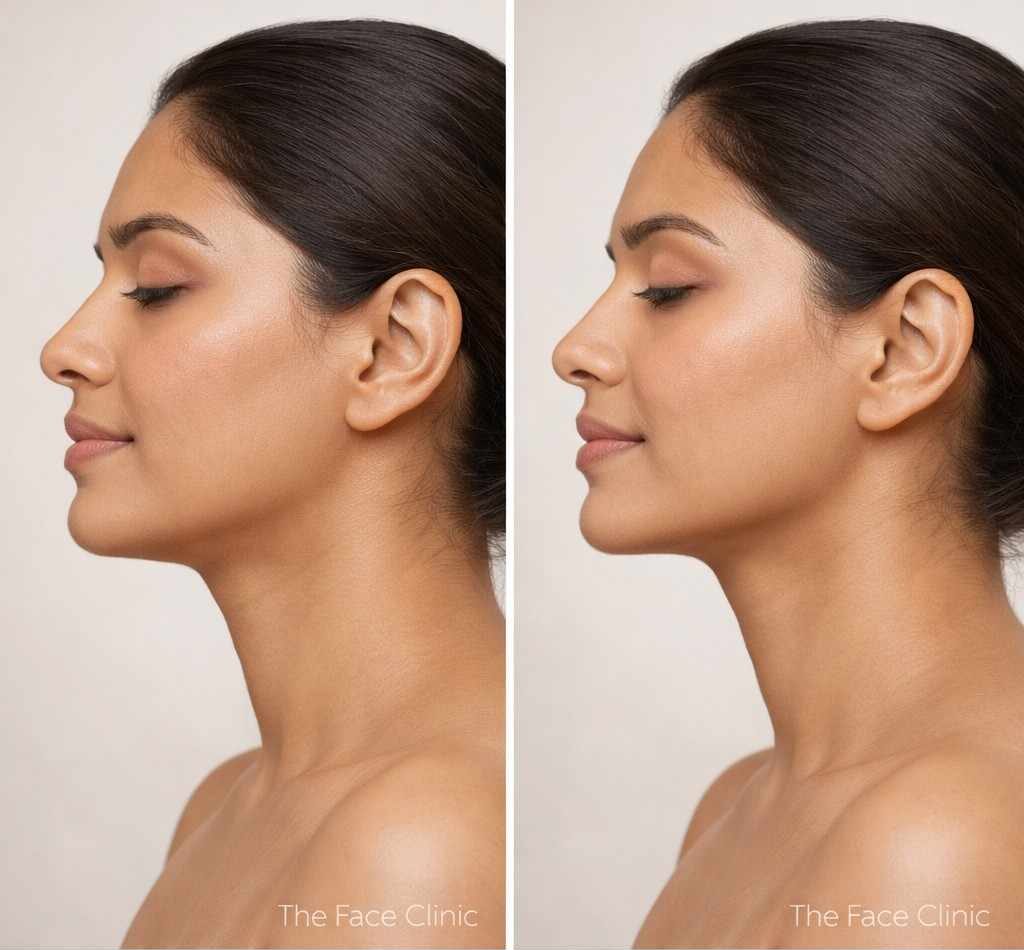
How to Reduce Double Chin Effectively: A Complete Guide
How to reduce double chin is a common aesthetic concern that can appear in people of different ages, body types, and lifestyles. A double chin, medically referred to as submental fullness, develops due to multiple factors such as fat accumulation under the chin, reduced skin elasticity, or natural variations in jawline structure.
While it is often associated with weight gain, submental fullness can also be seen in individuals who are otherwise within a normal weight range. In such cases, genetics, ageing changes, and facial anatomy play a more significant role than overall body fat.
In many individuals, the appearance of fullness under the chin is not caused by fat alone. Reduced collagen production, skin laxity, and weaker structural support in the lower face can also contribute to this concern. This is why the condition varies significantly from person to person.
Modern non-surgical approaches focus on understanding the underlying cause first, whether it is related to fat, skin laxity, or a combination of both. A proper assessment helps in identifying the most suitable approach for improvement rather than relying on a single method for all cases.
Understanding the reason behind submental fullness is the first and most important step in learning how to reduce double chin effectively.
👉 For a structured medical overview of assessment-based approaches, refer to double chin treatment in Delhi.
How to Reduce Double Chin Without Surgery
In many cases, the appearance of a double chin can be improved without surgery by understanding and addressing its underlying cause. Submental fullness may result from localised fat under the chin, reduced skin elasticity, or a combination of both factors.
The effectiveness of non-surgical approaches depends on correctly identifying whether the concern is primarily related to fat, skin laxity, or structural changes in the lower face. Without this evaluation, results may be limited or inconsistent.
In general, non-surgical management is based on three broad categories:
- Approaches that focus on reducing localised fat under the chin
- Approaches that support skin firmness and improve elasticity
- Combined approaches when both fat and skin changes are present
In clinical practice, outcomes are more predictable when the underlying cause is clearly understood before selecting any method of improvement.
A balanced and effective strategy for reducing double chin requires proper assessment of facial structure rather than relying on a single universal approach for all individuals.
What Causes a Double Chin? Understanding Submental Fat & Skin Laxity
Submental Fat
Submental fat refers to localised fat accumulation beneath the chin that can occur regardless of overall body weight. In many individuals, this fat distribution is influenced by genetic factors and may not respond significantly to general lifestyle changes alone.
This type of fat is considered a localised anatomical fat deposit and is evaluated separately from overall body fat during facial assessment.
👉 For medical insights on how body fat distribution works, refer to
Cleveland Clinic guidance on subcutaneous fat
Skin Laxity & Ageing
With age, natural reduction in collagen production, along with gravitational effects, can lead to decreased skin firmness under the chin and along the neck. This may create the appearance of fullness even when minimal fat is present.
In such cases, skin laxity becomes a more dominant factor than fat accumulation. Additionally, variations in chin projection or jawline structure can influence lower facial support, which may further enhance the appearance of submental fullness.
👉 Clinical research on ageing skin and collagen changes is explained in
Mayo Clinic skin ageing insights
Genetics & Weight Fluctuations
Genetic factors play a significant role in determining fat distribution patterns in the face and neck. Some individuals are naturally predisposed to store more fat in the submental area.
Frequent weight fluctuations can also contribute to persistent fullness under the chin, as the skin and underlying tissues may not fully adapt after repeated changes in weight.
Key Clinical Insight
Submental fullness is a multifactorial condition that may result from fat accumulation, skin laxity, structural anatomy, or a combination of these factors.
Because of this variation, management approaches differ from person to person and should always be based on individual assessment rather than a single standardized method.
Non-Surgical Approaches for Reducing Double Chin
Various non-surgical approaches are used in aesthetic practice to address the appearance of submental fullness. These methods are selected based on whether the concern is primarily related to fat accumulation, reduced skin elasticity, or a combination of both.
The goal of non-surgical management is gradual improvement in contour and definition without invasive procedures. The choice of approach depends on individual anatomical assessment and skin condition.
Fat Reduction-Based Approaches
Certain non-surgical methods focus on reducing localised fat beneath the chin. These approaches are typically considered when submental fat is the primary contributing factor.
They work gradually and may require multiple sessions depending on individual response and fat volume.
Skin Tightening-Based Approaches
Other approaches focus on improving skin firmness and elasticity in the lower face and neck region. These are generally more suitable when skin laxity is the main concern rather than fat accumulation.
Improvements are typically gradual and related to collagen remodelling over time.
Combination Approaches
In many cases, submental fullness is caused by both fat and skin-related factors. In such situations, a combination of approaches is often considered to achieve a more balanced improvement in jawline definition.
👉 For individuals exploring medically guided aesthetic options, double chin removal in Delhi may be considered based on personalised evaluation.
👉 For those considering clinical treatment options, double chin treatment in Delhi is typically planned after a detailed doctor-led assessment.
General Considerations
The effectiveness of any non-surgical approach depends on correct identification of the underlying cause of submental fullness.
A personalised evaluation is essential to determine which category of approach is most suitable for an individual.
How Many Sessions Are Usually Needed?
Fat-dissolving injections: commonly 2–4 sessions, spaced several weeks apart
Fat-freezing: often 1–3 sessions depending on fat volume
- HIFU / RF: multiple sessions may be required for optimal tightening
Other Non-Surgical Approaches Used in Aesthetic Care
In addition to commonly discussed methods, there are several other non-surgical approaches that may be used in aesthetic practice depending on individual facial structure and skin condition.
These approaches generally aim to improve either fat distribution, skin firmness, or overall lower-face contour. However, their suitability varies widely based on anatomy, age-related changes, and the primary cause of submental fullness.
Because of these variations, different individuals may respond differently to the same type of approach.
The selection of any method for improving double chin appearance should be based on a personalised assessment rather than a uniform or one-size-fits-all approach.
Understanding the underlying cause—whether related to fat, skin laxity, or structural factors—remains the most important step in determining the most appropriate option for improvement.
Which Approach May Be Suitable for Different Types of Double Chin?
If you are still exploring how to reduce double chin, it is important to understand that the most suitable approach depends on the underlying cause rather than a single universal method.
Different individuals may experience submental fullness for different reasons, and the appearance can vary based on fat distribution, skin quality, and lower-face structure.
When Fat is the Primary Concern
If the fullness under the chin is mainly due to localised fat, approaches that focus on fat reduction may be considered as part of a broader management plan.
When Skin Laxity is the Main Factor
If the concern is related to loose or sagging skin, approaches that support skin firmness and collagen improvement are generally more relevant.
When Chin Structure is Less Defined
In cases where lower facial support is limited due to natural chin or jawline structure, a structural evaluation becomes important in understanding overall facial balance.
When Multiple Factors Are Present
In many individuals, submental fullness is caused by a combination of fat, skin laxity, and structural factors. In such cases, a combined approach is often considered for balanced improvement.
👉 For a better understanding of clinical evaluation in aesthetic medicine, you may refer to doctor-led double chin treatment concepts in Delhi.
Key Understanding
The appearance of a double chin varies from person to person, which is why evaluation of the underlying cause plays a key role in determining the most appropriate approach.
What Factors Influence Results?
The outcome of non-surgical approaches for improving the appearance of a double chin depends on several individual factors, including skin quality, fat distribution, and overall lower facial structure.
Since each person’s anatomy is different, results can vary significantly from one individual to another. The same approach may produce different levels of improvement depending on how the underlying cause is distributed across fat, skin, and structural elements.
For this reason, outcomes are generally more predictable when the contributing factors are clearly understood before any approach is considered.
Common Mistakes to Avoid
One of the most important factors in achieving better outcomes is understanding that different causes of submental fullness require different approaches.
A common mistake is selecting an approach based only on one visible factor, such as assuming it is purely fat-related when skin quality or structural support may also be involved. This can lead to less effective or inconsistent improvement.
A more accurate understanding of the underlying cause helps in setting realistic expectations and choosing a more appropriate approach based on individual anatomy rather than a one-size-fits-all method.
Frequently Asked Questions
1. Can a double chin be improved without surgery?
Yes. In many cases, the appearance of a double chin can be improved without surgery by addressing contributing factors such as localised fat, skin laxity, or structural changes in the lower face.
The outcome depends on identifying the primary cause, as different individuals may require different approaches for visible improvement.
2. What helps reduce fat under the chin?
Certain medically guided approaches are designed to target localised fat beneath the chin. Over time, the body naturally processes and eliminates these fat cells, which may lead to gradual improvement in contour in suitable individuals.
3. Are different non-surgical approaches better for different people?
No single approach is universally best. The suitability of any method depends on factors such as fat distribution, skin quality, and facial structure. This is why results can vary significantly from person to person.
4. Can skin tightening approaches help a double chin?
Yes, in cases where skin laxity is a major contributing factor, approaches that support skin firmness may help improve jawline definition. However, their effectiveness depends on individual skin condition.
5. How long does improvement usually take?
The timeline for visible improvement varies depending on the type of approach used and individual response. Some changes appear gradually over weeks, while others may take longer depending on the underlying condition.
6. Is downtime required?
Most non-surgical approaches involve minimal downtime. Temporary effects such as mild swelling or tenderness may occur but usually resolve on their own within a short period.