
Have Any Question?
Don’t think much, have a query? Call us now!
Connect with us

Ozempic for Weight Loss: Safety, Eligibility & Semaglutide Treatment in Delhi
Ozempic® contains semaglutide, a GLP-1 receptor agonist used for specific medical indications. Semaglutide is also available in formulations specifically developed and approved for chronic weight management in eligible patients.
Because brand indications, available formulations and regulatory status differ by jurisdiction, patients considering semaglutide for weight management should first undergo medical assessment to determine whether treatment is appropriate and which formulation, if any, may be considered.
At The Face Clinic, Hauz Khas, South Delhi, weight-management consultation focuses on medical eligibility, metabolic health, contraindications, treatment expectations and appropriate specialist evaluation before prescription medication is considered.
Dr. Reema Arora, Founder and Medical Director, has over 20 years of clinical experience, primarily in medical and facial aesthetics. The clinic’s weight-management pathway includes mandatory pre-treatment evaluation or clearance by an Internal Medicine specialist or Endocrinologist before medication initiation.
For individuals exploring Ozempic weight loss treatment in Delhi, semaglutide injections or medically supervised weight management, the first step is understanding whether prescription therapy is clinically appropriate.
Important: Ozempic is not FDA-approved specifically for chronic weight management in the United States. Wegovy, another semaglutide-containing product, has approved weight-management indications. Patients should not assume that medicines containing the same active ingredient are interchangeable.

What Is Ozempic? Understanding Semaglutide and Weight Loss
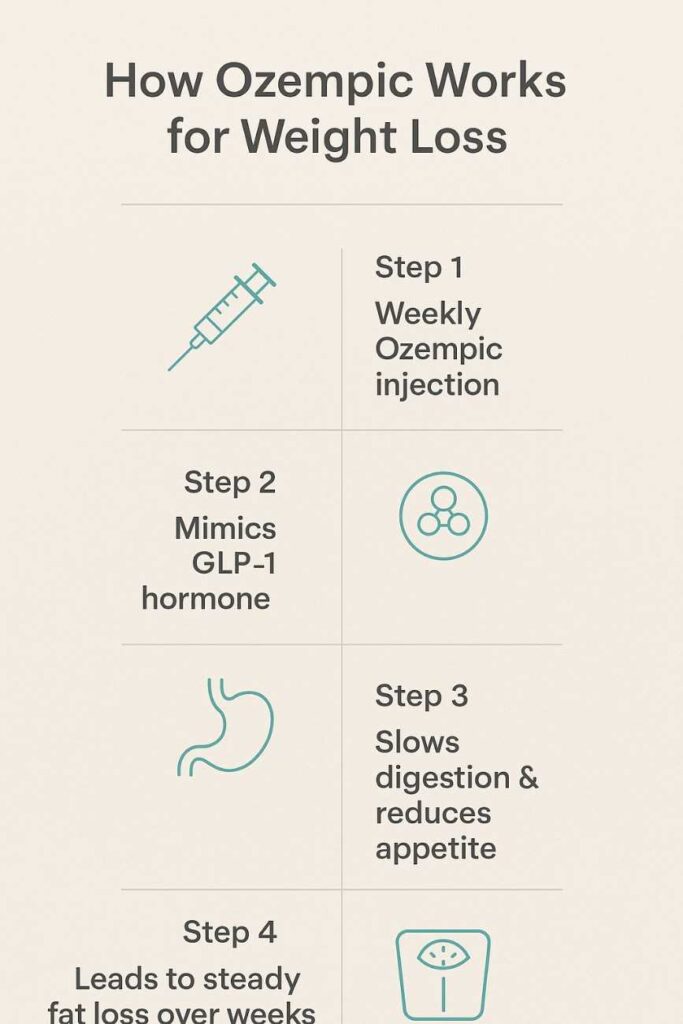
Ozempic is a prescription medicine containing semaglutide, an active ingredient belonging to the glucagon-like peptide-1 (GLP-1) receptor agonist class.
GLP-1 is a hormone involved in blood glucose regulation, appetite signalling and gastric emptying.
Semaglutide acts on GLP-1 receptors and can influence hunger, satiety and food intake. These effects help explain the weight reduction observed in clinical studies involving semaglutide-containing medicines.
However, Ozempic, semaglutide and medicines specifically approved for weight management are not interchangeable terms.
H3: Is Ozempic Approved for Weight Loss?
In the United States, Ozempic is approved for specified uses in adults with type 2 diabetes, including blood glucose management and certain cardiovascular and kidney-related risk-reduction indications.
It is not FDA-approved specifically for chronic weight management.
Wegovy contains semaglutide and has approved indications for chronic weight management in eligible patients.
In India, CDSCO documentation confirms that Wegovy injection has been approved for chronic weight management in adults.
The distinction matters because approved indications, formulations and prescribing requirements differ by product and jurisdiction.
In some circumstances, a clinician may consider using a prescription medicine outside an approved indication. Such decisions require careful medical justification and must comply with applicable Indian regulatory and professional requirements.
Patients should not presume that Ozempic is the appropriate medicine simply because they are interested in losing weight.
Official references:
- FDA Ozempic prescribing information — indications, warnings and contraindications
- CDSCO — Semaglutide and Wegovy regulatory documentation
What Is the Difference Between Ozempic and Semaglutide?
Semaglutide is the active pharmaceutical ingredient.
Ozempic is one branded medicine containing semaglutide. Wegovy is another semaglutide-containing product.
Although they share an active ingredient, their approved indications, formulations and dosing requirements differ.
A patient considering a semaglutide injection for weight loss should therefore understand which product is being discussed, its approved uses and whether it is medically appropriate.
For an overview of this medicine class, explore our GLP-1 weight loss guide for India.
How Does Semaglutide Work for Weight Loss?
Semaglutide influences several physiological processes involved in appetite regulation and glucose metabolism.
Its effects may support weight reduction in appropriately selected patients when used as part of a medically guided treatment plan.
Appetite Regulation and Reduced Hunger
Semaglutide acts on GLP-1 receptors involved in appetite signalling.
Some patients experience reduced hunger, greater fullness after meals and changes in their usual food intake.
These responses vary between individuals.
Delayed Gastric Emptying and Increased Satiety
Semaglutide delays gastric emptying, which can contribute to feelings of fullness.
This mechanism is also relevant to certain adverse effects, particularly nausea, vomiting and other gastrointestinal symptoms.
Blood Glucose and Metabolic Effects
Semaglutide influences glucose-dependent insulin secretion and glucagon release.
These actions contribute to its role in managing type 2 diabetes.
Although weight reduction can improve some weight-related metabolic measures, semaglutide should not be presented as a guaranteed treatment for insulin resistance, PCOS or prediabetes.
The underlying diagnosis and the selected product’s indication remain important.
Does Ozempic Directly Burn Fat?
No. Ozempic does not directly destroy fat cells or selectively remove abdominal fat.
Weight reduction associated with semaglutide is primarily related to its effects on appetite, energy intake and metabolic regulation.
A reduction in body weight can involve both fat and lean tissue.
Adequate nutrition, appropriate physical activity and attention to muscle preservation therefore remain important during medical weight management.
Ozempic Weight Loss Treatment in Delhi: The Importance of Medical Supervision
Patients frequently search for Ozempic weight loss treatment in Delhi when dietary changes, exercise and previous weight-management attempts have not produced satisfactory results.
However, medical weight management is not simply a matter of selecting an injection and increasing its dose.
An appropriate treatment decision requires identifying the patient’s health concerns, reviewing the available options and determining whether prescription medication is indicated.
At The Face Clinic, the consultation process begins with medical assessment rather than an automatic recommendation for Ozempic.
Initial Weight-Management Assessment
An individual assessment may consider:
- Current BMI and weight history.
- Previous weight-management approaches.
- Existing type 2 diabetes or other relevant metabolic conditions.
- Blood pressure and cardiovascular risk factors.
- Medication history.
- Relevant gastrointestinal, pancreatic, gallbladder and kidney conditions.
- Previous adverse reactions to medication.
- Family history and important contraindications.
- Pregnancy planning, where relevant.
- Treatment expectations and longer-term health goals.
Investigations may be recommended according to the patient’s clinical profile.
A consultation may identify that nutritional support, another treatment approach or specialist evaluation is more appropriate than medication.
Specialist Evaluation Before Medication
At The Face Clinic, patients being considered for prescription weight-management therapy undergo mandatory pre-treatment evaluation or clearance by an Internal Medicine specialist or Endocrinologist.
Where medication is appropriate, the prescribing clinician determines the formulation, dose, precautions and follow-up requirements.
This process helps distinguish a medically indicated treatment from the assumption that a particular injection is suitable for everyone seeking weight reduction.
For the broader treatment pathway, see our medical weight loss clinic in Delhi.
Semaglutide Treatment for Weight Loss in Delhi
Semaglutide treatment for weight loss in Delhi is increasingly discussed as part of medically supervised obesity care.
Clinical research has demonstrated meaningful weight reduction with specific semaglutide formulations in selected patients.
However, results from one formulation or clinical trial cannot automatically be applied to every semaglutide-containing medicine.
The choice of treatment depends on the patient’s medical needs, the available product’s approved indication and the prescribing clinician’s assessment.
What Does a Doctor-Supervised Weight-Management Programme Involve?
A structured programme may include:
- Medical assessment
Review of weight history, existing medical conditions, previous treatment attempts and relevant risk factors.
- Eligibility evaluation
Determination of whether prescription treatment is appropriate and whether further specialist investigations are required.
- Treatment planning
Consideration of approved medication options, lifestyle interventions and appropriate alternatives.
- Nutrition and physical activity
Individualised guidance intended to support nutritional adequacy, physical function and longer-term weight management.
- Clinical monitoring
Regular review of treatment response, tolerability and relevant health parameters.
- Maintenance planning
Discussion of continuing care, weight-regain risk and the possibility of longer-term treatment.
Patients should understand that medical treatment is not necessarily a short course of injections. Obesity and weight-related metabolic conditions may require continuing management.
For patients considering other approaches, our guide to non-surgical weight loss treatment in Delhi explains the broader treatment category.
Who May Be Eligible for Semaglutide Weight-Loss Treatment?
Eligibility depends on the selected medicine’s approved indication, the patient’s medical history and the prescribing clinician’s evaluation.
For certain medicines approved for chronic weight management, commonly used adult eligibility criteria include:
- BMI of 30 kg/m² or higher: Obesity.
- BMI of 27 kg/m² or higher with a qualifying weight-related condition: Such as hypertension, type 2 diabetes or dyslipidaemia.
These criteria relate to particular weight-management products and should not be interpreted as automatic prescribing criteria for Ozempic.
They are also not a substitute for individual assessment of body composition, metabolic risk and relevant population-specific clinical considerations.
What If You Have PCOS, Insulin Resistance or Prediabetes?
Patients with PCOS, insulin resistance or prediabetes may experience difficulties with weight management.
These conditions can be relevant to treatment planning, but they do not independently establish that Ozempic is indicated.
A qualified clinician must evaluate the underlying condition, available treatment options and product-specific prescribing requirements.
Can Semaglutide Help With Stubborn Belly Fat?
People searching for Ozempic injections for belly fat should understand that GLP-1 medicines do not selectively target a particular area.
When overall weight reduction occurs, changes in abdominal fat may also occur, but the distribution and degree of fat loss differ between individuals.
Semaglutide should not be confused with a body-contouring treatment.
Who May Not Require Prescription Weight-Loss Medication?
Not everyone seeking weight reduction requires pharmacological treatment.
Patients whose concerns involve localised fat, minor weight fluctuations or primarily cosmetic body-shape goals may not meet the criteria for prescription weight-management therapy.
An appropriate medical assessment can clarify whether treatment is necessary and, if so, which approach is justified.
Who Should Avoid Ozempic? Contraindications and Safety Precautions
Ozempic is a prescription medicine with recognised contraindications, warnings and potential adverse reactions.
Medical supervision is essential, but it does not eliminate the possibility of side effects or serious complications.
Important Contraindications
The US Ozempic prescribing information identifies contraindications including:
- A personal or family history of medullary thyroid carcinoma (MTC).
- Multiple Endocrine Neoplasia syndrome type 2 (MEN 2).
- A previous serious hypersensitivity reaction to semaglutide or an ingredient in the formulation.
The prescribing information contains a boxed warning concerning thyroid C-cell tumours observed in rodents. Its relevance to thyroid C-cell tumours in humans has not been established.
Other Medical Conditions Requiring Caution
Additional clinical assessment may be necessary in patients with:
- Previous pancreatitis.
- Gallbladder disease.
- Severe gastrointestinal disorders, including severe gastroparesis.
- Kidney-related concerns or dehydration risk.
- Diabetic retinopathy.
- Concurrent use of insulin or certain other glucose-lowering medicines.
- Planned procedures involving general anaesthesia or deep sedation.
- Pregnancy, planned pregnancy or breastfeeding.
The US prescribing information advises discontinuing Ozempic at least two months before a planned pregnancy.
The applicability of specific precautions should be assessed using the prescribing information for the actual product selected.
What Are the Common Side Effects of Ozempic?
Common adverse reactions include:
- Nausea.
- Vomiting.
- Diarrhoea.
- Abdominal pain.
- Constipation.
Some reactions may be more pronounced during treatment initiation or dose escalation.
Other serious adverse reactions are possible.
Patients experiencing severe or persistent abdominal pain, repeated vomiting, dehydration or symptoms suggestive of a serious allergic reaction should seek prompt medical evaluation.
A detailed discussion of risks and expected benefits should take place before treatment begins.
For the complete safety information, consult the official FDA prescribing information for Ozempic.
Benefits and Limitations of Semaglutide-Based Weight Management
Semaglutide-containing medicines have an established evidence base for specific medical indications.
When an appropriately indicated formulation is used in an eligible patient, potential benefits may include:
- Reduced appetite and increased satiety.
- Lower overall energy intake.
- Clinically meaningful weight reduction in some individuals.
- Improvements in selected weight-related metabolic measures.
- A non-surgical treatment option when clinically justified.
These potential benefits should be weighed against medication-related risks, cost, treatment duration and individual suitability.
What Results Cannot Be Guaranteed?
Prescription treatment cannot guarantee:
- A particular percentage of weight loss.
- A fixed timeline for visible results.
- Complete resolution of metabolic conditions.
- Permanent weight reduction after medication stops.
- An absence of adverse effects.
- The same results for all patients.
Treatment response must be evaluated individually.
A medically responsible programme should explain both the potential benefits and the reasons a patient may not be suitable for therapy.
Ozempic Weight Loss Programme Cost in Delhi
Patients researching Ozempic treatment cost in Delhi should understand the difference between purchasing prescription medication and participating in a medically supervised weight-management programme.
The total expense may include medication, medical consultations, investigations, follow-up and other services.
These costs should be explained separately wherever applicable.
What Is the Cost of a Doctor-Supervised Weight-Loss Programme?
At The Face Clinic, the existing indicative programme range is ₹7,000–₹12,500 per week, depending on the treatment selected, dosage, duration and individual clinical requirements.
This is a programme estimate, not a fixed Ozempic injection price or a guarantee that semaglutide will be prescribed.
The final quotation depends on the medical assessment and recommended treatment plan.
What Does the Programme Involve?
The clinic’s stated weight-management framework includes:
- Initial medical assessment and eligibility screening.
- Review of relevant health and weight history.
- Mandatory pre-treatment evaluation or clearance by an Internal Medicine specialist or Endocrinologist.
- Individualised treatment planning.
- Appropriate follow-up and clinical monitoring.
- Review of treatment response and tolerability.
- Guidance concerning longer-term weight management.
The exact inclusions, medication charges, additional specialist fees and investigation costs should be confirmed before treatment is initiated.
What Determines the Final Cost?
Factors affecting cost may include:
- The prescribed medication and formulation.
- Dose and frequency of administration.
- Treatment duration.
- Required clinical investigations.
- Specialist consultations.
- Follow-up requirements.
- Changes in treatment based on response or tolerability.
A patient should receive a clear explanation of the proposed treatment and associated expenses before making a decision.
Is the Ozempic Injection Price Different From the Programme Cost?
Yes. Medicine-only pricing and a clinic’s supervised treatment charges are separate considerations.
The same active ingredient may also be available in products with different prices, formulations and approved indications.
For medicine-specific information, visit our Ozempic cost in India: injection price and availability guide.
All programme figures are indicative and subject to confirmation following individual assessment. The availability or suitability of a particular medicine is not guaranteed.

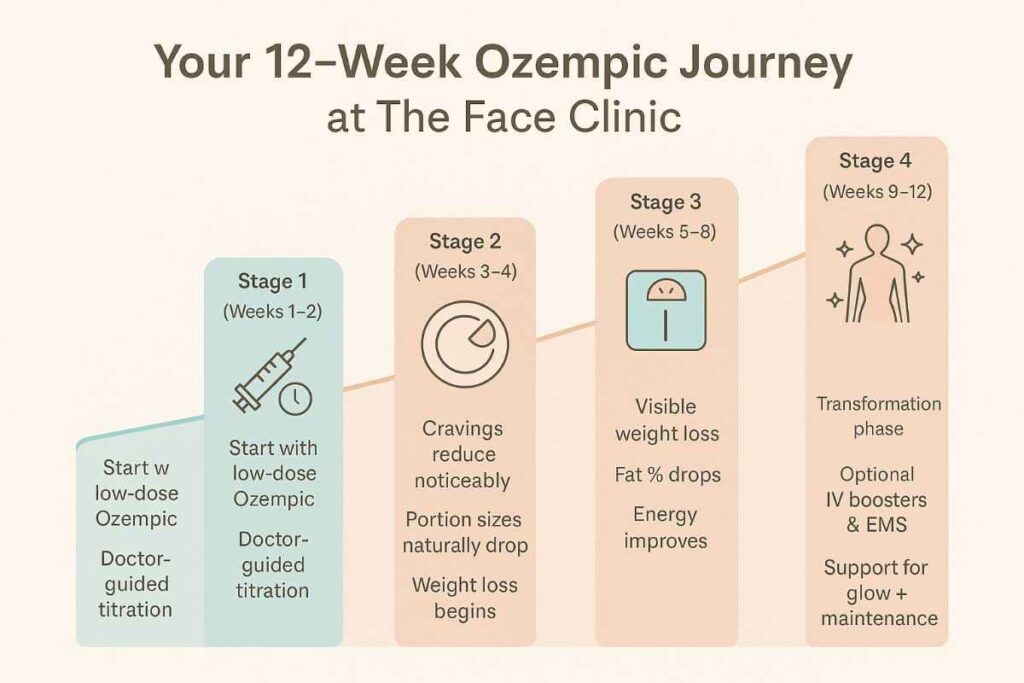
Ozempic Results Timeline: What to Expect During Treatment
A common question among patients exploring Ozempic weight loss in Delhi is how quickly changes in appetite or body weight may become noticeable.
There is no universal Ozempic results week-by-week pattern.
Response varies according to the medicine prescribed, starting weight, dose, accompanying lifestyle measures and individual tolerability.
The following timeline explains what clinicians may assess as treatment progresses. It does not predict or guarantee results.
Weeks 1–4 — Early Appetite Changes and Tolerability
Some patients notice reduced hunger or increased fullness during the early stages of semaglutide therapy.
Others experience limited changes in body weight initially.
This period is also important for reviewing gastrointestinal symptoms, hydration and treatment tolerability.
Weeks 4–8 — Reviewing the Initial Response
A clinician may assess appetite, weight trends, nutritional intake and adverse effects.
Any dose adjustment should follow the prescribing requirements of the specific medicine.
Early weight reduction may occur, but its extent varies.
Weeks 8–12 — Assessing Progress
Over the following weeks, some patients experience more noticeable changes in weight or body measurements.
Others may respond more gradually.
Clinical progress should be assessed using appropriate health measures rather than appearance alone.
Months 3–6 — Evaluating the Longer-Term Response
If treatment continues, follow-up may include:
- Body-weight trends.
- Changes in relevant metabolic parameters.
- Nutritional adequacy.
- Physical activity and muscle function.
- Treatment adherence and tolerability.
- Whether continuing medication remains appropriate.
The amount of weight lost over several months can differ substantially between patients.
Long-Term Results and Weight Maintenance
Weight management frequently requires continuing attention beyond the initial period of weight reduction.
Weight regain can occur after discontinuing GLP-1 therapy.
A maintenance plan may involve ongoing nutritional support, physical activity, medical follow-up and, where appropriate, continued pharmacological treatment.
Treatment duration should be decided by the prescribing clinician rather than by a predetermined cosmetic target.
Clinical perspective: Weight-loss results reported in trials of Wegovy or other weight-management formulations should not automatically be described as expected Ozempic results.
Can Significant Weight Loss Cause Facial Changes?
Substantial weight reduction may be accompanied by changes in facial fat volume, skin laxity and facial proportions.
The popular term Ozempic face refers to facial changes associated with significant weight reduction. It is not a separate medical diagnosis, and these changes are not exclusive to people using semaglutide.
Our dedicated guide explains Ozempic Face and facial changes after GLP-1 weight loss.
Ozempic vs Wegovy vs Mounjaro: What Is the Difference?
Patients comparing prescription weight-management options frequently encounter Ozempic, Wegovy and Mounjaro.
Although these medicines share certain metabolic effects, they are not interchangeable.
Medicine | Active ingredient | Mechanism | Regulatory distinction |
Ozempic | Semaglutide | GLP-1 receptor agonist | US-approved for specified type 2 diabetes-related indications, not specifically for chronic weight management. |
Wegovy | Semaglutide | GLP-1 receptor agonist | Has approved chronic weight-management indications in eligible patients. |
Mounjaro | Tirzepatide | Dual GIP and GLP-1 receptor agonist | Approved indications must be evaluated according to the applicable jurisdiction and product information. |
Is Wegovy the Same as Ozempic?
Both medicines contain semaglutide.
However, they are different prescription products with different approved indications and formulation-specific dosing requirements.
Wegovy should not be described merely as a higher-dose version of Ozempic. Its distinct weight-management indication is clinically and regulatorily important.
How Is Mounjaro Different From Semaglutide?
Mounjaro contains tirzepatide, which acts on both GIP and GLP-1 receptors.
Semaglutide acts on GLP-1 receptors.
Both active ingredients have been investigated in metabolic and weight-related conditions, but findings from different studies and patient populations require careful interpretation.
For more information, see our dedicated guide to Mounjaro weight loss treatment in Delhi.
Which Treatment May Be Appropriate?
Treatment selection depends on:
- The patient’s diagnosis.
- BMI and weight-related medical conditions.
- Contraindications.
- Medication history.
- Product-specific approved indications.
- Tolerability and monitoring requirements.
- Availability and affordability.
- The prescribing clinician’s assessment.
The medicine associated with greater average weight reduction in a particular study is not necessarily the appropriate choice for every individual.
For a more detailed comparison, read our Wegovy vs Mounjaro weight-loss guide.
Why Consider The Face Clinic for Medical Weight-Management Assessment in Delhi?
For patients searching for an Ozempic doctor near me in Delhi, an important consideration is whether the clinic provides an appropriate medical assessment before treatment is discussed.
At The Face Clinic, the consultation process is intended to establish whether prescription weight-management therapy is clinically justified and whether additional specialist care is required.
Clinical Background of Dr. Reema Arora
Dr. Reema Arora is the Founder and Medical Director of The Face Clinic, Hauz Khas, New Delhi.
Her qualifications include MBBS and an MSc in Facial Aesthetics from the UK.
She has over 20 years of clinical experience, primarily in facial aesthetics, and has previously served as Medical Head — Facial Aesthetics at Allergan India.
Her professional work includes training medical practitioners in aesthetic injectable procedures.
Her experience in aesthetic medicine should be distinguished from specialist qualifications in Internal Medicine or Endocrinology.
Accordingly, the clinic’s stated weight-management pathway includes mandatory pre-treatment evaluation or clearance by an Internal Medicine specialist or Endocrinologist before initiating prescription medication.
A Structured Medical Assessment
The clinical pathway focuses on:
- Reviewing the patient’s health history and weight-management concerns.
- Assessing possible indications and contraindications.
- Arranging specialist evaluation where required.
- Discussing available treatment categories.
- Establishing an appropriate follow-up plan.
- Supporting informed decisions about ongoing medical care.
Patients should receive clear information concerning treatment limitations, possible adverse effects and costs.
An enquiry or consultation does not guarantee that Ozempic, Wegovy or another prescription medicine will be recommended.
Frequently Asked Questions About Ozempic Weight Loss Treatment in Delhi
1. What is Ozempic used for?
Ozempic contains semaglutide and is approved in the United States for specified medical indications involving adults with type 2 diabetes. Although weight reduction may occur during treatment, Ozempic is not FDA-approved specifically for chronic weight management. Product indications should always be checked for the country in which treatment is prescribed.
2. Is Ozempic approved for weight loss in India?
Approval of semaglutide as an active ingredient does not mean that every semaglutide brand has identical indications. Indian CDSCO documentation confirms Wegovy’s approval for chronic weight management in adults. Patients should verify the Indian-approved indication of the specific product being considered, rather than assume Ozempic and Wegovy have the same approval.
3. Can Ozempic help reduce body weight?
Semaglutide can influence appetite and food intake, and weight reduction has been observed in clinical studies. However, whether Ozempic itself should be prescribed in an individual case depends on the patient’s diagnosis, applicable product indication and medical assessment.
4. How long does it take to see Ozempic weight-loss results?
Some patients notice appetite changes during the first few weeks. Changes in body weight may develop over several months. There is no guaranteed timeline or specific amount of weight reduction.
5. How much does an Ozempic weight-loss programme cost in Delhi?
The Face Clinic’s existing indicative programme range is ₹7,000–₹12,500 per week, subject to confirmation of the prescribed treatment and programme inclusions. Medicine-only pricing may differ. Visit our Ozempic cost in India guide for information about product pricing.
6. Is Ozempic safe for weight loss?
Ozempic has recognised contraindications, warnings and potential adverse reactions. Medical assessment and monitoring are necessary, but no prescription treatment is risk-free. Patients should review the applicable prescribing information and discuss their individual risks with a qualified clinician.
7. Who should avoid Ozempic?
The US product information identifies contraindications including a personal or family history of medullary thyroid carcinoma, MEN 2 and serious hypersensitivity to semaglutide or its ingredients. Other medical circumstances may require caution or make treatment inappropriate.
8. Can people with PCOS, insulin resistance or prediabetes take semaglutide?
These conditions may be relevant to the overall assessment, but they do not automatically establish an indication for Ozempic. A clinician should evaluate the underlying diagnosis, associated health risks and approved treatment options.
9. Do I need a prescription for Ozempic injections in Delhi?
Yes. Ozempic is a prescription medicine. Patients should not purchase or use it without appropriate medical evaluation and a valid prescription.
10. Is Ozempic available in Delhi?
Medicine availability can change. Patients should verify current availability, authenticity and the approved Indian product indication through an authorised pharmacy and appropriately registered medical practitioner.
11. Is Wegovy different from Ozempic?
Both medicines contain semaglutide, but they are separate products with different approved indications and formulation-specific dosing requirements. Wegovy has an approved role in chronic weight management for eligible patients.
12. What is the difference between Ozempic and Mounjaro?
Ozempic contains semaglutide, a GLP-1 receptor agonist. Mounjaro contains tirzepatide, which acts on GIP and GLP-1 receptors. Their approved indications, formulations and individual suitability differ.
13. Can I combine semaglutide with diet and exercise?
Appropriate nutrition and physical activity are important components of medical weight management. For products approved for chronic weight management, these measures generally form part of the treatment approach.
14. Will I regain weight after stopping semaglutide?
Weight regain can occur after discontinuation. The extent varies between individuals. Longer-term management should be discussed with the treating clinician before medication is stopped.
15. How do I find an Ozempic doctor near me in Delhi?
Look for an appropriately qualified and registered medical practitioner who assesses medical eligibility, contraindications, associated metabolic conditions and the need for follow-up. Patients with complex metabolic concerns may require an Internal Medicine specialist or Endocrinologist.
16. Where can I enquire about semaglutide treatment in South Delhi?
Patients researching Ozempic injections near me or semaglutide treatment in Delhi can enquire about medical weight-management assessment at The Face Clinic, Hauz Khas.
The consultation is intended to determine clinical suitability and the need for specialist assessment, not to guarantee access to a particular prescription medicine

Book a Doctor-Led Weight-Management Consultation in Delhi
Considering Ozempic weight loss treatment in Delhi or another semaglutide-based option?
The appropriate first step is not choosing an injection. It is understanding your medical needs, whether prescription treatment is indicated and what ongoing supervision may involve.
At The Face Clinic, Dr. Reema Arora provides an initial doctor-led assessment, with mandatory pre-treatment evaluation or clearance by an Internal Medicine specialist or Endocrinologist before medication initiation.
A consultation can help clarify:
- Whether medical weight-management treatment may be appropriate.
- The differences between available GLP-1 medicines and their approved indications.
- Relevant contraindications and safety considerations.
- Treatment costs and monitoring requirements.
- The role of nutrition, physical activity and long-term maintenance.
The objective is an informed, medically appropriate treatment decision — including the possibility that medication may not be indicated.
Visit The Face Clinic — Hauz Khas, South Delhi
The Face Clinic | Dr. Reema Arora LGF, C-36, Chaudhary Dilip Singh Marg Hauz Khas Market, New Delhi – 110016
Clinic Hours: Monday–Saturday, 10 AM–6 PM Phone: +91 99580 73900
Book a Medical Weight-Management Consultation
Prescription medication is considered only when clinically appropriate and subject to applicable prescribing requirements. Individual outcomes vary. Information on this page is educational and does not replace a consultation with a qualified medical practitioner.
All treatments are subject to individual variation. Outcomes are determined following clinical evaluation by a qualified doctor.